


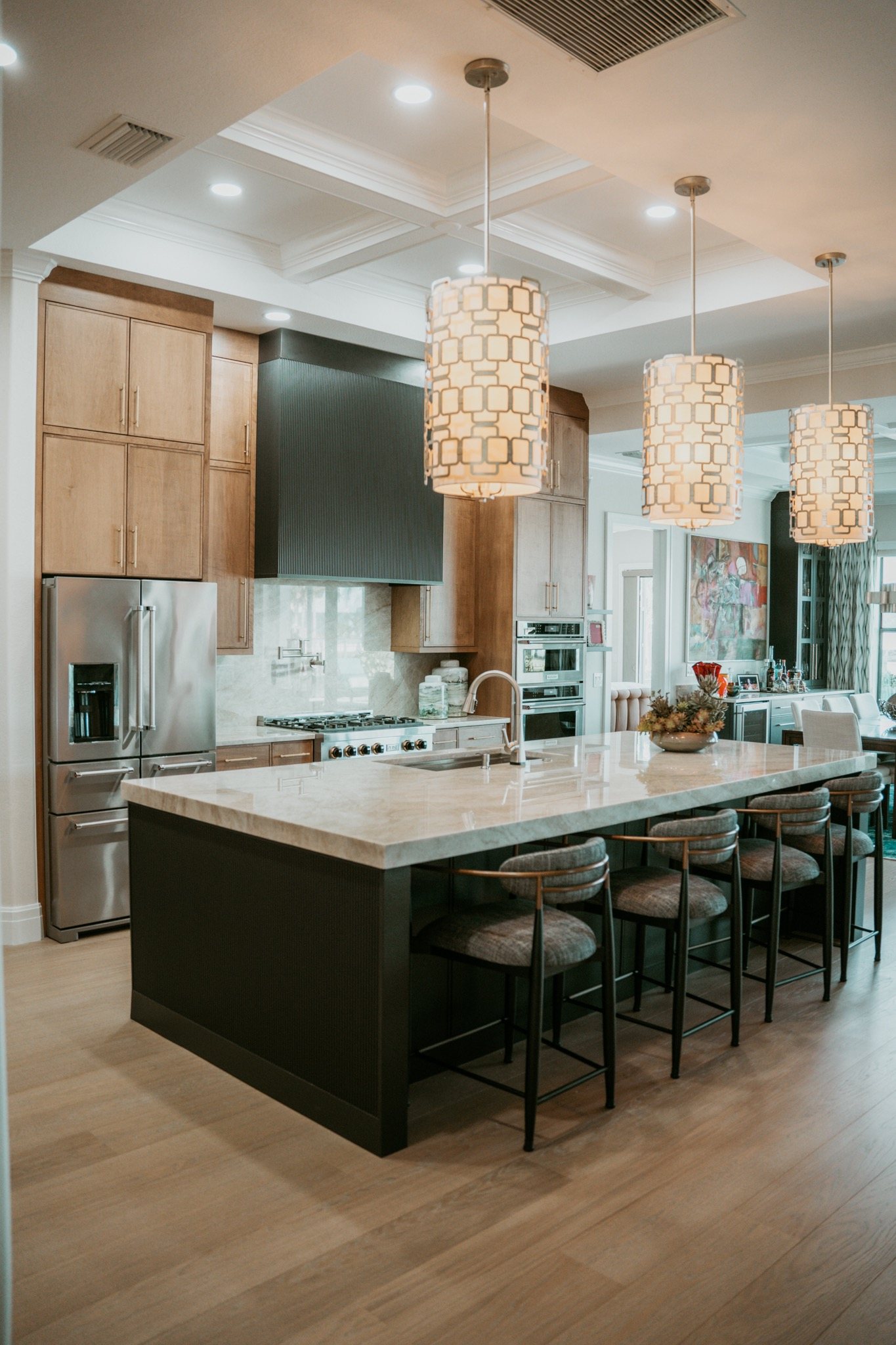
Replacing Builder Grade Countertops in a Newer Home
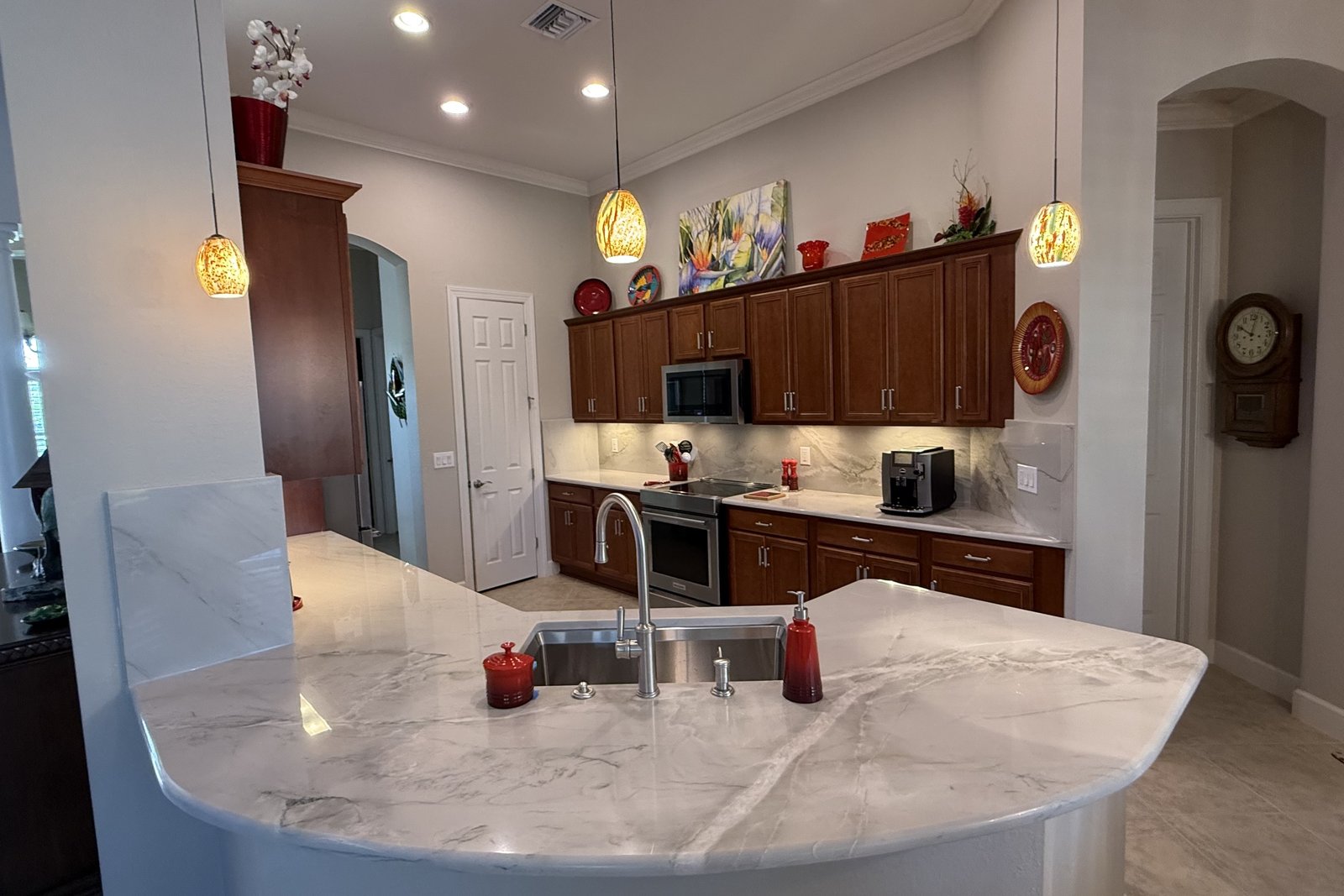
It makes sense to replace builder grade countertops when they no longer fit how you live: they show wear, the color feels dated against your cabinets, or you’re planning other kitchen updates and want the surfaces to match. A newer home isn’t a reason to wait. The stone you choose is yours, and you can swap it without redoing the whole kitchen if the cabinets are in good shape.
Here’s what builder grade usually means, how to tell it’s time, which materials suit a newer home and what to line up before we template.
What Builder Grade Countertops Usually Mean
“Builder grade” describes the standard package a builder installs so a house can be finished on schedule and on budget. It’s a baseline, not a judgment of the home. Most builders also offer upgrades, and some buyers choose them at closing, but many homeowners move in with the standard selection and decide later that they’d like something different.
What you’re likely to have
The standard package varies from builder to builder and from one price tier of home to the next, so don’t assume. Common examples include a basic laminate, a plain stone or engineered top in a limited color range, a simple edge profile and a single straight run with few special cutouts. Your closing documents or the selection sheet from your builder will show what was installed.
Ask yourself what you can’t change about what’s there. A builder package might fix the color range, the edge, the backsplash height and whether the sink is undermount. A replacement lets you decide each of those again.
It isn’t a flaw in the house
Builder grade tops can work well for years. The question isn’t whether yours is “bad.” It’s whether it still suits your kitchen. If you like it and it’s holding up, there’s no rush.
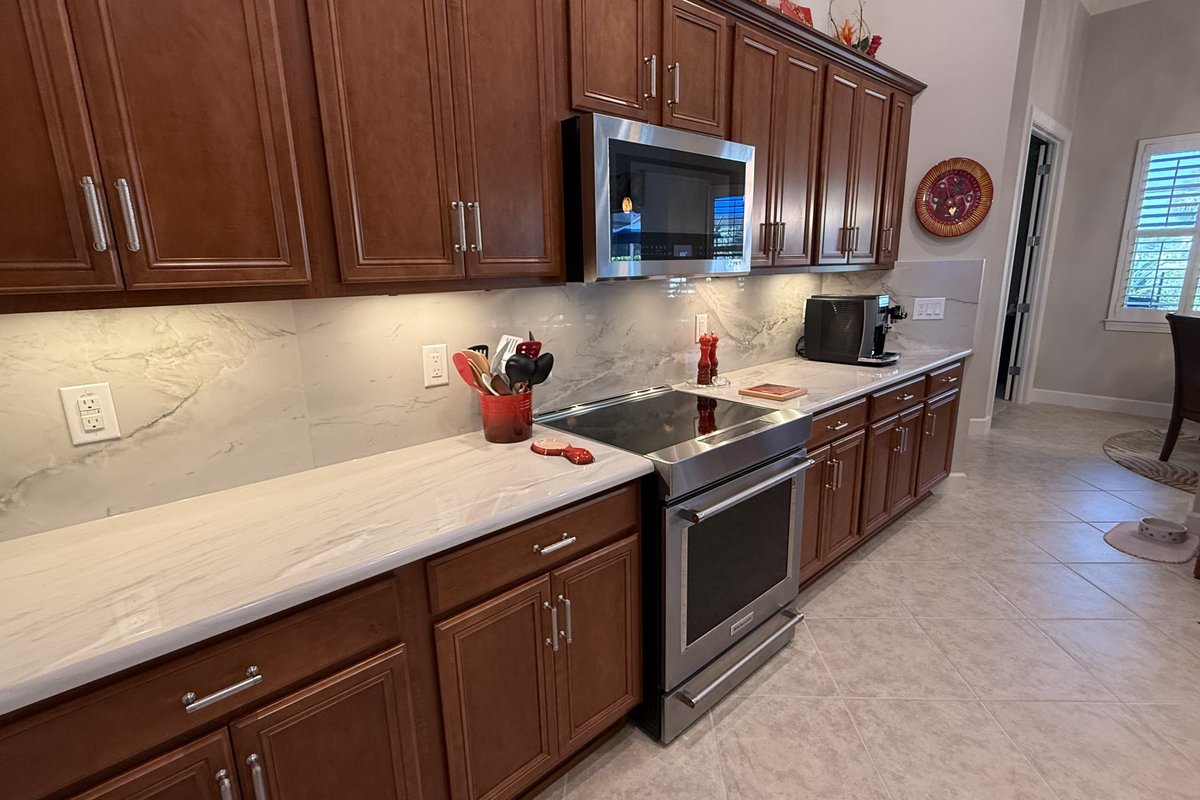
Signs It’s Time to Upgrade
A few signals tend to push people from “someday” to “now”:
- Visible wear. Dull patches, seams that have opened, worn edges or stains that no longer wipe clean.
- The look no longer fits. You’ve updated paint, lighting or hardware, and the counters now look like they came from a different house.
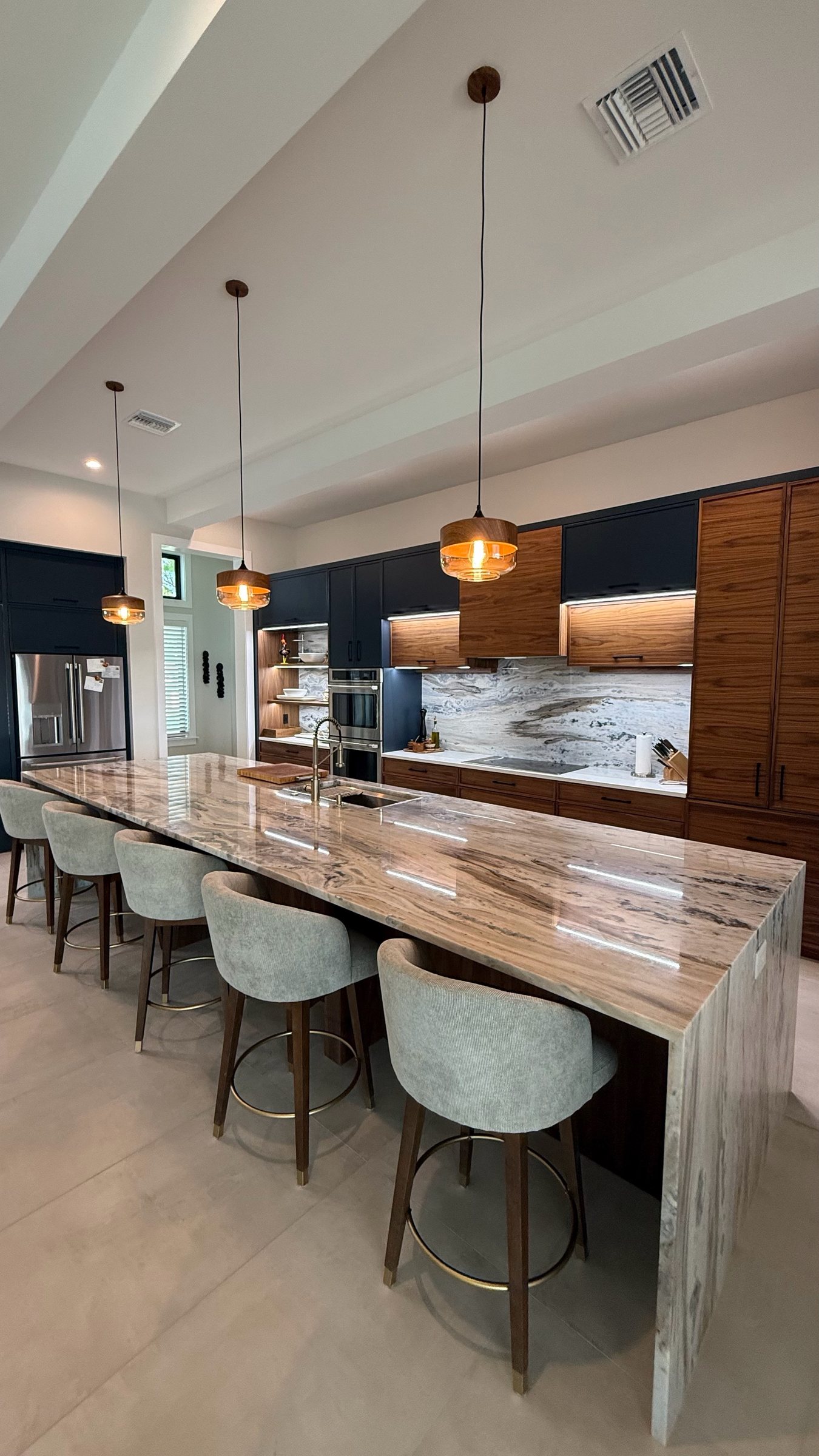
- You want a larger island or a waterfall end. A new layout often needs new stone, because the old top won’t cover the new dimensions.
- A sink or cooktop change. New fixtures need new cutouts, and it’s often easier to start with a fresh top.
- You’re getting ready to sell or stay for the long haul. Either way, the surfaces buyers touch first are the ones they remember.
If one of these sounds like your kitchen, a replacement is worth pricing out. Keep in mind that a quote depends on the slab, edge, cutouts and layout, so we walk through your space before we give you a number. For a look at what’s possible, our Estero countertops page covers the area and what a project looks like from selection to installation.
Choosing a Stone to Replace Builder Grade Countertops
For most homeowners the choice comes down to look and upkeep. Here’s how the main options compare, in plain terms.
Quartz: low upkeep and consistent color
Quartz is engineered, non-porous and uniform from slab to slab. Cambria’s FAQ says its surfaces require no sealing, polishing or reconditioning, and recommends warm water, a soft cotton cloth and mild soap for cleaning. It also advises a trivet or closed-weave hot pad for pots and pans, since the surface may not withstand direct heat transfer. It suits busy kitchens where you don’t want a sealing routine. Keep it indoors, away from long hours of direct sun.
Granite: natural, hard and varied
Granite is a natural stone with real variation, a hard surface and plenty of color range. It’s porous to a degree. The Natural Stone Institute says most granite countertops don’t need to be sealed, though in many cases it makes sense to seal them with a quality sealer. Ask us about the slab you like.
Quartzite and marble: character with trade-offs
Quartzite gives you flowing, marble-like veining on a very hard stone, and it generally wants sealing. Marble is softer, etches from acids and develops a patina over time, which some cooks love and others don’t. If you cook heavily and love the marble look, quartzite is the usual alternative.
No stone is “best” on its own. The right one matches how you cook, how much you’ll wipe down and what your cabinets look like. We’ll set real slabs next to your cabinet door so you can compare in your own light.
Community Rules, Access and Planning Before Templating
Check the rules first
Many newer neighborhoods and condo buildings are run by associations, and some have rules about work hours, delivery access, elevators or parking. Check with your community early, since a rule can affect scheduling more than the stone choice. We’ll talk through access with you when we plan the job. For builders and developers who want to see how we work with production schedules, our countertops for home builders page explains how we coordinate.
Seasonal and second homes add one more wrinkle. If you’re away for part of the year, schedule the work around when someone can meet us for templating and installation, and let the property manager or association office know the dates ahead of time.
Your builder’s paperwork
Before anything comes out, read the documents your builder gave you. Coverage terms vary from builder to builder, and none of this is legal advice. If you’re unsure whether swapping the countertops changes your coverage, ask your builder in writing so you have the answer in front of you. Keep that reply with your closing papers.
What to have ready before templating
Templating works best when the cabinets are installed, level and secured, since the template follows them exactly. Before the visit:
- Pick your sink and faucet. The actual model matters more than a general idea, because cutouts depend on it.
- Know your cooktop or range. Drop-in and slide-in models need different cutouts.
- Decide on your edge and backsplash height, or ask us to walk through the choices.
- Clear the counters and the area under the sink so measuring goes smoothly.
- Mention your existing tops when you request an estimate, so removal is part of the plan from the start.
Our guide to countertop templating explains the visit step by step. Once you approve the layout, our in-house fabrication at our Fort Myers facility cuts the stone using CNC equipment and digital templating, and installation follows. From templating to installation takes 10 business days. If you want to see the whole timeline, how long it takes to install countertops breaks it down.
Frequently Asked Questions
What are builder grade countertops?
They’re the standard surfaces a builder installs as part of the base package. The material and quality vary by builder, so check your selection sheet or closing documents to see what you have.
Can I upgrade countertops in a new build?
Yes. Many homeowners upgrade after move-in, and you can do it without changing your cabinets if they’re in good shape. Share your cabinet drawings or photos so we can plan the layout.
Will replacing countertops affect my builder warranty?
That depends on the terms in your own documents, and it isn’t something to guess at. Read them and ask your builder in writing before you start.
What is the best material to upgrade to?
The one that fits how you cook, clean and live. Quartz suits people who want no sealing, and granite or quartzite suits those who want natural stone. Compare real slabs side by side before you decide.
Ready to see what could replace your current tops? Call (239) 362-0404 to talk through your kitchen, or request an estimate and send photos of your cabinets and the selection sheet from your builder.