




How to Clean Quartzite Countertops and Keep the Polish
How to clean quartzite countertops comes down to three things: warm water, a mild soap or a pH-neutral stone cleaner, and a soft cloth. Wipe spills soon, rinse, and dry the surface so it doesn’t streak. What you leave in the cabinet matters just as much as what you use, because acids, scouring powders and strong disinfectants can dull the polish and wear down the sealer over time.
Here’s the routine we’d follow in our own kitchens, the products to skip and how to tell a real stain from a dull patch.
How to Clean Quartzite Countertops Every Day
What to use each day
The Natural Stone Institute’s care guidance recommends a neutral cleaner, stone soap, or a mild liquid dishwashing detergent in warm water, applied with a soft cloth. That’s all quartzite needs on a normal day. Quartzite is a very hard stone, but hardness protects against scratches, not against a cleaner that eats at the finish or the sealer.
Go light on the soap. The same guidance warns that too much cleaner can leave a film and cause streaks, so follow the directions on the bottle, then rinse with clear water and dry with a clean cloth.
A simple order of operations
- Clear the surface. Move small appliances and the soap dispenser so the cloth reaches the whole top.
- Wipe with the mild solution. Work in long passes instead of scrubbing in circles.
- Rinse with a damp cloth. Plain water lifts the soap film.
- Dry and buff. A dry microfiber cloth keeps the polish looking clean and removes water spots near the faucet.
Wipe up oil, wine, coffee and citrus soon after they land. Quartzite is natural stone and porous to a degree, so the longer a spill sits, the more chance it has to soak in.
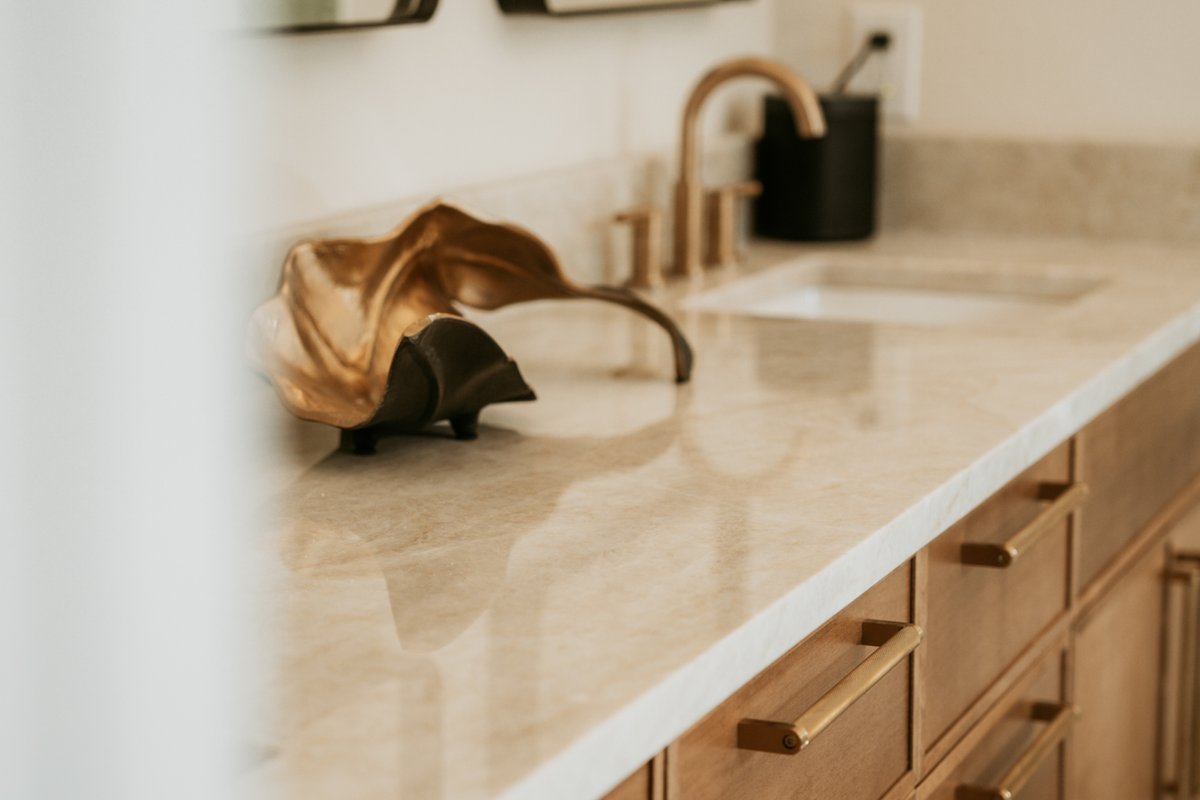
Cleaners to Use and Cleaners to Skip
Safe choices
You don’t need a special shelf of products. Any of these works for regular cleaning:
- Warm water and a soft cloth for light daily wiping.
- A few drops of mild dish soap in warm water for greasy spots near the cooktop.
- A pH-neutral stone cleaner sold for granite and quartzite, used as the label directs.
Our guide to the best cleaner for granite countertops covers the same neutral-cleaner approach, and most of it carries over because the two stones are cared for in much the same way. Quartzite is also harder than granite in most cases, which we explain in our comparison of quartzite and granite hardness, but that doesn’t make it more forgiving of chemicals.
Disinfecting without hurting the stone
After raw meat or a sick day in the house, you may want more than soap. We’d avoid bleach-based and disinfecting wipes on quartzite, since repeated use can dull the polish and break down the sealer. If you need a disinfectant, ask us about a stone-safe one, and rinse the surface well afterward.
What not to use
The list is short, and most items are things people already keep under the sink.
- Acidic cleaners, including vinegar and lemon. The Natural Stone Institute says acid-based products may dull or etch calcareous stones, and it still doesn’t recommend acidic cleaners for siliceous stone, because trace minerals can react. Quartzite usually resists etching from lemon juice better than marble does, but a cleaner is a different matter: it sits on the surface longer than a splash of juice.
- Scouring powders and creams. The same guidance notes that these often contain abrasives that can scratch certain stones.
- Bleach and heavy disinfectants. They wear on the sealer and the shine.
- Rust removers and some toilet bowl cleaners. The Institute warns that products containing hydrofluoric acid will attack all stones, including granite and quartzite. Keep those away from any stone surface.
- Ammonia-heavy glass cleaners. The Institute says frequent or heavy ammonia use may eventually dull the surface of some stone types, and it should never be mixed with bleach. If a glass cleaner lists ammonia, we’d skip it on your counters.
So can you use dish soap, Clorox wipes or Windex? Mild dish soap, yes. Clorox wipes and ammonia glass cleaners, we’d pass.
Stain or Dull Spot? How to Tell
Two different things can show up on a polished counter, and they have different causes.
A stain sits in the stone
A stain is a color change, often a dark patch that looks like the shape of the spill. It means liquid soaked in. Oil tends to leave a darker spot, while wine and coffee leave a tint. Sealing helps here, but the Institute is plain that sealing makes stone more stain resistant, not stain proof.
A dull spot is a change in the surface
A dull patch looks lighter or hazier than the polish around it, and it feels a little rough or flat. The Institute explains that some materials will etch the finish without leaving a stain, and that etch marks come from acid left on the surface. On quartzite, a dull spot often points to a cleaner or a spill that didn’t belong on the stone, not to the stone being weak.
Look at the spot from a low angle, with light skimming across the top. A stain changes color. An etch changes the shine. If you can’t tell which you have, a photo helps us talk it through. Please don’t reach for scouring powder, because that trades one mark for several.
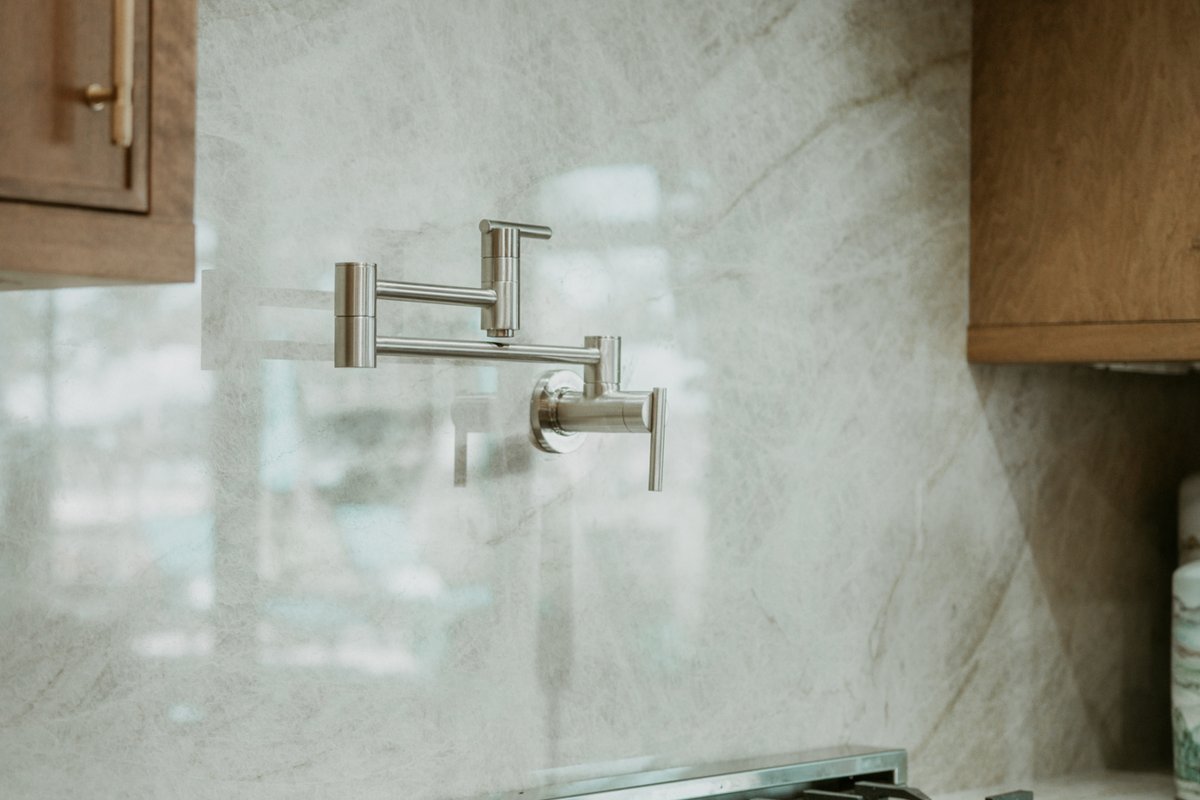
When It’s Time to Reseal
Quartzite is treated as a porous stone and generally wants sealing. How often depends on the slab and on the sealer you use, so we don’t give one calendar date. Follow the label on your sealer, and ask us about your slab, since some are denser than others. Our quartzite countertops page explains what makes the stone different from engineered quartz.
The water-drop test tells you what the stone itself is doing. Put a few drops of water on the surface and wait a few minutes. If the water beads up, the sealer is still working. If water darkens the stone and sinks in, it’s time for a fresh coat. Test a couple of spots, especially around the sink and cooktop, since those wear first.
Habits that protect the finish
- Use coasters under wine and citrus drinks.
- Keep a tray for oils and bottles near the stove.
- Use a cutting board and a trivet. Hardness doesn’t make a blade or a hot pan welcome.
- Wipe and dry before you close up a seasonal home. A closed-up house stays humid, so don’t leave a damp cloth or sponge sitting on the stone while you’re away.
If you’re planning a quartzite project on the islands or along the coast, our Sanibel countertops page covers the quartzite options we can fabricate for that area.
Frequently Asked Questions
What cleaner can you use on quartzite?
Warm water with a mild liquid dish soap, or a pH-neutral stone cleaner, applied with a soft cloth. Rinse and dry afterward so no film is left behind.
Can you use Dawn dish soap on quartzite?
A mild liquid dishwashing detergent in warm water is fine for daily cleaning, according to the Natural Stone Institute. Use only a little, since extra soap leaves streaks, and rinse well.
Can I use Clorox wipes on quartzite?
We’d avoid them. Bleach and acidic disinfectants can dull the polish and break down the sealer on natural stone. Use warm water and a pH-neutral cleaner, and ask us about a stone-safe disinfectant if you need one.
Is Windex OK to use on quartzite?
Check the label first. The Natural Stone Institute says frequent or heavy ammonia use may dull the surface of some stones. A damp microfiber cloth gives you a clear, streak-free finish without the risk.
Not sure what your slab is or when to reseal it? Call (239) 362-0404 and we’ll talk through your cleaning routine, or request an estimate if you’re choosing a new quartzite slab and want to see it in person.