





The Best Cleaner for Granite Countertops: What’s Safe and What Isn’t
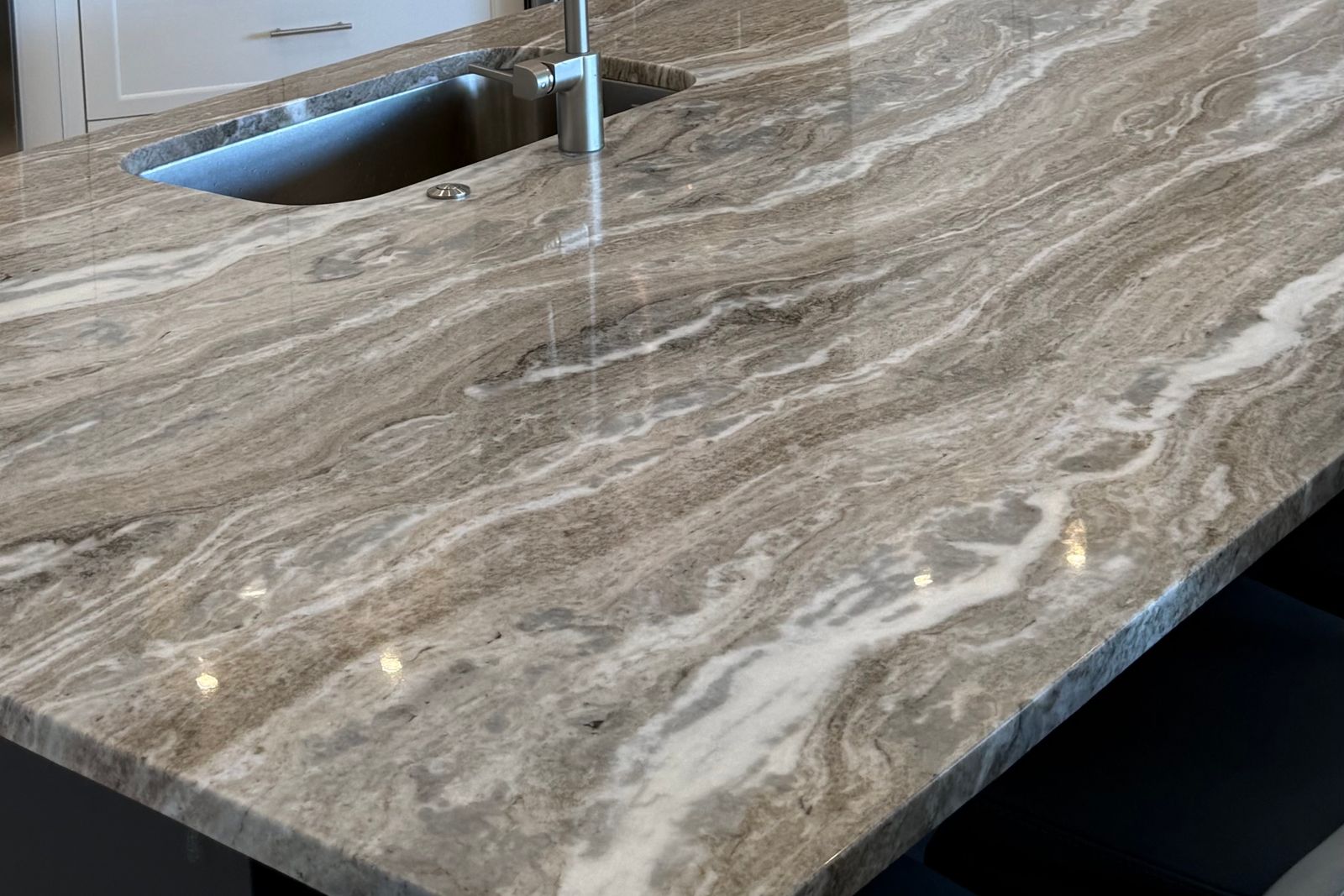
The best cleaner for granite countertops is a simple one: warm water with a few drops of mild dish soap, or a pH-neutral stone cleaner, and a soft cloth. That’s enough for daily messes on a sealed surface. What you leave out matters just as much, because acids, bleach, abrasive powders and heavy disinfectants can wear down the sealer and dull the finish over time.
Below is what we’d use at home, what we’d keep away from the stone, and how to handle the spills that give people the most trouble.
The Right Cleaner for Granite Countertops, Every Day
The Natural Stone Institute’s care guidance recommends a neutral cleaner, stone soap, or a mild liquid dish detergent in warm water for routine cleaning. We agree with that routine.
A simple daily routine
- Wipe up crumbs and spills with a soft, damp cloth. Blot liquids first so you don’t push them around.
- Wash with warm water and a small amount of soap. A few drops is plenty. Too much cleaner leaves a film, and the film is what makes granite look streaky or dull.
- Rinse with clean water. This is the step most people skip, and it removes the soap that would otherwise dry on the surface.
- Dry with a soft cloth. Drying keeps water spots from forming, especially around the faucet.
What “pH-neutral” means for you
A pH-neutral cleaner is neither acidic nor strongly alkaline, so it cleans without attacking the stone or the sealer on top of it. Look for a label that says it’s safe for granite or natural stone. We don’t recommend a particular brand, and a plain dish soap and water mix does the same job for most kitchens.
A microfiber cloth or soft sponge is all you need. Skip scrub pads and anything gritty. Granite is hard, but the sealer and the polish are what you’re protecting, and abrasives wear on both.

Cleaners That Wear Down the Sealer
Most granite is porous to a degree, and many people seal it for extra stain resistance, though the Natural Stone Institute says most granite countertops don’t strictly need it. Harsh products work against that layer. Here’s the short list to keep away from your counters.
- Acidic cleaners. Lemon, vinegar and anything built on them. The Natural Stone Institute notes that acids can dull or etch some stones, and even on a stone that handles acid well, we’d rather not test the sealer.
- Bleach and bleach-based wipes. Repeated use can wear down the sealer and dull the finish.
- Scouring powders and creams. The institute warns that they often contain abrasives that can scratch certain stones.
- Rust removers and some toilet bowl cleaners. Some contain hydrofluoric acid, which the institute says attacks all stone, granite included. Keep those products off the counter entirely.
- Anything you aren’t sure about. If the label doesn’t say it’s safe for natural stone, assume it isn’t.
One safety point that has nothing to do with the stone: never mix ammonia and bleach. The combination makes a toxic gas, and the Natural Stone Institute flags it for exactly this reason.
Is your sealer still doing its job?
Drop a little water on the surface. If it beads up, the sealer is working. If it darkens and soaks in after a few minutes, the stone is ready for a fresh coat if you seal it. Denser stones may need it less often. Sealing makes granite more stain resistant rather than stain proof, which is why wiping spills promptly still counts. Our granite countertops page has more on caring for the stone you choose.
Are Clorox Wipes, Windex or Vinegar Safe on Granite?
This is the question we hear most, so here’s the plain version for each.
Disinfecting wipes
We recommend against them for everyday use. Repeated passes with bleach-based or disinfecting wipes can wear down the sealer and may dull the finish. When you do need to disinfect, use a product that says it’s safe for stone and follow the label, including how long the surface should stay wet. The EPA’s guidance on disinfectants reminds readers that they are pesticides and that the label directions are the ones to follow.
Glass cleaner
Glass and all-purpose sprays are made for windows and general surfaces, not for sealed stone, and they vary a lot from one bottle to the next. The institute says heavy or frequent ammonia use may eventually dull some stones. Unless the label names stone or granite, we’d leave it in the cabinet.
Vinegar and water
It’s a popular home recipe, and we’d skip it. Vinegar is an acid, and the Natural Stone Institute says acids can etch calcareous stones such as marble. Granite is more resistant, but vinegar can still wear on the sealer, so we’d skip it. A pH-neutral cleaner does the job without that risk.
If you’re planning a new kitchen in Cape Coral and weighing granite, our Cape Coral countertop page shows how we work with homeowners there. For the daily layout of a kitchen, our kitchen countertop page covers cutouts, edges and islands.

Handling Oil, Wine and Hard Water Marks
With sealed granite, speed is your best tool. The longer something sits, the more time it has to work into a porous stone, so build a few habits instead of relying on a cleaner to rescue a spill.
Spills
Blot with a paper towel right away rather than wiping, since wiping can spread a spill. Then wash the area with warm water and mild soap, rinse a few times, and dry with a soft cloth. This works well for coffee, juice, wine and cooking oil when you catch them early.
Hard water spots around the sink
Water spots and rings are mineral buildup from hard water. Dry the counter near the faucet after you use it, and they have little chance to form. If a mark is already there, keep to gentle cleaning and don’t reach for a stronger product.
Habits that prevent marks
- Use coasters under glasses, especially ones with alcohol or citrus juice.
- Keep a tray for oil and vinegar bottles near the stove, so a drip doesn’t sit on the stone.
- Use a trivet under a pot straight off the burner. Granite handles heat well, and a trivet still protects the sealer.
- Use a cutting board. It protects the polish and your knives.
One more habit: wipe away loose crumbs and grit before you scrub anything. Grit can abrade stone, and a kitchen that opens to a lanai often collects more of it.
If a dark spot or dull patch stays
Not every mark comes off with a cloth, and we won’t pretend a home product will solve it. Stop scrubbing, don’t try stronger chemicals, and ask a stone professional what the mark is and how to treat it. The best protection is prevention: sealing on schedule and wiping spills early.
Frequently Asked Questions
Can you use Clorox wipes on granite?
We’d avoid them. Repeated use can wear down the sealer and may dull the finish. Warm water with a pH-neutral stone cleaner handles daily cleaning, and a stone-safe disinfectant is fine when you need one.
What should you not clean granite with?
Skip vinegar and other acids, bleach, scouring powders, abrasive pads, and rust removers or toilet bowl cleaners with hydrofluoric acid. Also skip any spray that doesn’t say it’s safe for natural stone.
Is Dawn dish soap safe on granite countertops?
A few drops of mild liquid dish soap in warm water is a fine daily cleaner, and the Natural Stone Institute lists mild dish detergent as an option. Use a small amount and rinse well so no film is left behind.
Can I clean granite with vinegar and water?
We don’t recommend it. Vinegar is acidic, and acids can dull or etch stone and wear on the sealer. A pH-neutral cleaner or mild soap and water is the safer routine.
Questions about the granite you have now, or a slab you’re considering? (239) 362-0404 is our line to call, or you can request an estimate and we’ll talk through the care that suits the stone you pick.