
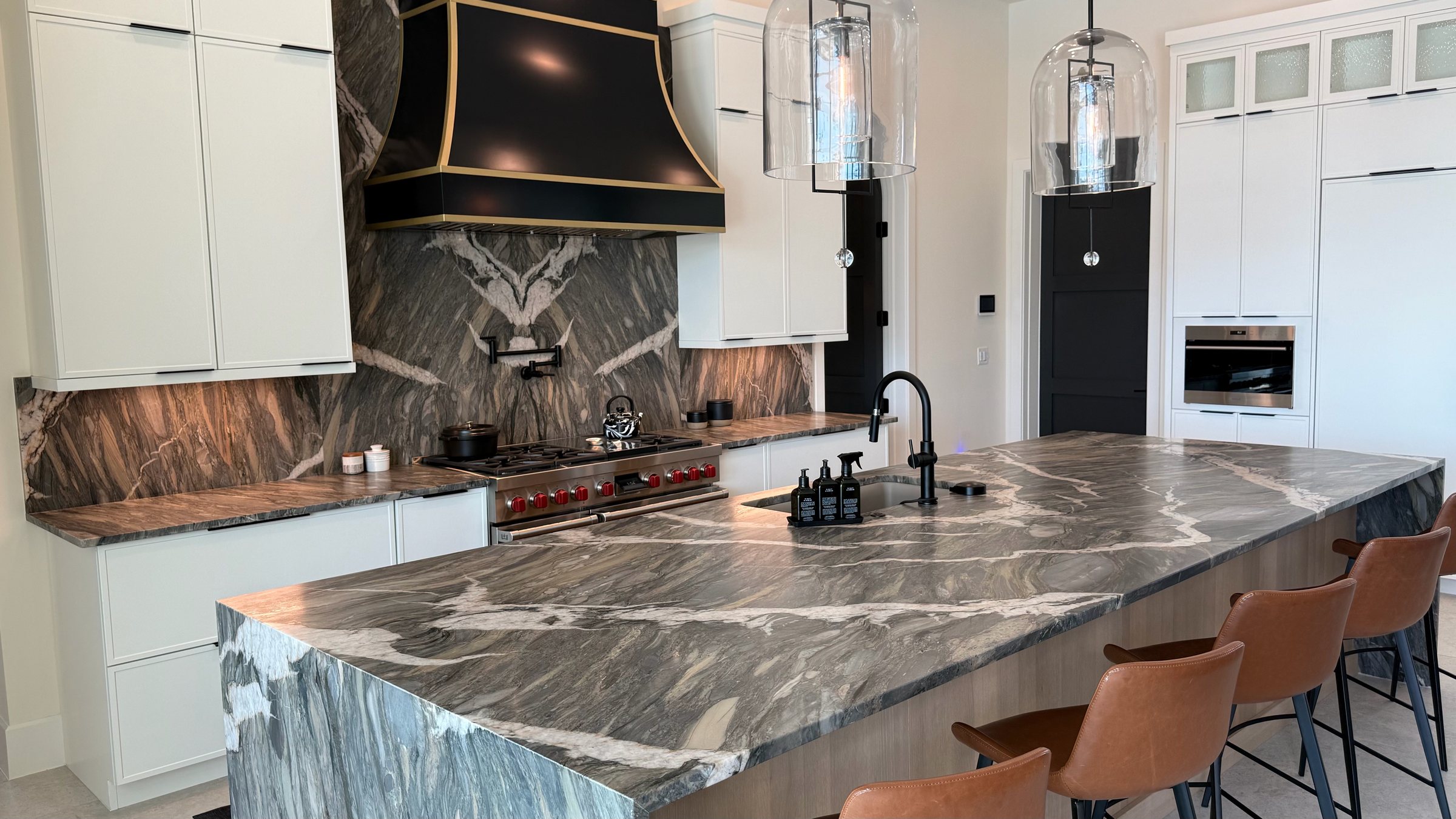
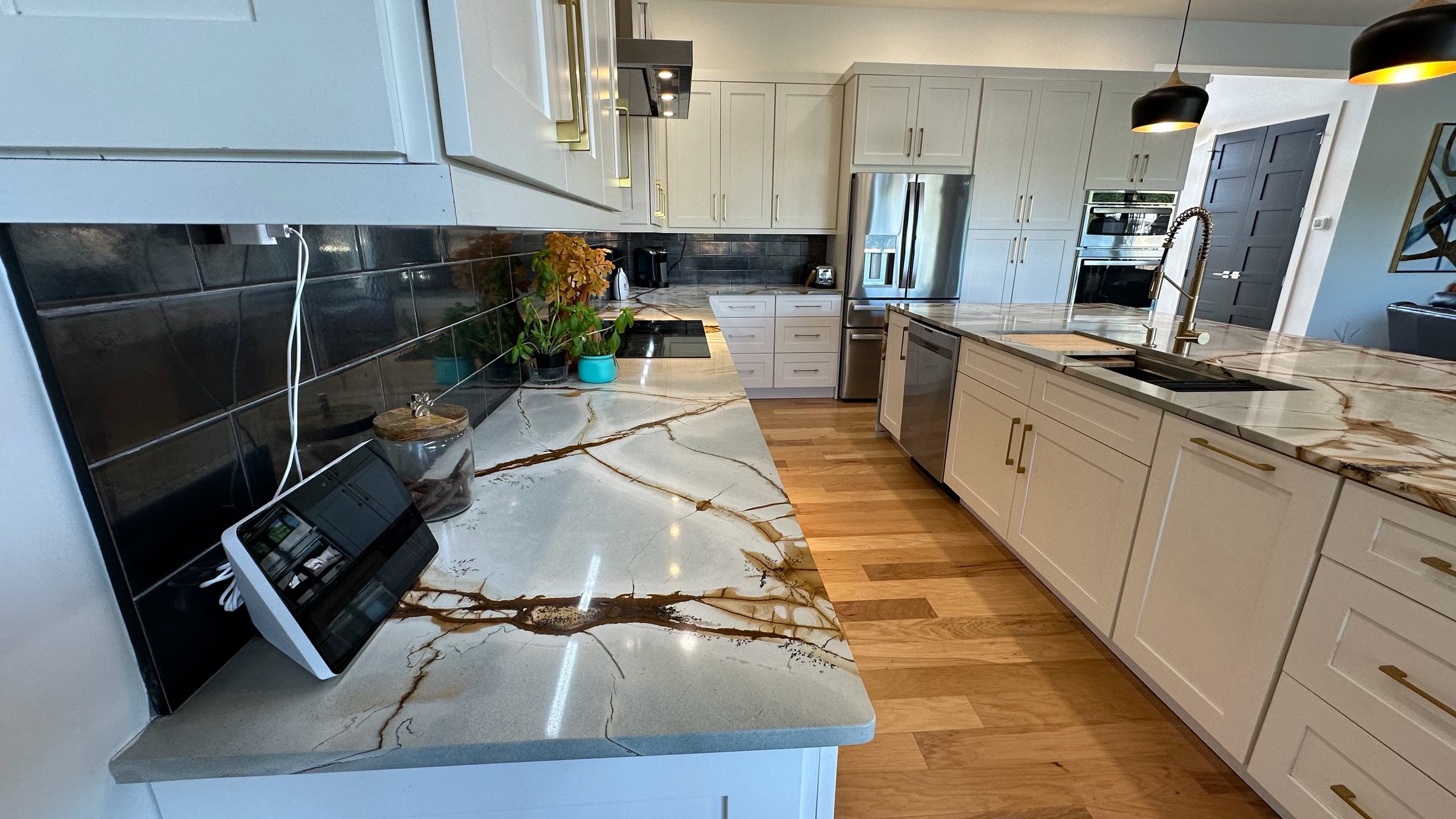
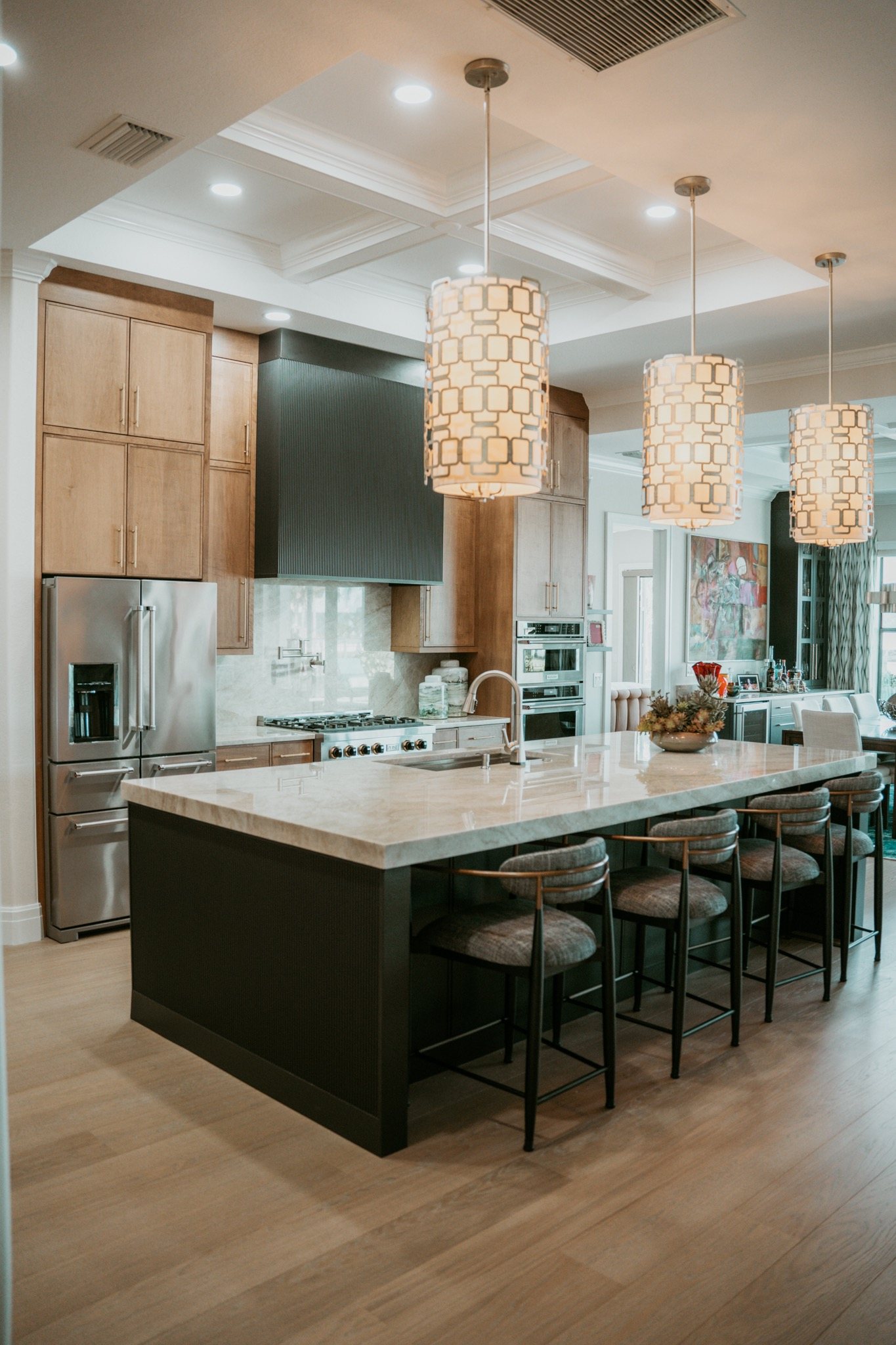
Coastal Kitchen Countertops: Stone for Sun, Humidity and Canal Homes
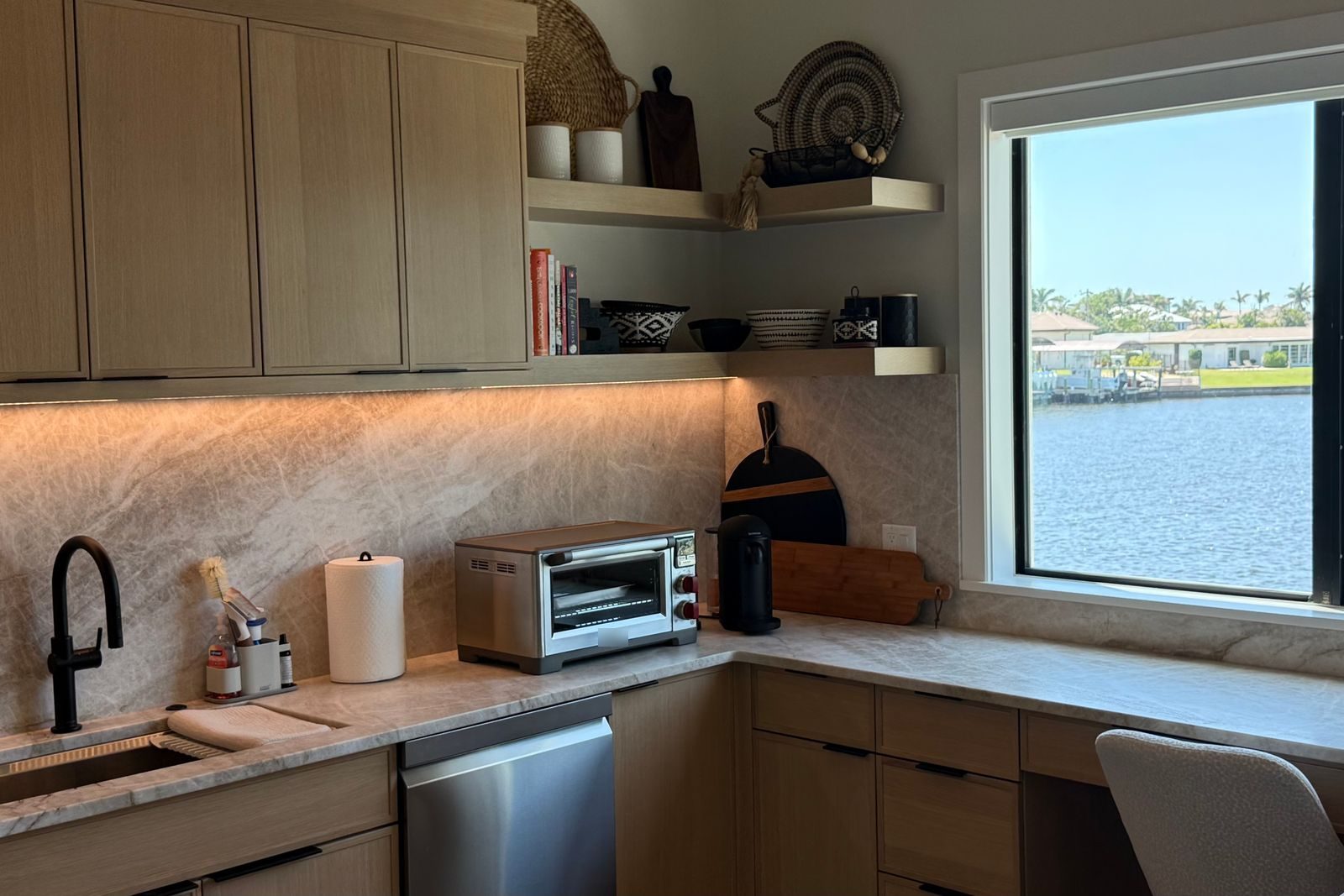
The best coastal kitchen countertops are light in color, easy to wipe down and chosen for how much sun and sand your kitchen really sees. Quartz, quartzite, granite and porcelain all work near the water. The right one comes down to your cooking habits and how much direct light reaches the counter, not to the view out the window.
If you’re planning a kitchen in a waterfront or canal-front home in Southwest Florida, here’s how we’d think it through, including a few things we won’t claim because we can’t back them up.
What Salt Air and Humidity Mean for Your Counters
People ask us constantly whether salt air will damage a stone. We’ve looked for a source we trust that says it does, or says it doesn’t, for granite, quartz or quartzite in a kitchen. We haven’t found one, so we’re not going to tell you either way. If a fabricator promises you a stone is immune to salt air, ask where that comes from.
What we can say plainly is what a waterfront kitchen does demand, and it’s mostly ordinary stuff.
Humidity and moisture
Southwest Florida is humid for much of the year. Water spots, damp towels and wet glasses are part of daily life. Non-porous surfaces such as quartz and porcelain shed water and wipe clean without a second thought. Natural stones such as granite and quartzite are porous to a degree, so they benefit from a good sealer and from wiping spills rather than letting them sit. None of that is unique to the coast, but a humid house gives you more chances to forget it, and a kitchen with a lot of foot traffic from the water gives you more spills to catch.
Sand and grit
If your household comes in from the beach or the dock, grit travels. The Natural Stone Institute’s care guidance notes that sand, dirt and grit are abrasive and can damage natural stone, and it suggests blotting spills rather than wiping, since wiping spreads them. Keep a rinse routine for beach bags and shoes away from the counter, and wipe before you rub.
Sun through big windows
Waterfront kitchens often have large glass and a lot of daylight. Direct, prolonged sunlight can discolor the resin in standard quartz over time, so check your maker’s guide for its sun-exposure terms. That’s a question to settle before you choose a slab if your counter sits in a sunny stretch by a slider.
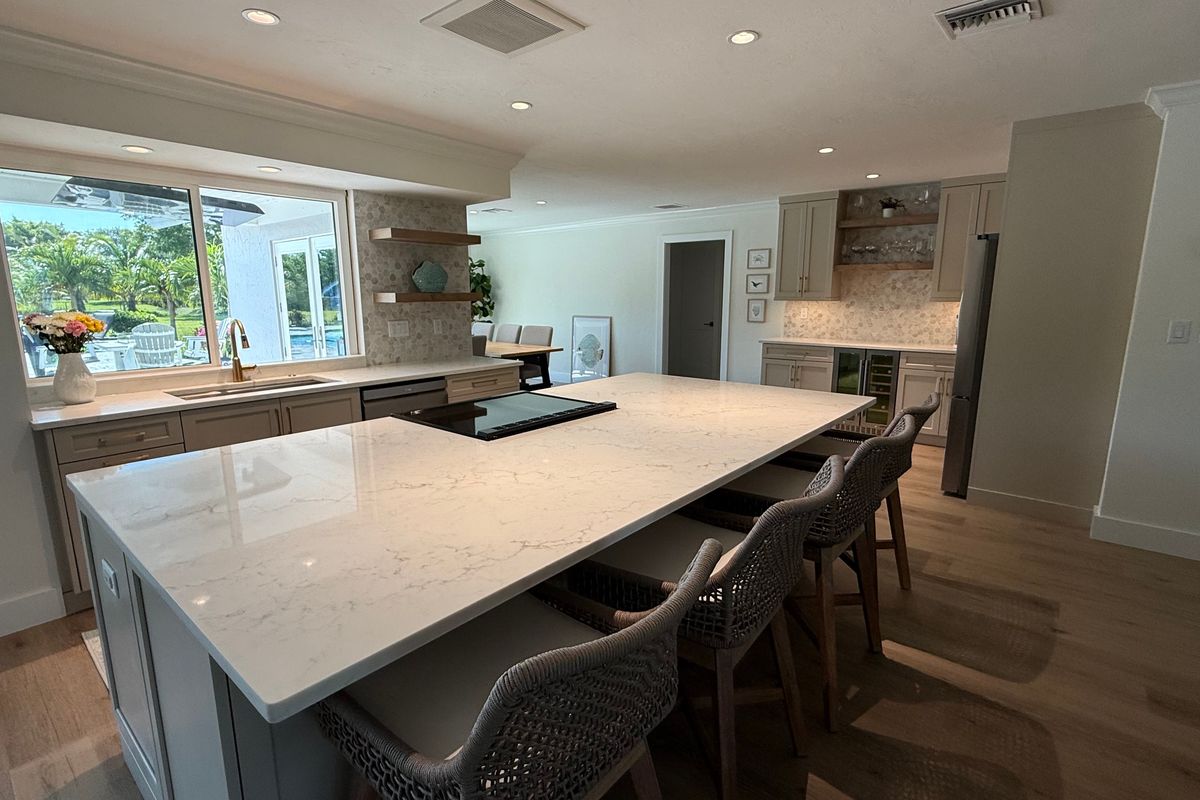
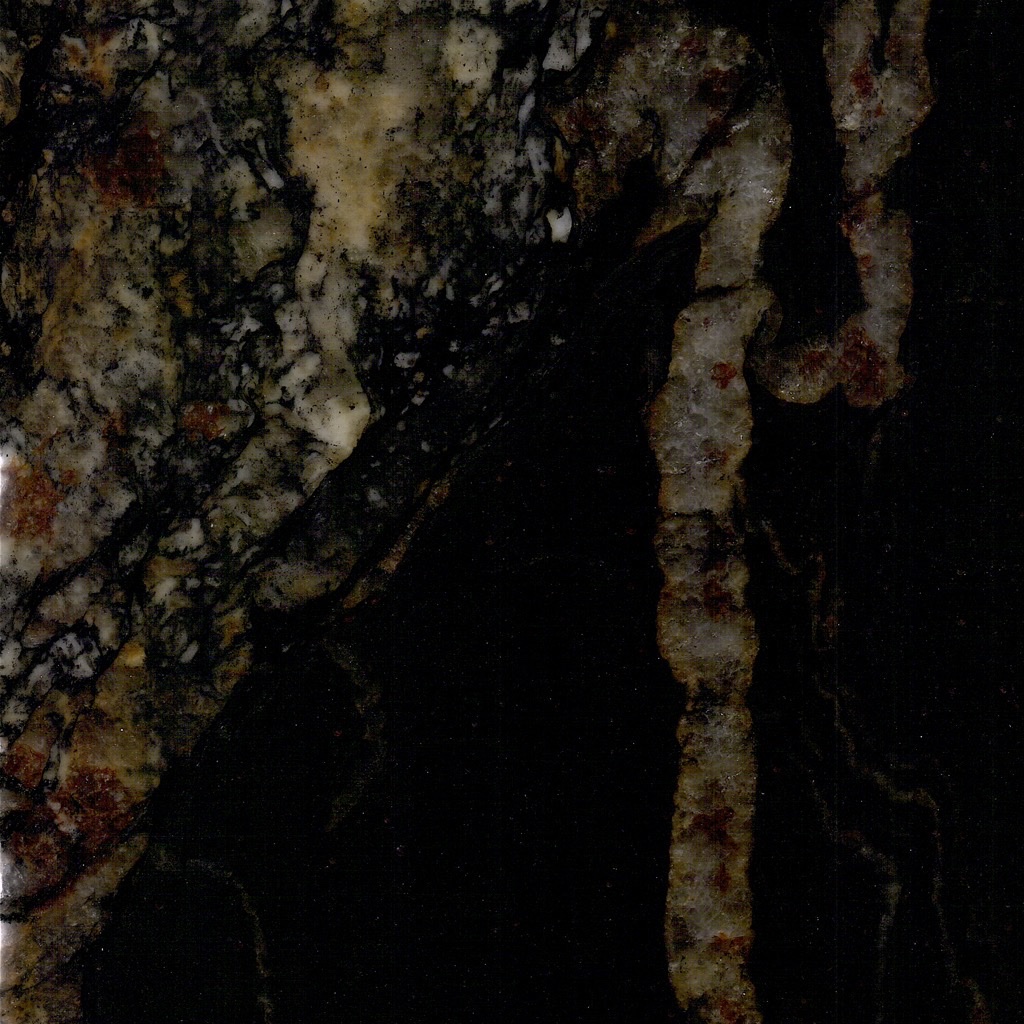
Light, Beachy Colors for Coastal Kitchen Countertops
The look most people want near the water is bright and airy. That usually means a few color families.
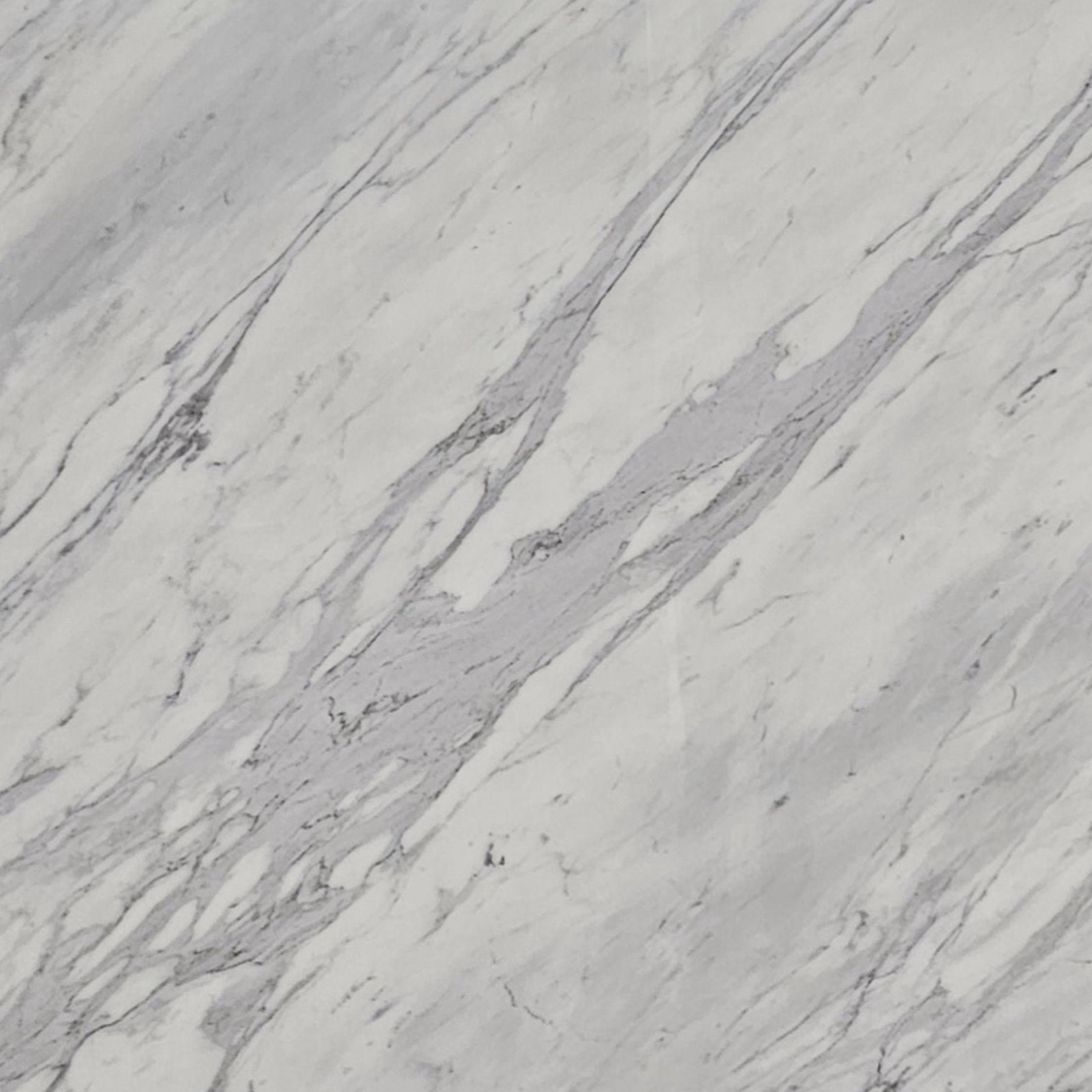
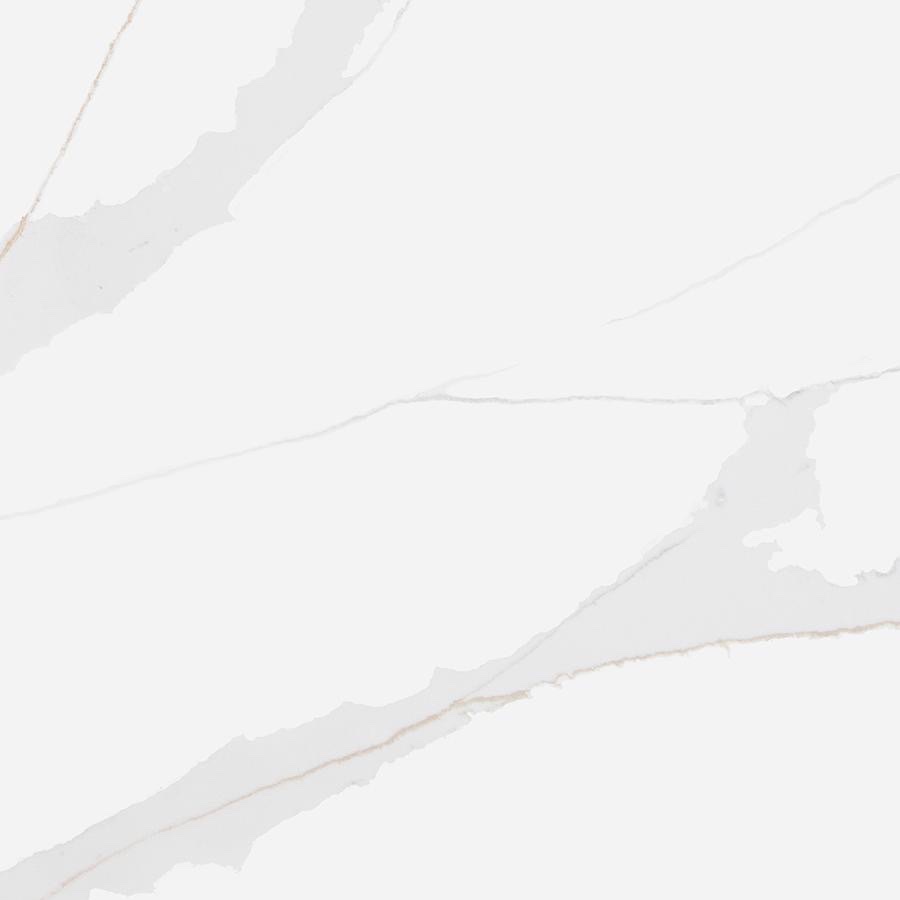
White and soft grey with veining
These are the classic bright choices, and you’ll find them in marble, quartzite, dolomite and quartz. Soft veining keeps a big white island from feeling flat. If you love the look of marble but cook heavily, quartzite or a marble-style quartz is usually the more forgiving path, because marble etches from acids like lemon juice and vinegar and it picks up a patina.
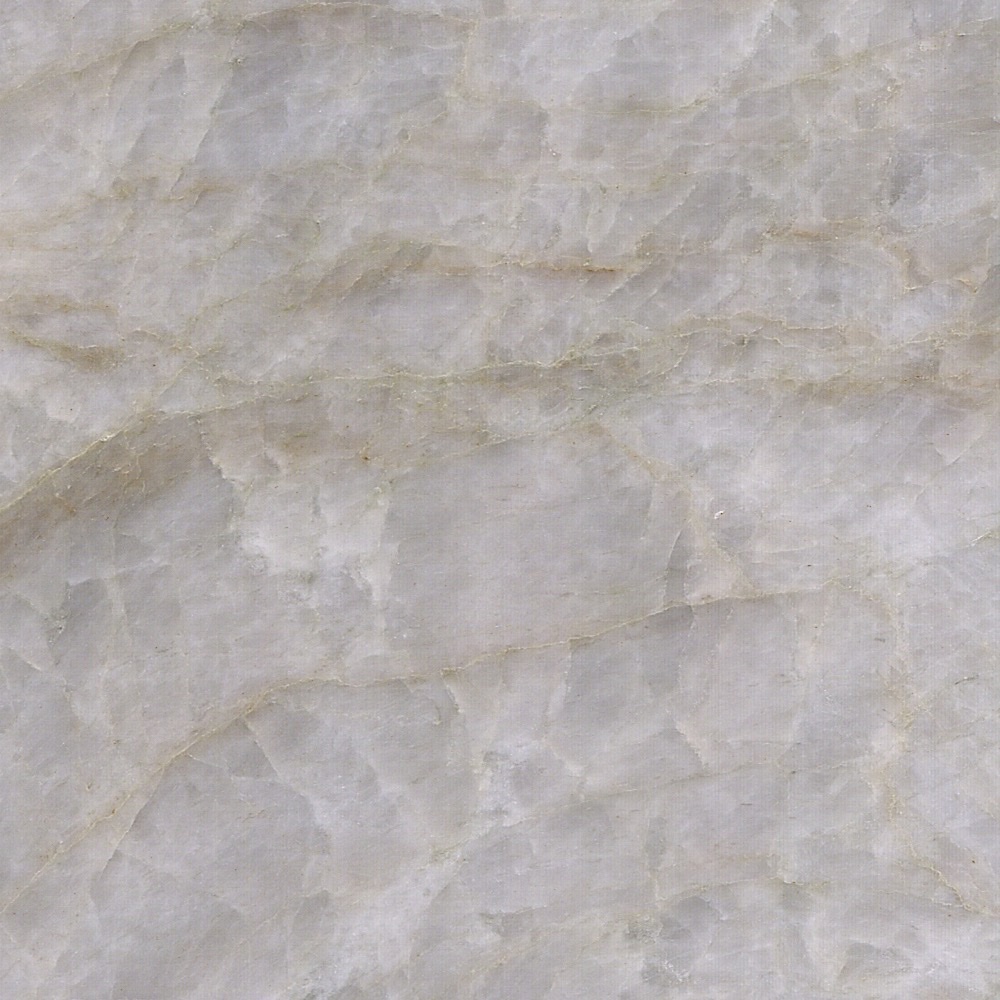
Warm neutrals and sandy tones
Creams, beiges and soft golds suit wood cabinets and natural textures, and they nod to a beach palette without being literal. They also tend to hide the small marks of daily use better than a pure white does.
See the slab in the light you have
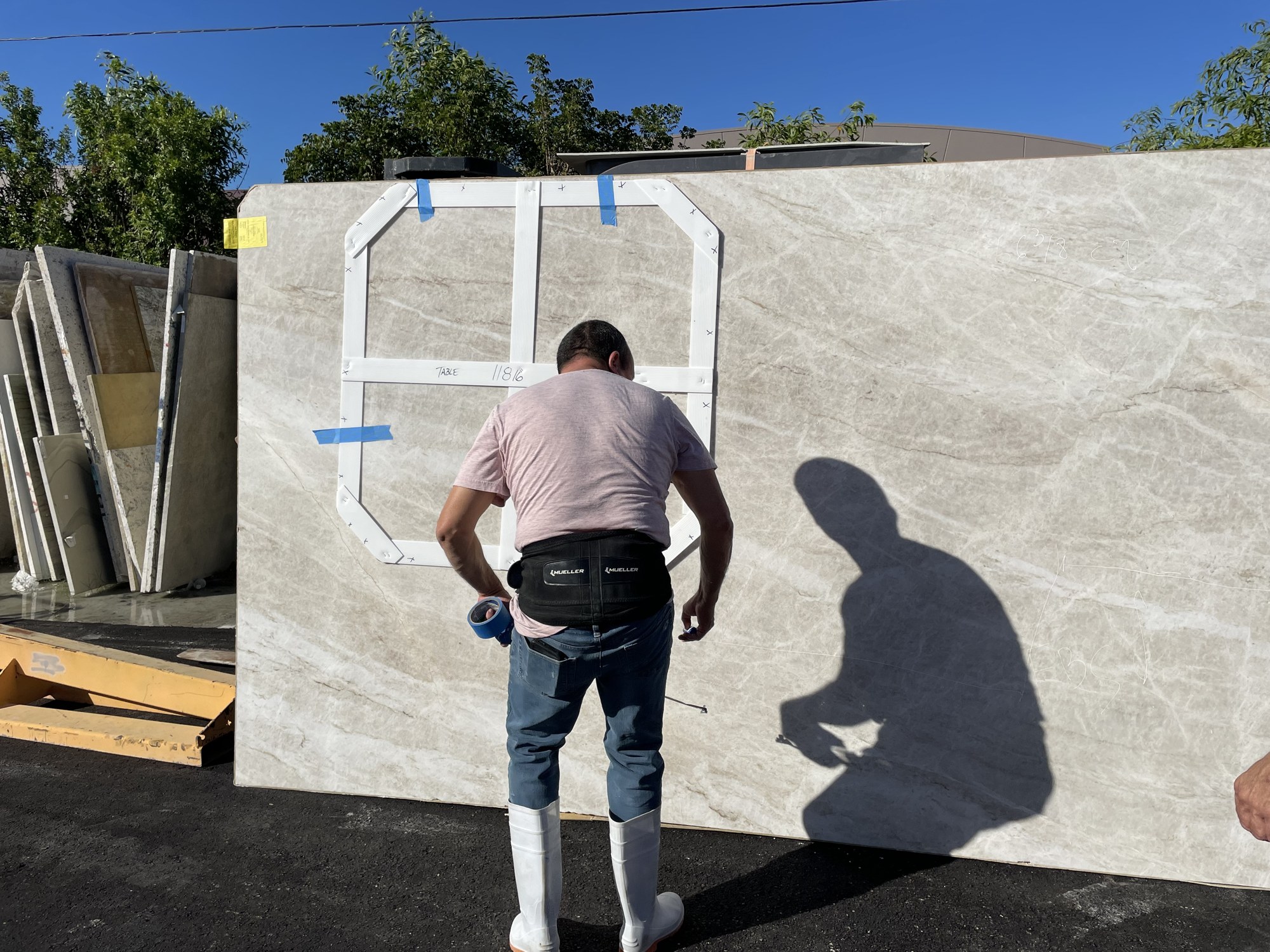
Water reflects light into the room, and the same stone can look warmer or cooler through the day. A slab that looks warm under showroom lights can look different by a bright window. Look at the full slab, ideally in daylight, and bring your cabinet color and flooring along. Our kitchen countertops page walks through how we plan layouts, edges and backsplashes.
Edges, islands and backsplashes
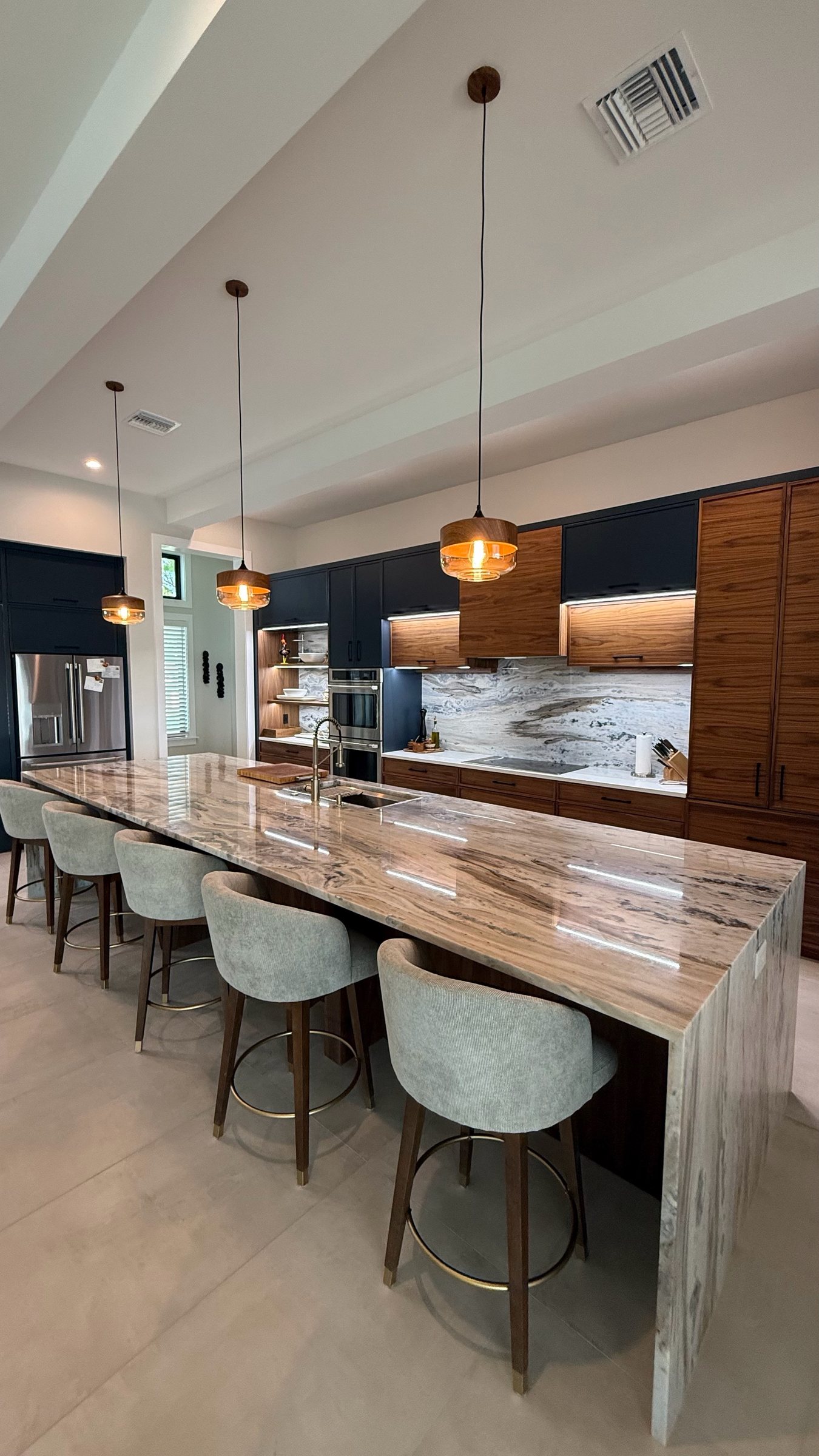
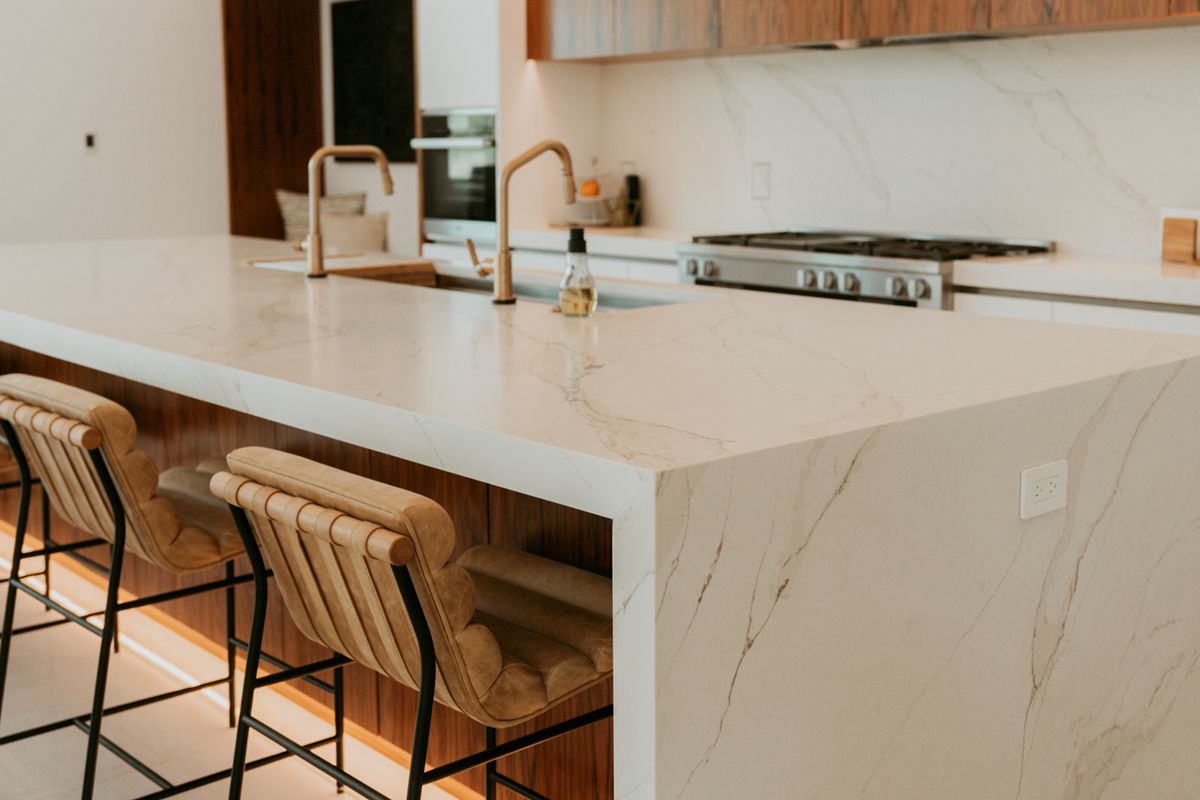
A light kitchen reads cleaner with simple details. A plain, eased edge keeps the focus on the stone, and a backsplash that runs full height in the same slab gives you fewer grout lines to clean behind the range. Long islands are common in open waterfront layouts, and slabs only come in certain sizes, so a long island may need a seam. We review where it falls and how the veining runs before anything is cut.
Quartz, Quartzite, Granite and Porcelain Near the Water
Here’s how each material behaves in a kitchen like this, going only by what we know about the stone itself. For a closer look at two of the most commonly confused options, see our quartz vs. quartzite comparison.
- Quartz: non-porous, no sealing and a very consistent color. It’s a good fit for a bright, busy family kitchen. Use trivets for hot pans, and keep the sun question above in mind.
- Quartzite: a hard natural stone, often with soft, flowing movement in whites, creams and greys. It needs sealing. Because some stones sold as quartzite are softer, ask how the slab was classified and how it should be cared for.
- Granite: natural, heat- and scratch-resistant, with real variation from slab to slab. It’s a solid pick for a lanai or summer kitchen, though some colors can fade after years of direct sun.
- Porcelain and Dekton: made to hold up under UV, and non-porous, so there’s nothing to seal. They suit a kitchen that opens onto a sunny lanai. The trade-off is that a hard knock on an edge can chip it, and slabs are thinner, so edge profiles are more limited.
Marble is the one we’d think hardest about. It’s beautiful in a light kitchen, but etching and scratching show most on a honed or polished white surface, and a waterfront kitchen sees plenty of lemon, wine and cocktails.
Care Habits and Planning a Canal-Front Project
Everyday habits that help
Clean with warm water and a neutral cleaner, or mild dish soap, and rinse and dry afterward. Skip bleach, vinegar and harsh acidic products. Use coasters under glasses, particularly anything with citrus or alcohol, and wipe spills soon. If you close up a seasonal home for part of the year, give the counters a clean before you leave so nothing sits on them while the house is empty.
Getting the project right
In a canal-front home, the practical questions are usually about access and timing. We template at your home and measure the cabinets as they’re installed, then you approve how the slab will be cut, including where seams and veining fall, before we cut. Fabrication happens in-house at our Fort Myers facility, and our installers protect your floors and clean up. From templating to installation usually takes 10 business days. Our post on countertop templating explains what to have ready.
If you’re in Cape Coral, our Cape Coral countertops page covers how we work in that area.
Frequently Asked Questions
Which countertops suit a beach house?
Light stones with soft veining or warm sandy tones look right in most beach-style kitchens. White and grey quartzite, marble-style quartz and calm granite all work. Pick by how you use the kitchen, then confirm the color on the full slab.
Does salt air damage granite or quartz?
We haven’t found a source we trust that settles it either way, so we won’t claim it. What we do know is that sun, sand, humidity and acids affect how a counter holds up day to day. Quartz and granite each have their own care needs, and we’ll go through them for the slab you choose.
What color countertops suit a coastal kitchen?
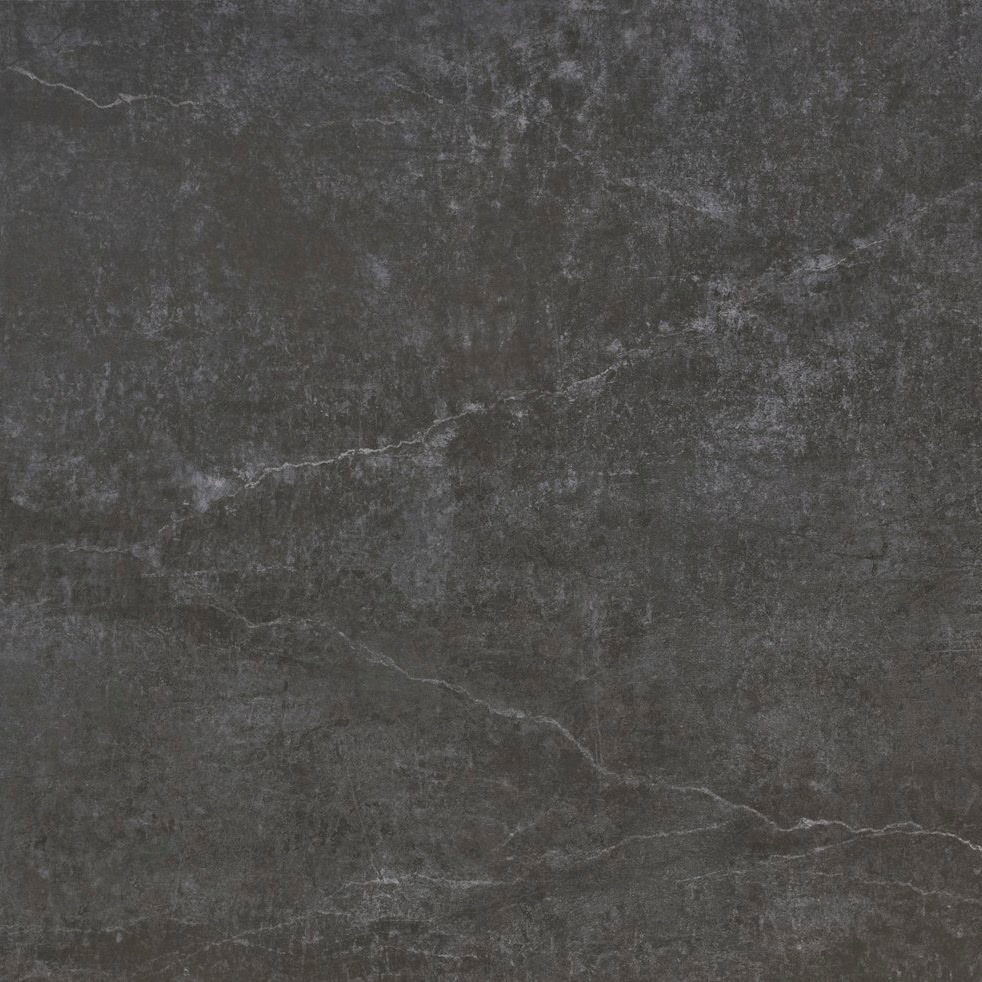
Soft whites, light greys and warm neutrals suit most. Pair them with natural wood or a calm backsplash. Darker stones can work as a bold island, though they show water spots and dust more than lighter ones.
Which countertops work best near the water?
Non-porous surfaces such as quartz and porcelain are the easiest in a humid kitchen. Granite and quartzite work well too when they’re sealed and cleaned properly. Porcelain and granite are the stronger picks where the counter sees full sun.
Thinking about a waterfront kitchen? (239) 362-0404 will get you a conversation about slabs and layouts, and you can request an estimate to start with your cabinet plans.