

Quartz Vanity Countertops: Are They Right for Your Bathroom?
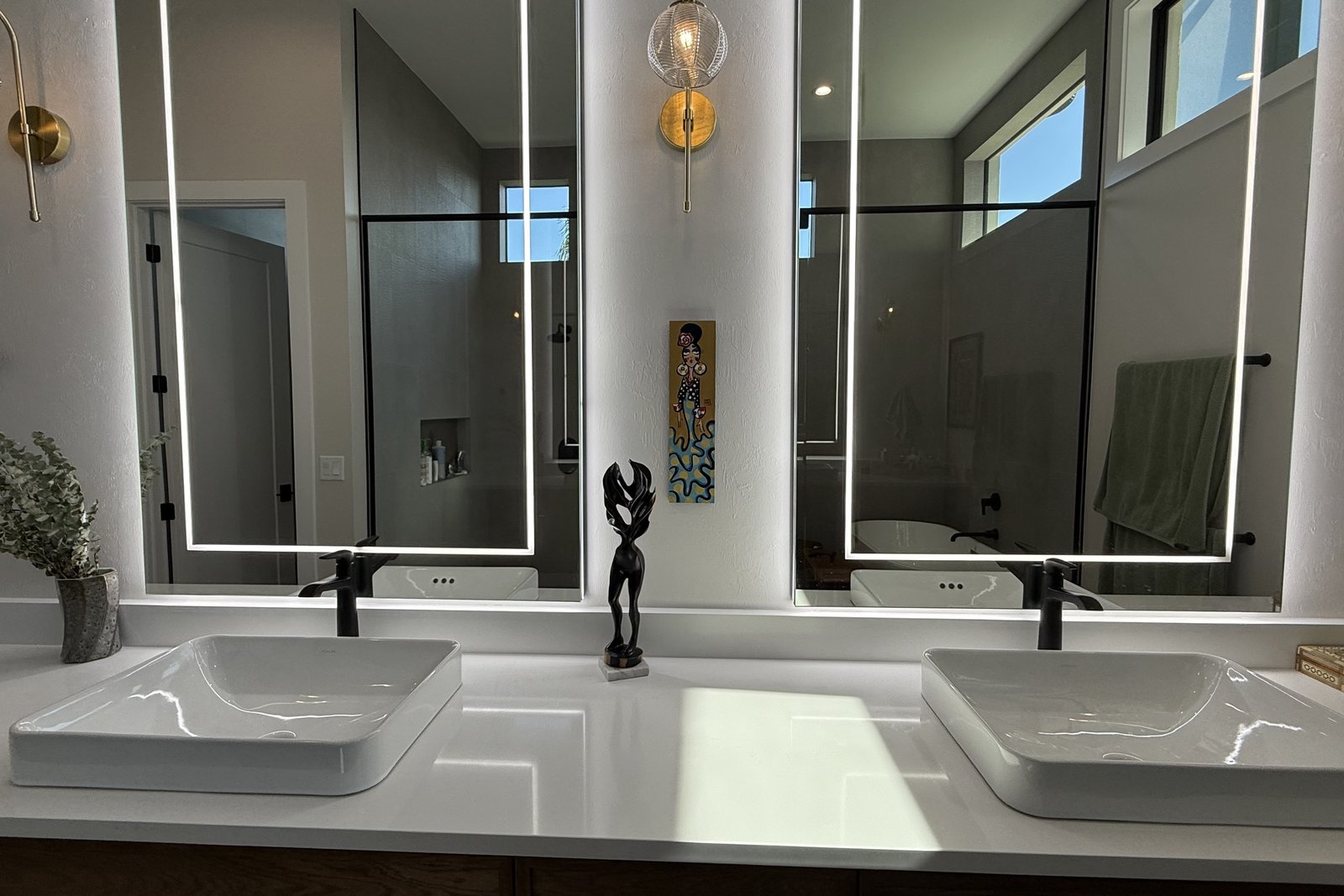
Quartz is a very good choice for most bathroom vanities. Quartz vanity countertops are non-porous, so toothpaste, soap and cosmetics stay on the surface, and there’s no sealing schedule to remember. The trade-offs are heat and direct sun, and both are easy to plan around. Here’s how quartz behaves in a bathroom, where the details matter, and when a different stone is the better call.
Why Quartz Vanity Countertops Work in a Bathroom
Moisture and daily mess
Quartz is engineered: manufacturers combine ground natural quartz with resin and pigment and press the mixture into slabs. Because the result isn’t porous, steam, water around the faucet and spilled products don’t soak in. That’s a real advantage in a humid Southwest Florida bath, where a vanity gets wet every day.
Cambria, one of the quartz lines we fabricate, says its surface never needs sealing, polishing or reconditioning, and tells owners not to apply sealers or other treatments to it. So the sealing chore that comes with granite or marble simply isn’t part of owning a quartz vanity.
Color that matches from sink to sink
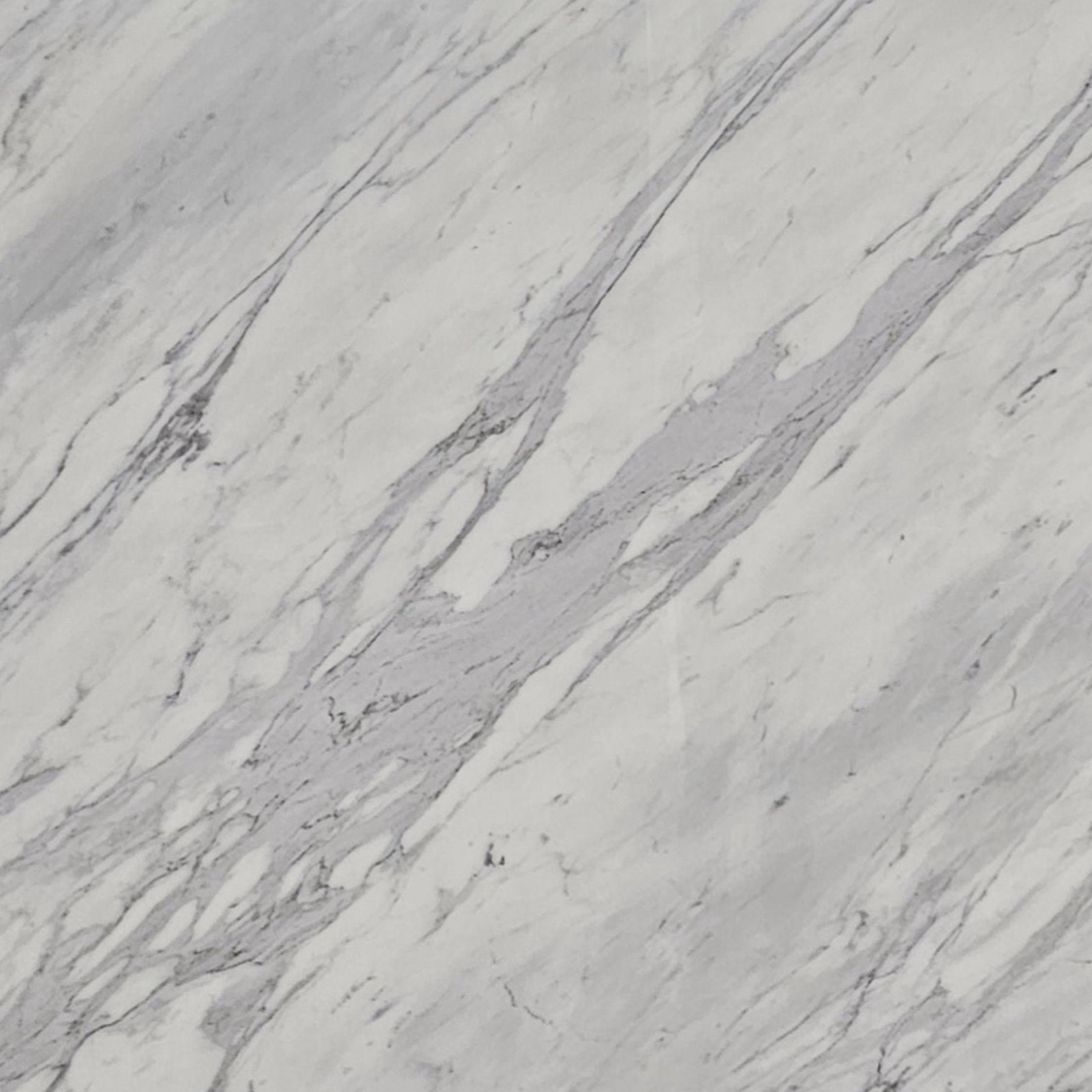
Quartz color is predictable. What you approve on the slab is very close to what lands in your bathroom, which helps when a primary bath and a guest bath should look like they belong together. Many quartz lines also copy a Carrara-style white, so you can get the look of marble with fewer worries. If you’re still deciding on materials, our guide to the best countertop for a bathroom vanity compares the options side by side.
Hot Tools, Cosmetics and Cleaners
Curling irons and flat irons
This is the one place quartz asks for a habit. The resin that holds the stone together can scorch or discolor under direct, high heat. Cambria recommends a closed-weave hot pad or solid trivet under hot pots and pans, and a hot styling tool is the same kind of risk in a smaller package.
Our advice is simple. Set a curling iron or flat iron on a heat-safe mat or tray, never straight on the stone, and let it cool before it goes back in the drawer. Check your quartz maker’s care guide for anything specific about hair tools, since we don’t want to guess at a number for you.
Makeup, toothpaste and daily cleaning
Because liquids stay on top, most bathroom mess wipes away. Warm water, a soft cloth and a little mild soap handle daily cleaning, which is the method Cambria itself describes. Wipe up spills when you notice them instead of letting them dry, and use a non-abrasive cleaner for dried-on spots.
What to keep away from the vanity is the harsh stuff. Cambria warns against bleach, oven cleaners and strong alkaline or acidic products, and that includes a few bathroom cleaners people grab without thinking. Read the label before you spray anything on the stone. Our post on how to clean quartz countertops covers the routine in more detail.
Sink Cutouts, Edges and Splashes
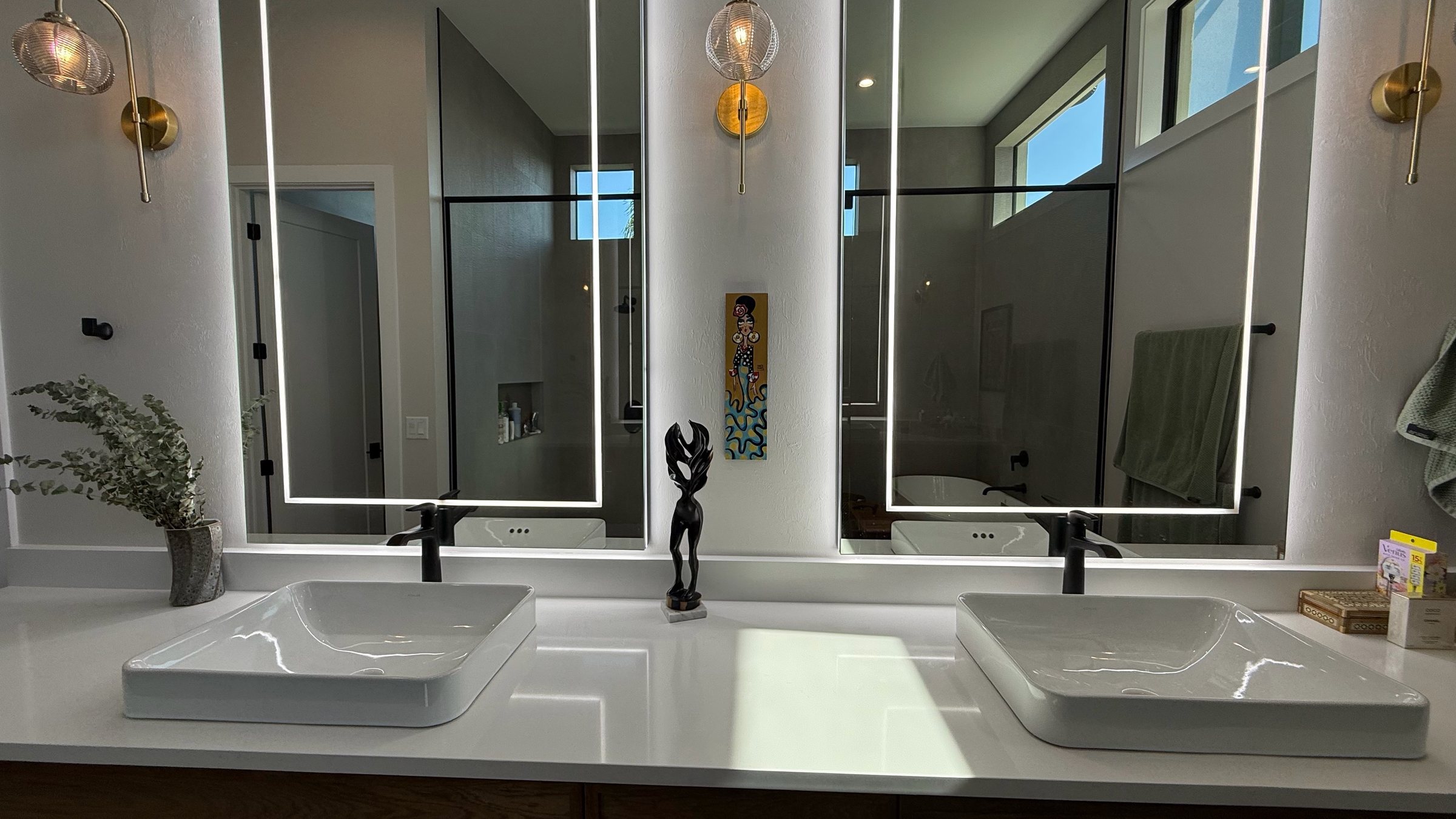
A vanity top is smaller than a kitchen counter, but the cutouts are where details go wrong. Undermount, vessel and integrated sinks each need a different cutout, and the faucet decides how many holes the stone needs. Bring the sink model and the faucet spec sheet to the template visit so the cutouts are planned from real dimensions.
Edges come next. Quartz comes in thicker slabs with plenty of edge options, from a clean eased edge to a thicker built-up look. Remember that a hard knock on a corner, like a heavy bottle dropped on the edge, can chip quartz, and a chip is harder to hide on a plain color than on a busy pattern. Rounder edge profiles on a vanity people lean against and bump into every morning are worth a look.
Double vanities deserve a note of their own. A long run can need a seam, so we review the layout with you before cutting to decide where it falls. On a plain quartz color a seam usually reads as a thin line, and on a light color it can show more, so this is a good time to ask questions.
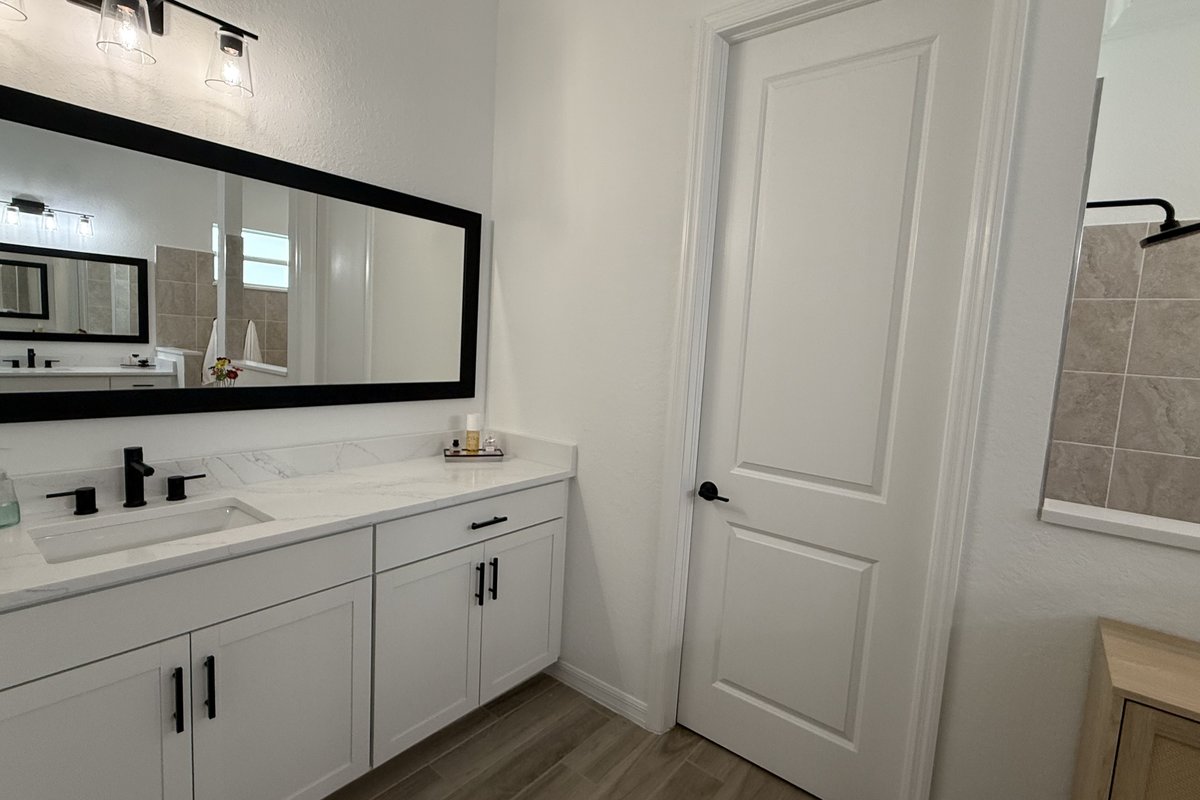
Splashes
A short backsplash and side splashes keep water off the wall and drywall, and they protect the paint where toothbrush holders and soap dispensers live. Cut from the same slab, they carry the color across so the vanity looks like one piece.
You can also run the quartz up the wall as a full-height backsplash behind the sink. That means fewer grout lines to clean, and we confirm the height against your mirror and outlet locations before fabrication. Tell us early if you want it, because a taller backsplash changes the layout.
If you’re in Naples, our Naples countertops page explains how we serve that area.
Planning around the fixtures you already own
Most vanity surprises come from fixtures chosen after the stone. A wall-mounted faucet, a widespread set and a single-hole faucet all need different cutouts, and a vessel sink changes how high the faucet has to sit. If you haven’t picked the sink and faucet yet, choose them before templating, because stone can’t be changed once it’s cut.
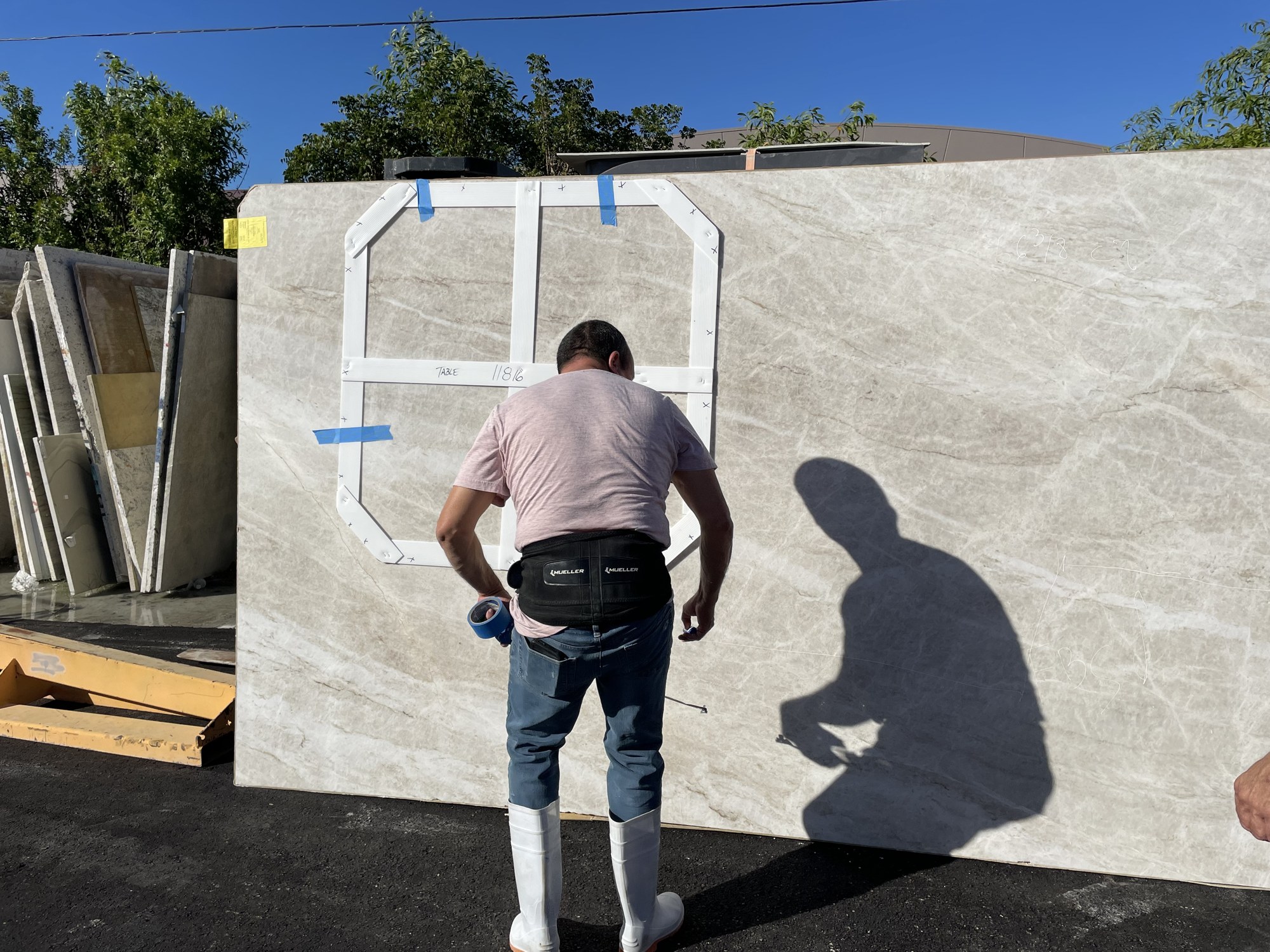
Think about the wall, too. Bathroom walls are rarely perfectly square, so a template taken at your home follows the vanity as it’s actually installed. That’s one more reason to order stone from a measurement and not from a drawing.
When Another Stone Suits Better
Quartz isn’t the answer for every bath. Here’s where we’d steer you elsewhere:
- Direct sun. Most quartz manufacturers don’t recommend standard quartz for prolonged direct sunlight, because UV can discolor the resin over time. For an outdoor shower or open cabana, porcelain, Dekton or a natural stone is the usual pick.
- The real marble look. If you want genuine veining and a living patina, marble is the classic primary-bath choice. It’s softer and etches from acids, so it suits someone who accepts that and reseals it.
- One-of-a-kind patterns. Granite and quartzite give you natural variation that quartz can only imitate, and both are sealed periodically.
Our bathroom countertops page lays out all of these choices for single, double and custom vanities, and our quartz countertops page shows the color range. Slab, edge, cutouts and layout all shape the estimate, so the useful step is to look at real slabs together.
If you lean toward natural stone, the Natural Stone Institute’s sealing guide says that in many cases it makes sense to seal granite and marble with a quality sealer, and that sealed stone becomes more resistant to everyday dirt and spills, not immune. Every quartz line also publishes its own care guide, and the details can differ, so check the one for the color you pick.
Frequently Asked Questions
Is quartz good for a bathroom vanity?
Yes, for most bathrooms. It’s non-porous, keeps a consistent color, and cleans with warm water and mild soap. Keep hot tools off it and avoid direct sun.
Can a hot curling iron damage quartz?
It can. The resin in quartz can scorch under direct high heat, so set hot tools on a heat-safe mat or tray and let them cool first.
Can quartz be used for a double vanity?
Yes. A long double vanity may need a seam, and we review where it falls and how the pattern flows before anything is cut. Tell us before the layout review whether you’d rather have the seam between the sinks or off to one side.
Does quartz need sealing in a bathroom?
No. Cambria says its quartz never needs sealing and tells owners not to apply sealers. Natural stones like granite, quartzite and marble are the ones that need it.
Planning a vanity top and not sure about edges or cutouts? Call (239) 362-0404 to talk it through, or request an estimate and bring your sink and faucet details.