

Best Countertop for a Bathroom Vanity in a Humid Florida Home
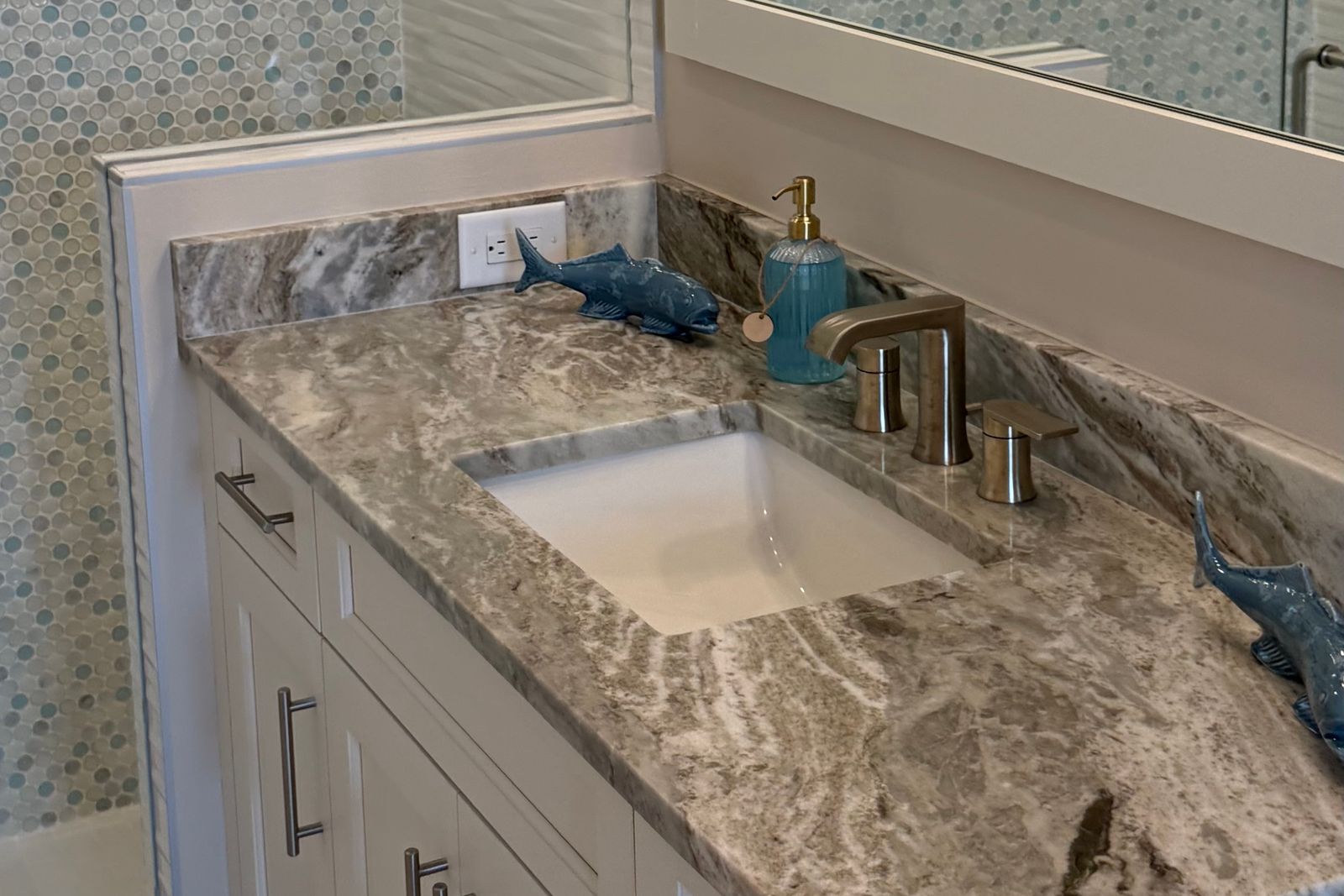
There isn’t one best countertop for a bathroom vanity, because the right stone depends on who uses the room and how. A busy family bath needs something forgiving. A primary bath that gets careful use can handle a softer, more dramatic stone. Below, we match each material to the way you actually use the space.
Quartz, granite, quartzite, marble and porcelain all work on a vanity. They just ask different things of you once the top is installed.
What a Vanity Top Has to Handle
A vanity top is small, but it takes more daily abuse for its size than almost any other surface in the house. Before you compare stones, it helps to know what you’re asking the surface to survive.
Humidity and standing water
Every shower puts moisture in the air, and in Southwest Florida the air is already humid before you turn the water on. Water pools around the faucet, behind the sink and along the backsplash line. A top that sheds water and wipes dry fast makes life easier. That’s why the question of whether a stone is porous comes up so often with bathrooms.
Cosmetics, toothpaste and soap
Foundation, hair dye, perfume, nail polish remover and toothpaste all end up on the counter sooner or later. Some are oily, some are acidic and some are simply hard to see until they’ve sat for a day. If your household has a few people getting ready at once, expect more of this, not less.
The cleaners you’ll use
Most surface damage in a bathroom comes from what we clean with, not from what we spill. The Natural Stone Institute’s care guidance says products with lemon, vinegar or other acids can dull or etch calcareous stones, which is the family marble belongs to. It recommends a neutral cleaner, stone soap or mild dish detergent with warm water, and a squeegee after use in wet areas to cut down on soap scum. Whatever material you pick, that routine is a good habit.
Comparing the Materials for a Vanity
Quartz
Quartz is engineered, and its surface isn’t porous, so water, toothpaste and makeup stay on top where you can wipe them off. It never needs sealing, and the color on the slab you approve is very close to the color you get in the bathroom. That’s a real advantage if you have two bathrooms that should match.
The trade-offs are mostly heat and sun. The resin in quartz can scorch under direct high heat, so a curling iron left on the counter is the thing to watch. For a full rundown of how quartz lives day to day, our post on the pros and cons of quartz countertops goes further.
Granite and quartzite
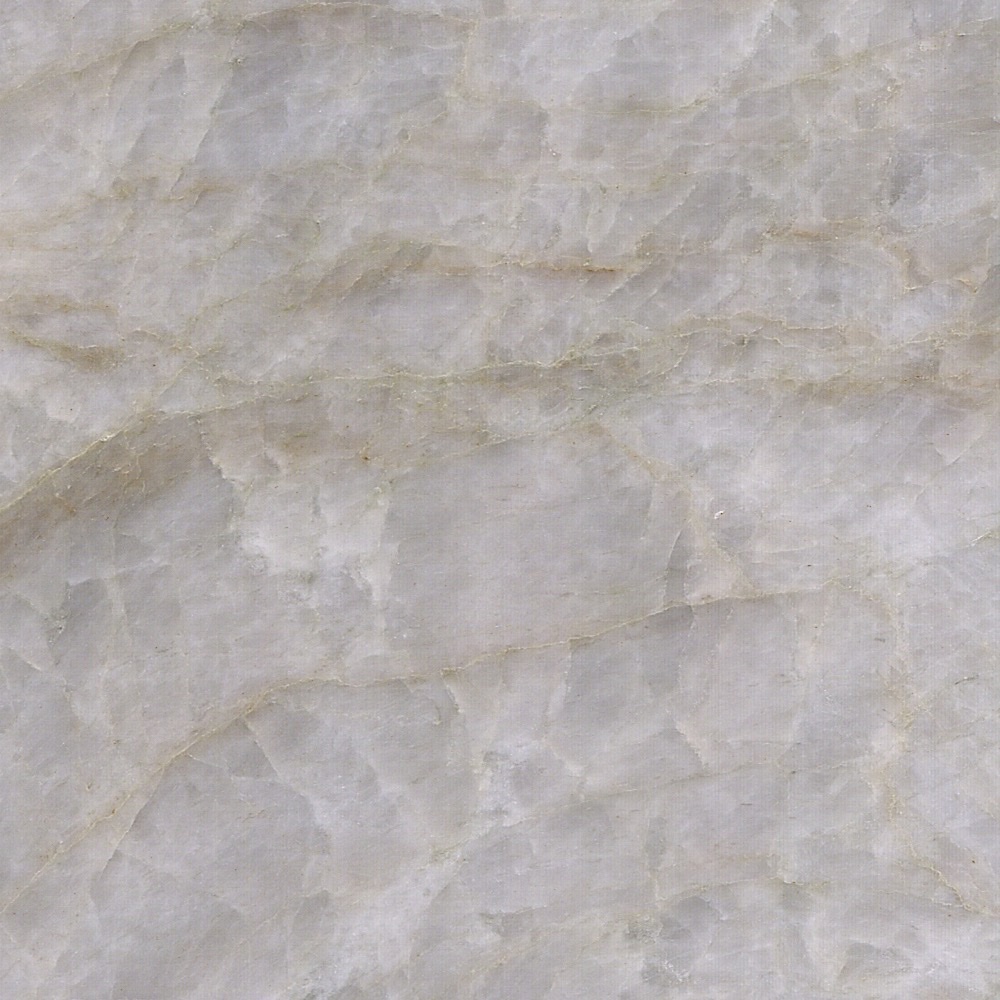
Both are natural stone, so every slab is one of a kind. Granite is hard and stands up to daily wear. Quartzite is also very hard and often has soft, flowing movement that looks like marble. If you want real stone in the bathroom without the fussiness of marble, these two are where we usually point people who want real stone.
Sealing is the open question. The Natural Stone Institute says most granite countertops don’t strictly need to be sealed, and also says that in many cases it makes sense to seal marble and granite with a quality sealer, because a sealed stone resists everyday dirt and spills better. Quartzite is porous, and we treat it as a stone that wants sealing. We’ll tell you what we’d do with the specific slab you pick.
Marble
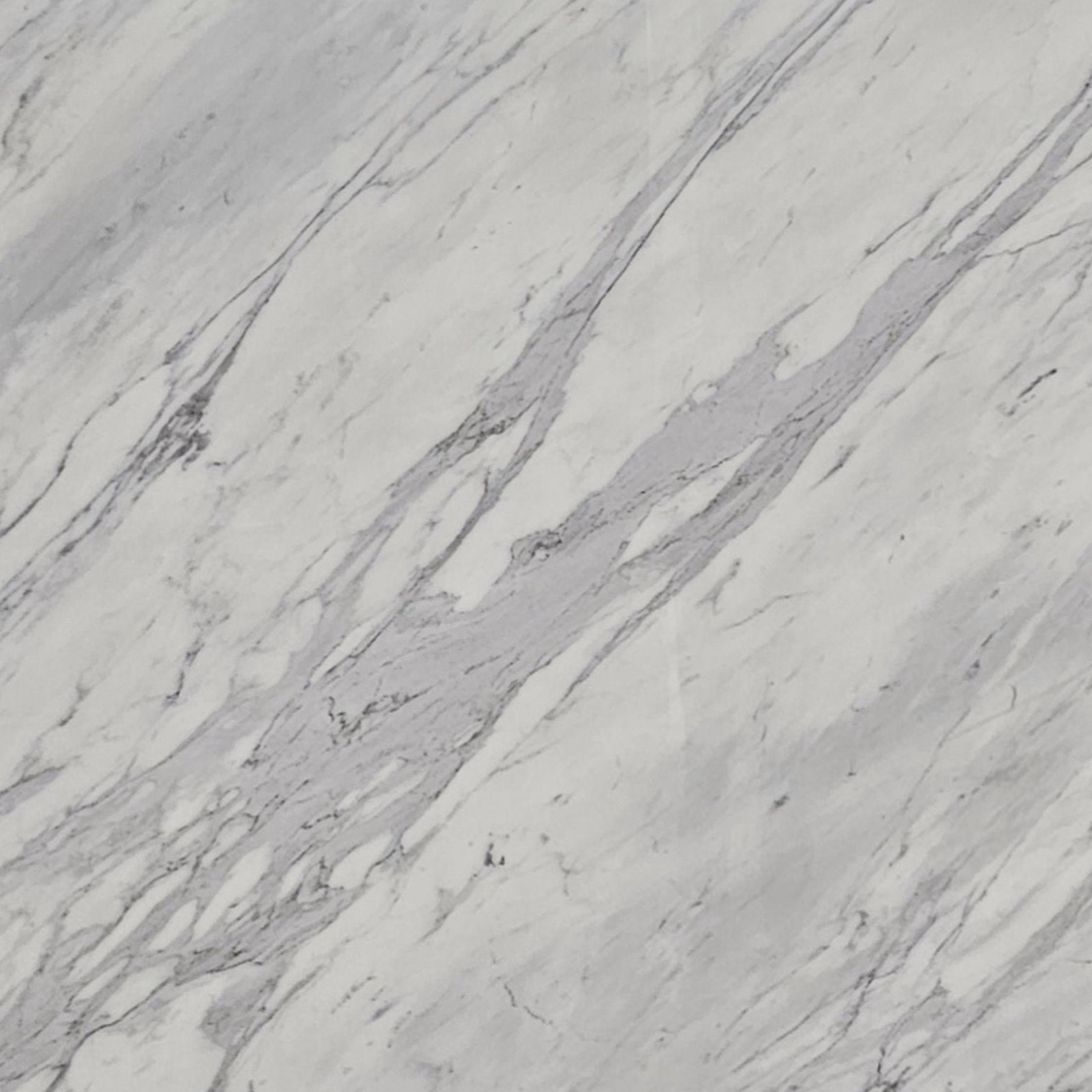
Marble gives you the look that people picture when they imagine a spa-like bath. It’s also the softest of the natural stones we fabricate, and it reacts to acids. Lemon, vinegar and some household cleaners leave dull marks called etching, which are changes to the surface, not stains. Fine scratches show up over time too.
A vanity is actually one of the better places for marble, since a bathroom sees less raw cooking than a kitchen does. The catch is the products on the counter. If you’re the person who sets a perfume bottle down without thinking, put a small tray under it. If you’d rather not think about any of this, marble probably isn’t your stone, and we’ll say so. Our look at white marble bathroom design shows what the finished room can look like.
Porcelain and Dekton
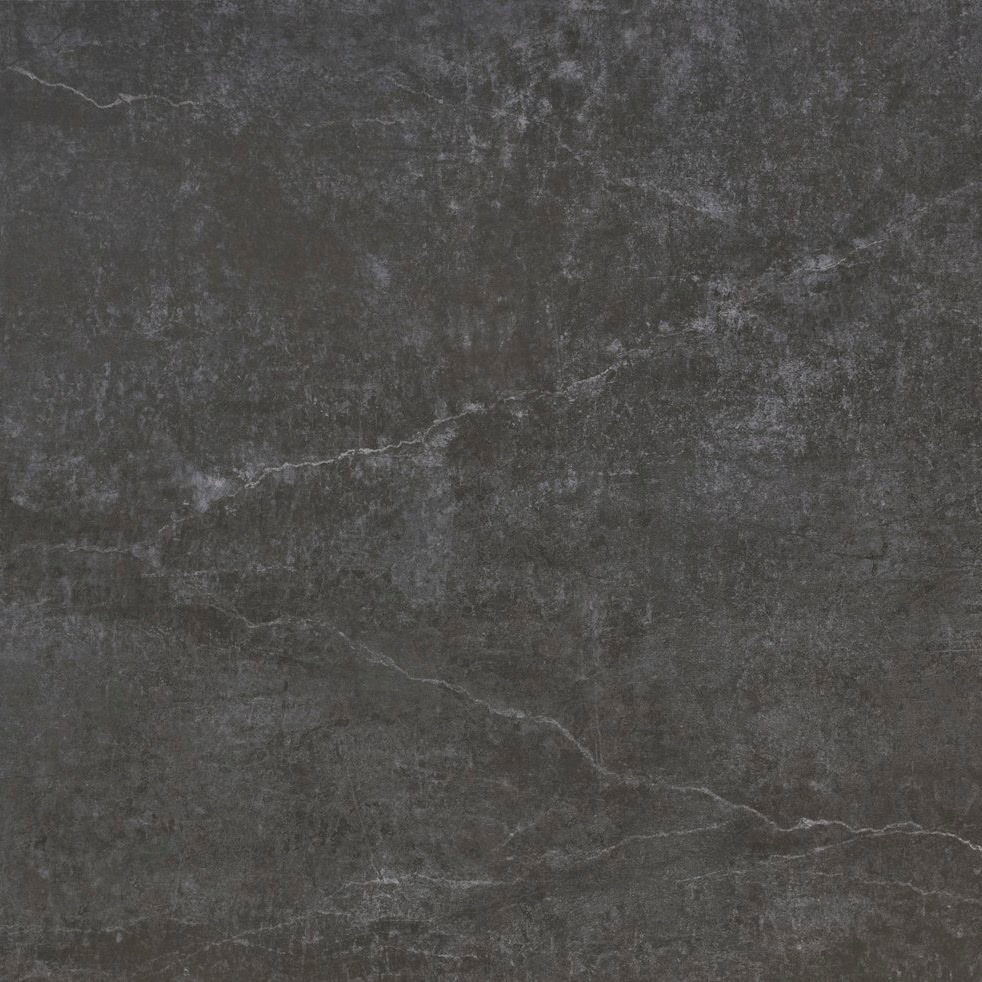
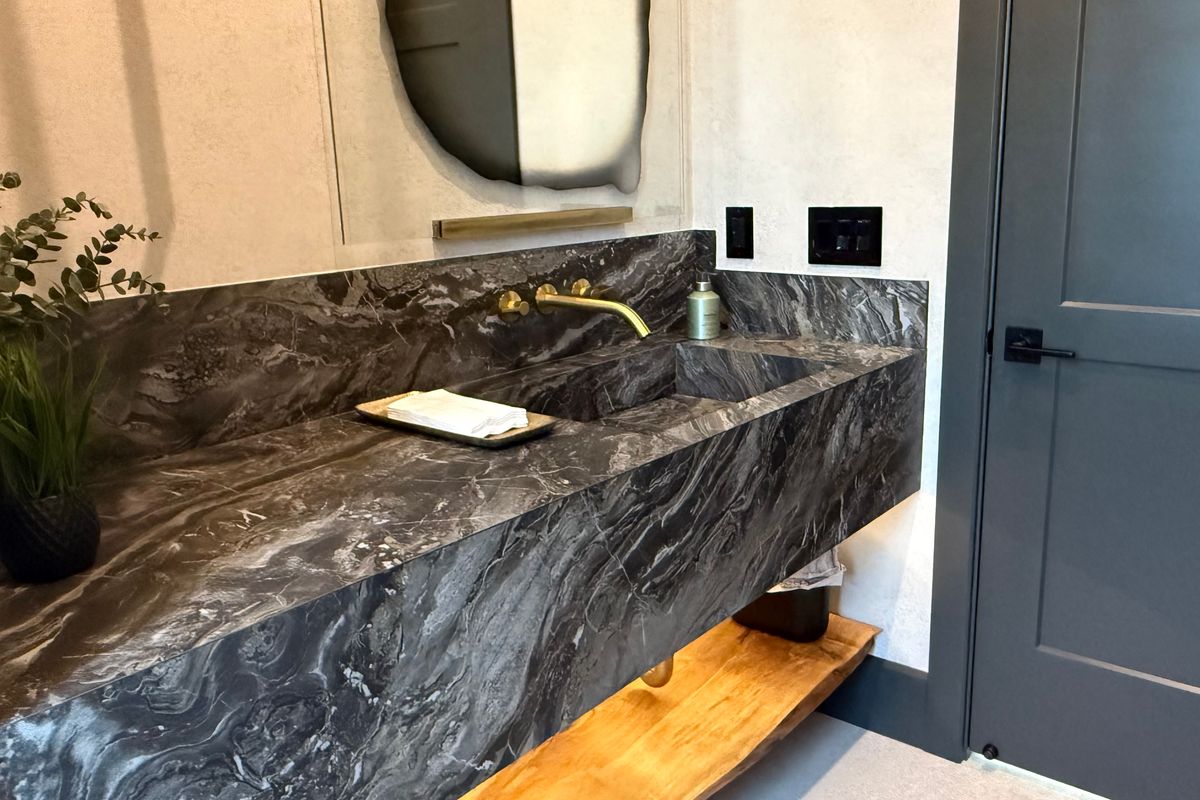
Porcelain and Dekton are manufactured from minerals fused under heat. They’re non-porous, so nothing soaks in, and nothing needs sealing. They handle heat and scratches well. The trade-offs are edges and detail. Slabs are often thinner than natural stone, so an edge is usually mitered to look thicker, and a hard knock on a corner can chip it. Ornate edge profiles usually aren’t practical.
Porcelain suits a modern bath with clean lines. On many slabs the pattern sits on the surface rather than running through the body, so we plan the sink cutout and edge before cutting.
Choosing the Best Countertop for Your Bathroom Vanity
Instead of asking which material wins, ask which of these sounds like your bathroom.
- Busy family bath, kids, lots of products: quartz or porcelain. Both are non-porous and easy to wipe, and neither asks you to remember a sealing schedule.
- Guest bath that rarely gets used: almost anything works. This is a good place to try a bolder stone you’d hesitate to use in the kitchen.
- Primary bath where you want real stone: granite or quartzite for natural pattern with good hardness, or marble if you accept etching and patina and will keep up with a tray and neutral cleaner.
- A bathroom closed up for part of the year: if you’re a seasonal resident, a low-fuss surface means you won’t come back in the fall to a top that needs attention.
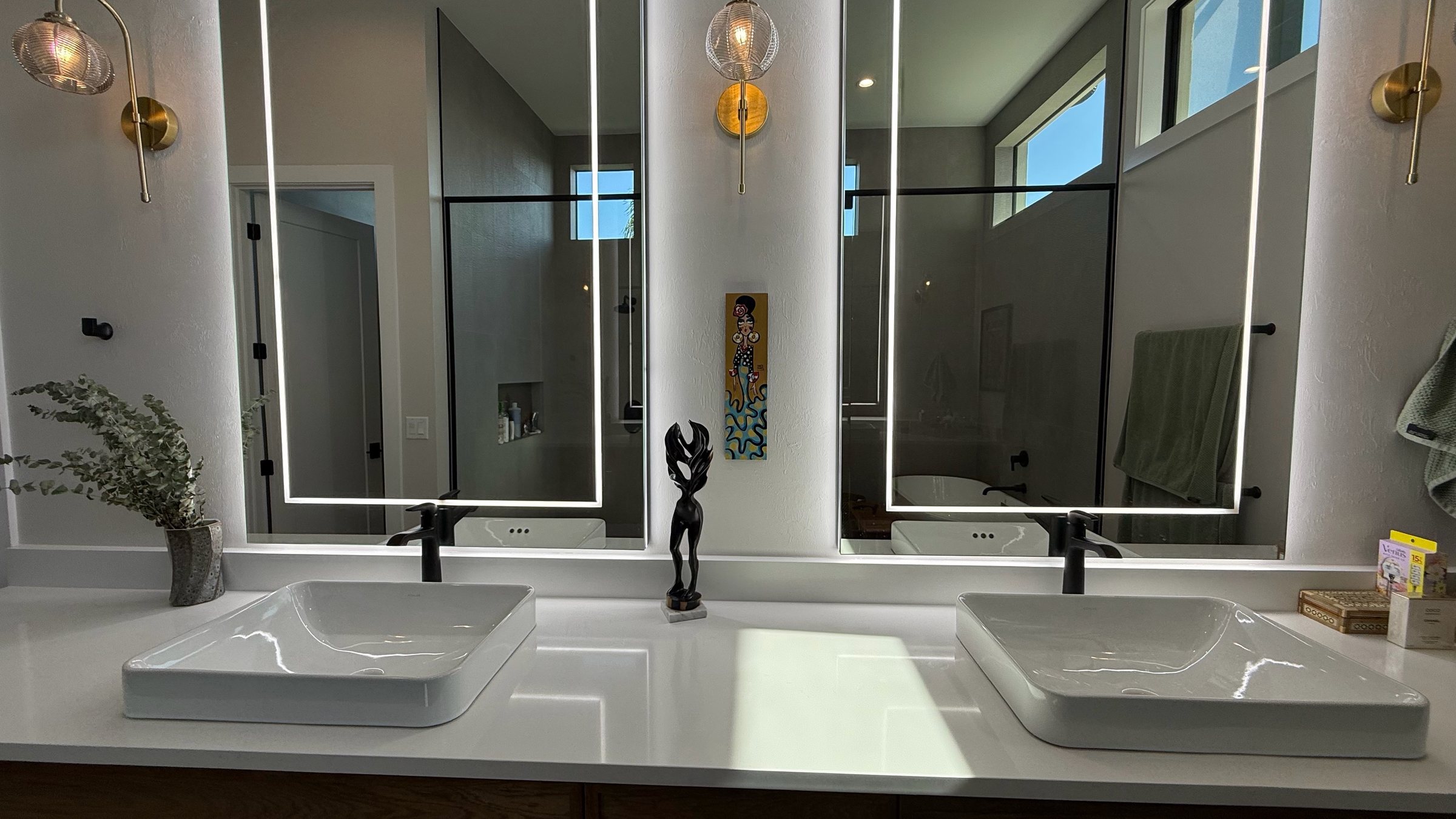
- Double vanity with a long run: ask about seams early. A longer top may need one, and we review where it falls and how the veining flows before we cut.
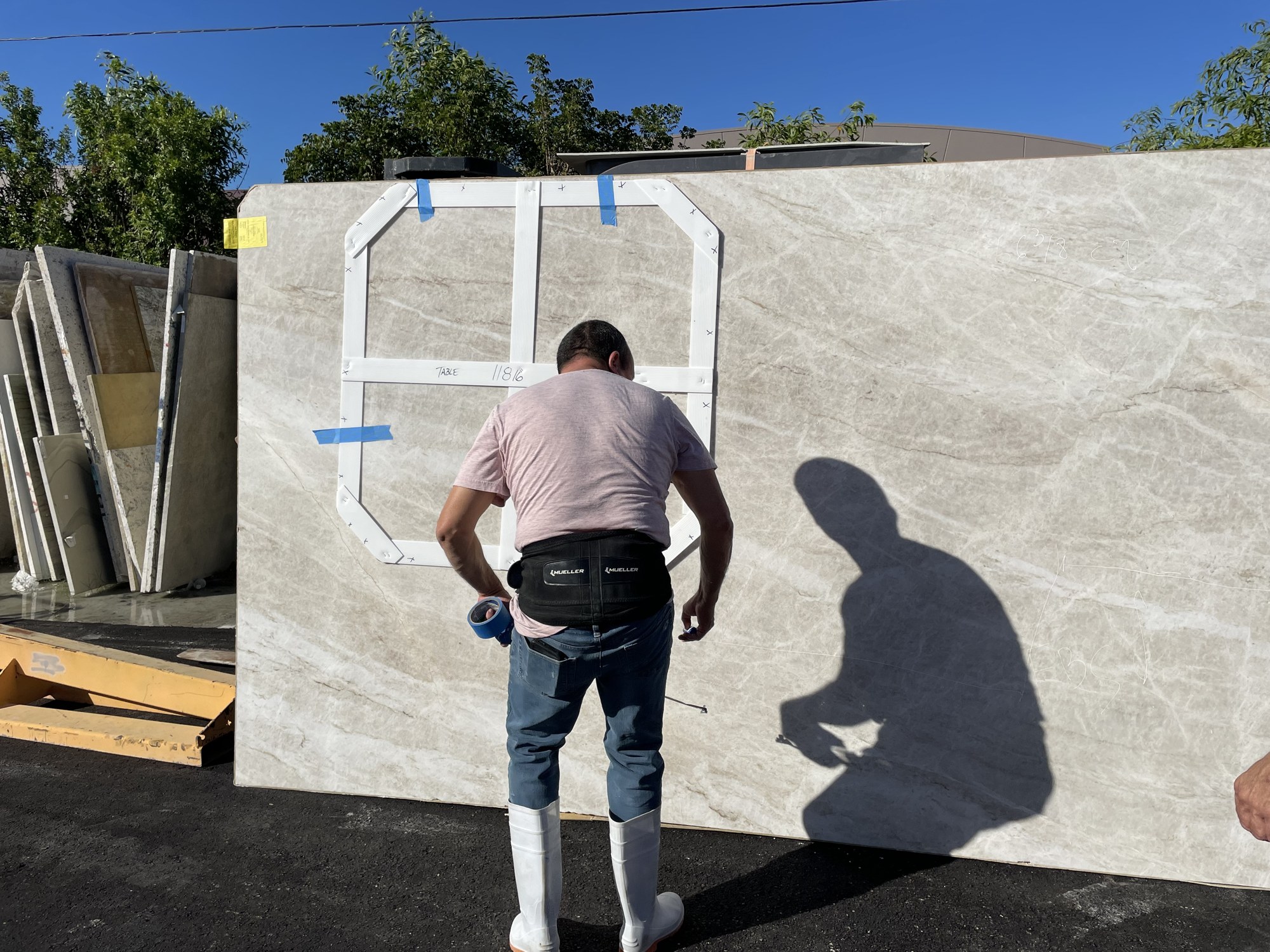
Two practical points are easy to miss. First, pick your sink and faucet before templating, because undermount, vessel and integrated sinks each need different cutouts and the faucet’s hole count changes the layout. Second, look at the full slab in the light your bathroom actually has. A stone that looks warm under showroom lights can look cooler by a window.
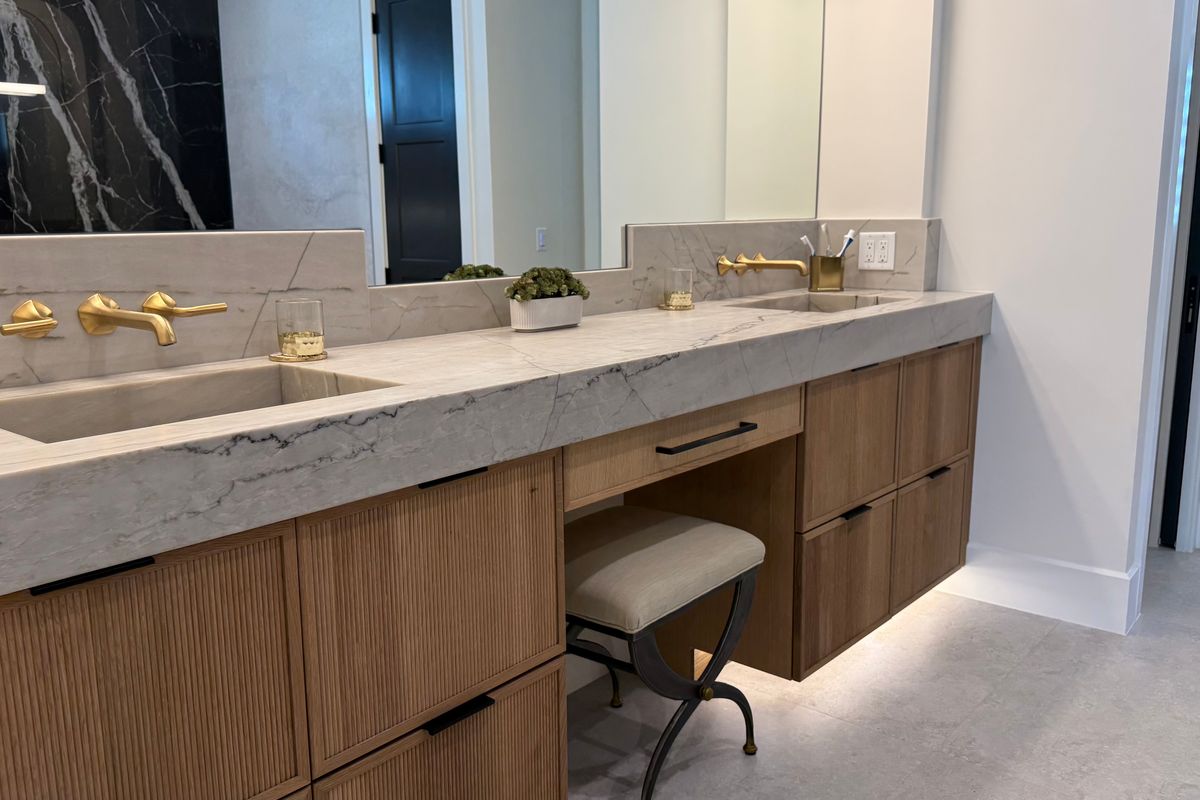
If you’re in Estero and planning a bathroom, our Estero countertops page covers how we work in that area. For the vanity-specific details, including splashes and double vanity layouts, see our bathroom countertops and vanity tops page.
Frequently Asked Questions
What type of countertop is best for a bathroom vanity?
It depends on how the bathroom is used. Quartz and porcelain are the lowest maintenance because they’re non-porous. Granite and quartzite give you natural pattern with good hardness. Marble is the most beautiful to many people and the most demanding. Choose the one whose upkeep you’re willing to live with.
Which is better for a bathroom vanity, marble or quartz?
For daily durability and easy care, quartz usually wins. Ordinary household acids don’t etch it the way they do marble, and it needs no sealing. Marble is the real stone, with natural veining and a patina that develops over time. If you want that look with fewer worries, look at quartz in a marble-style color. If you want the genuine material, plan on gentle cleaners and a tray for bottles.
What are the bathroom countertop trends for 2026?
We see a lot of interest in soft white and warm neutral stones with natural veining, and in clean, simple edges. Trends move, though, and a vanity top stays in your house for years. Pick the stone you’ll enjoy looking at every morning, not only the one that’s popular this year.
What makes a bathroom look outdated?
Usually it’s the whole combination rather than one item: a tired color, a heavy decorative edge, a top that has dulled or worn, or a mismatch between the stone and the cabinets and fixtures. A fresh vanity top in a calm stone with a simple edge is one of the quickest ways to make a bathroom feel current.
Ready to match a stone to your vanity? (239) 362-0404 is the fastest way to talk it through with us, or you can request an estimate and bring your sink and faucet details along.