

Marble vs. Quartz Countertops: Beauty, Etching and Everyday Use
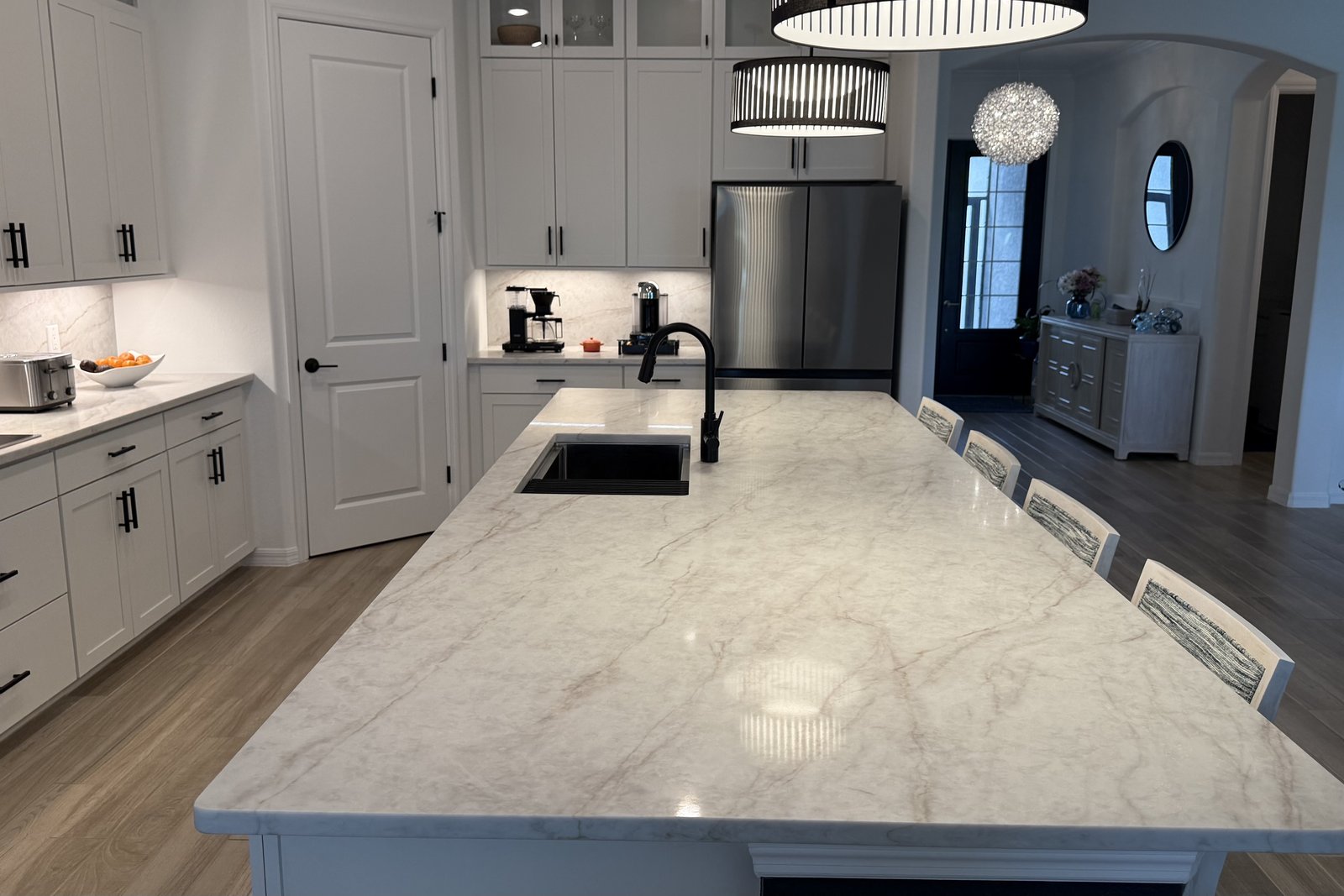
Marble vs quartz countertops comes down to etching and upkeep. Choose marble if you want real stone with natural veining and you’re comfortable with a surface that etches and changes over time. Choose quartz if you want a low-maintenance counter that doesn’t need sealing and doesn’t usually etch from everyday spills like lemon juice or vinegar. Neither is wrong, and the decision usually comes down to how you cook and how you feel about a counter that shows its life.
Here’s what each one is, how they handle etching and stains, how well quartz can imitate marble and where each belongs in a home.
Marble vs Quartz Countertops: What Each One Is
Marble is natural stone
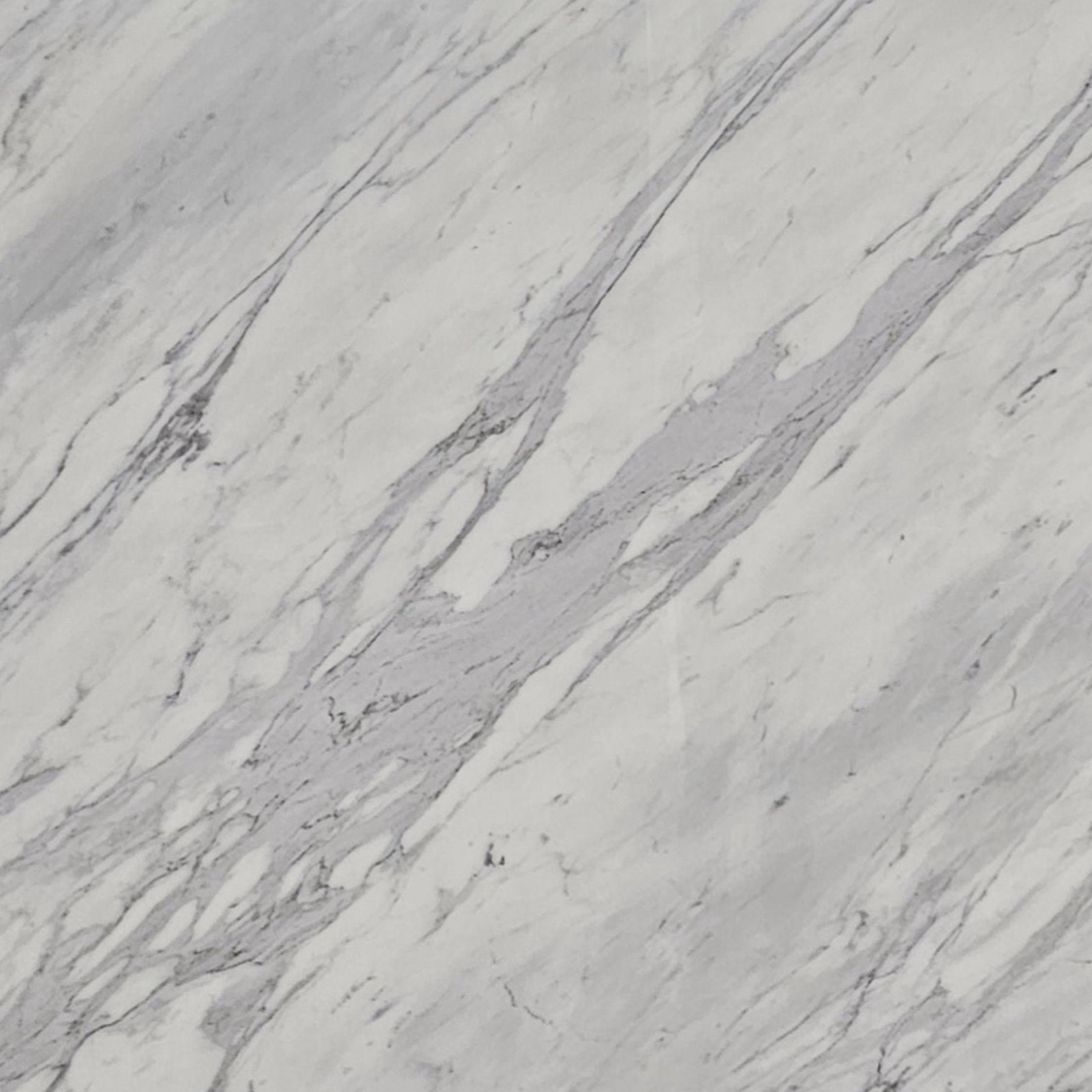
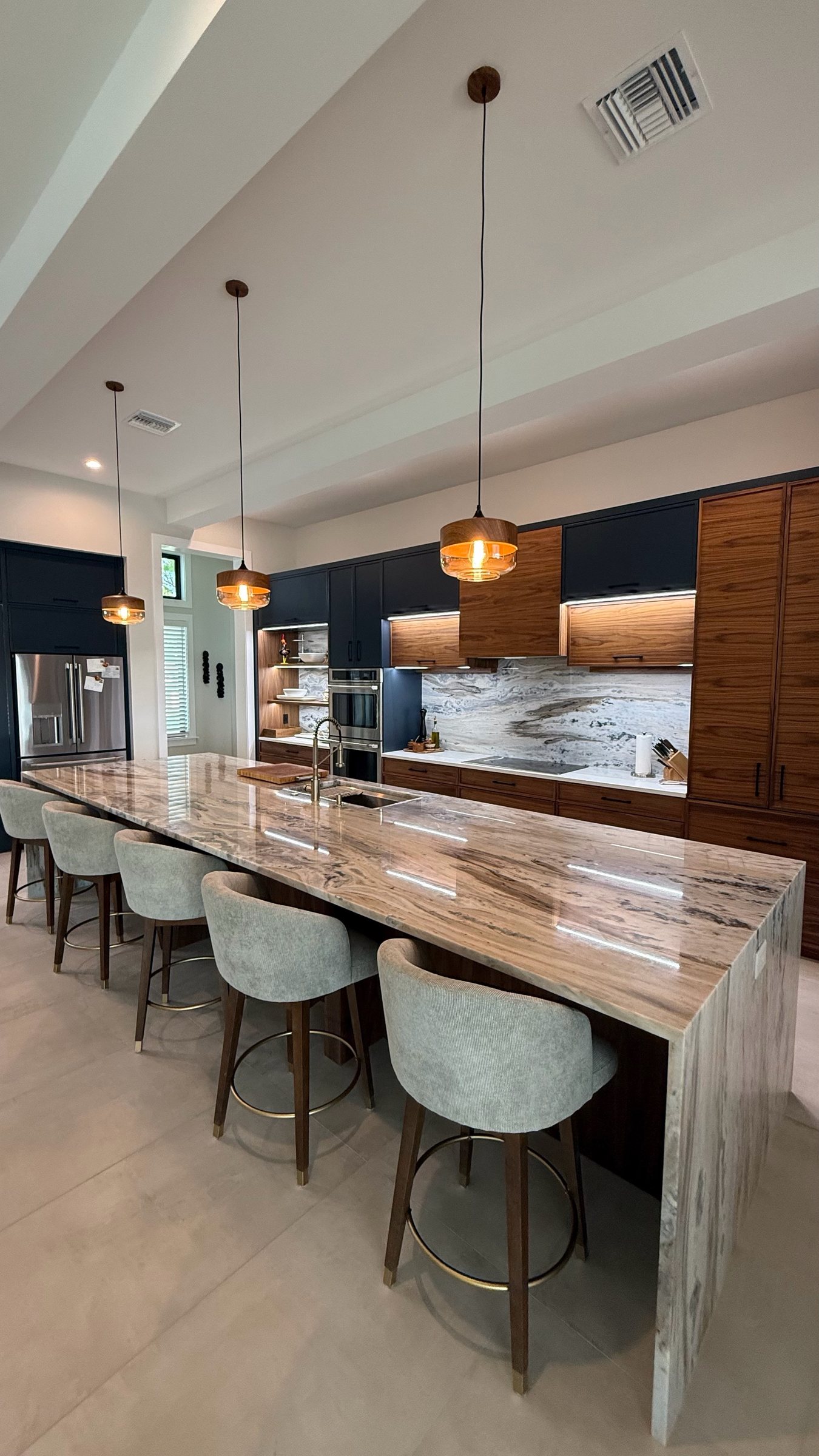
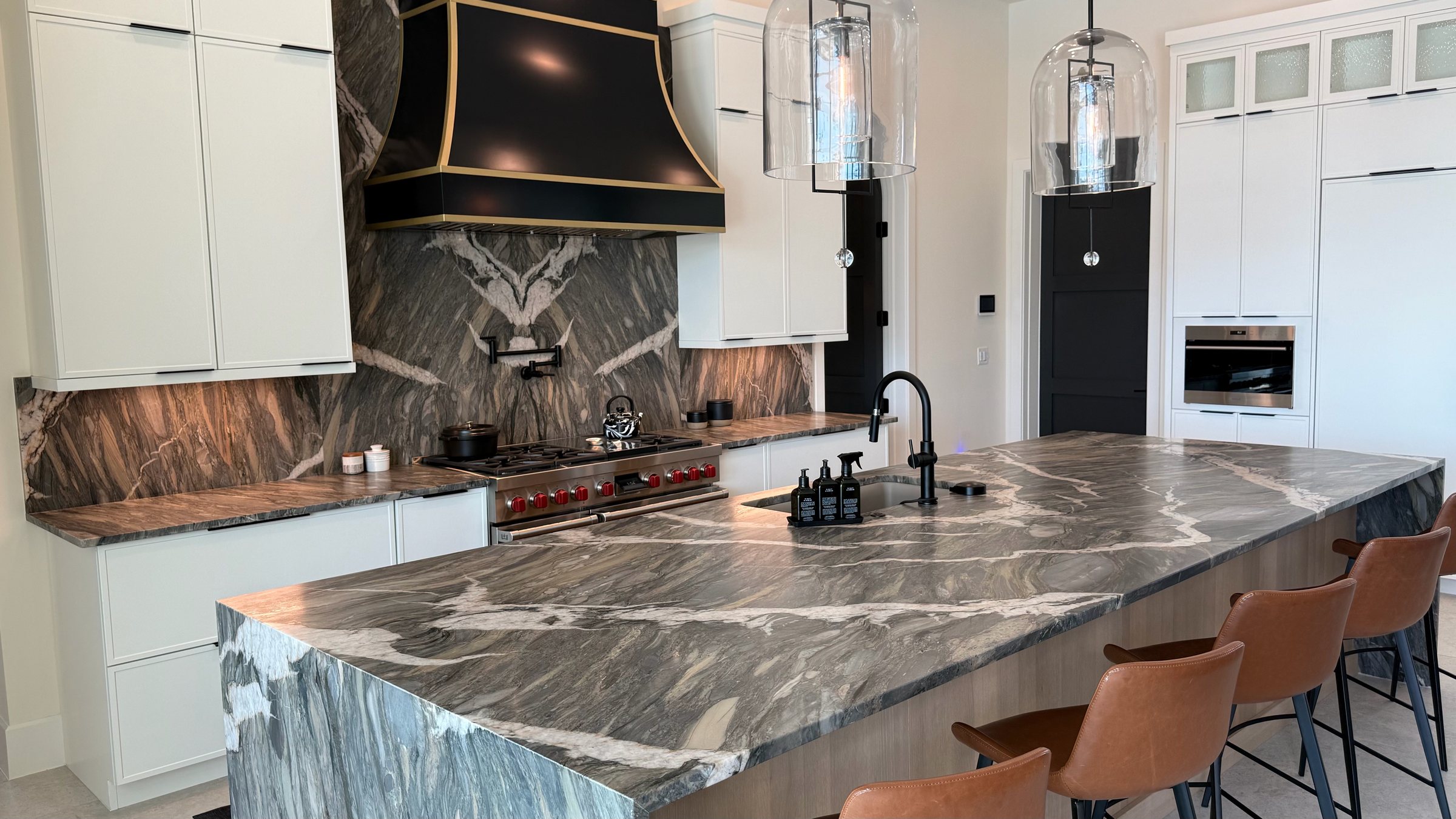
According to Geology.com’s marble page, marble is composed primarily of the mineral calcite, and it reacts with many acids. The same page puts its hardness at about three on the Mohs scale, which is why it’s easy to carve and why it’s the softest of the natural stones we install. Every slab is one of a kind. The classic whites, such as Carrara and Calacatta, bring a soft, luminous depth that engineered products only approximate.
Quartz is engineered
Quartz is made by combining ground natural quartz with resin and pigment and pressing the mixture into slabs. The result is a surface that’s non-porous, uniform from slab to slab and available in everything from plain whites to convincing marble-style veining. Cambria states that its surfaces require no sealing, polishing or reconditioning, and LX Hausys describes its Viatera surfaces as non-porous and says they don’t require sealing.
Because the veining is designed into the slab, quartz looks more predictable than natural stone. That’s an advantage on a large island or a run of baths that should match, and a small disappointment if you love randomness. Our marble countertops page explains the stone in more depth.
Etching, Stains and Patina
This is the heart of the decision, so it’s worth being clear about what happens on each surface.
What etching is
Acids such as lemon juice, vinegar, wine and many household cleaners react with the calcite in marble and leave dull marks. They aren’t stains. They’re a change to the surface. The Natural Stone Institute explains that some materials will etch the finish without leaving a stain, that etch marks come from acids left on the surface, and that products containing lemon, vinegar or other acids may dull or etch calcareous stones. Marble is a calcareous stone.
On a polished white marble, an etch can look like a faint ring or a pale smudge, usually visible when the light skims across the top. A honed finish hides it better than a high polish does.
Staining and sealing
Marble is porous and should be sealed, which slows staining but doesn’t stop etching. Plan on testing the sealer with a few drops of water now and then: if the stone darkens and soaks them in after a few minutes, it’s time for a fresh coat. Oil, wine and coffee are the usual culprits, and wiping them up soon matters. Sealing makes stone more stain resistant, not stain proof. Quartz sidesteps this, since a non-porous surface keeps liquids on top where you can wipe them away.
Patina is the trade-off
Think about the people in your house, too. A household that cooks with lemon and wine every night will meet marble’s limits sooner than a couple who mostly use the kitchen for coffee. Teenagers, visiting grandchildren and rental guests all add moments when a glass gets set down in the wrong place.
Marble gathers character. Fine scratches, soft etches and gradual dulling build up over years, and many people love that lived-in look. Others see each mark as a flaw. Ask yourself honestly which you are. If a flawless surface matters most, quartz will serve you better. If you like a counter that tells a story, marble rewards patience.
Quartz That Looks Like Marble
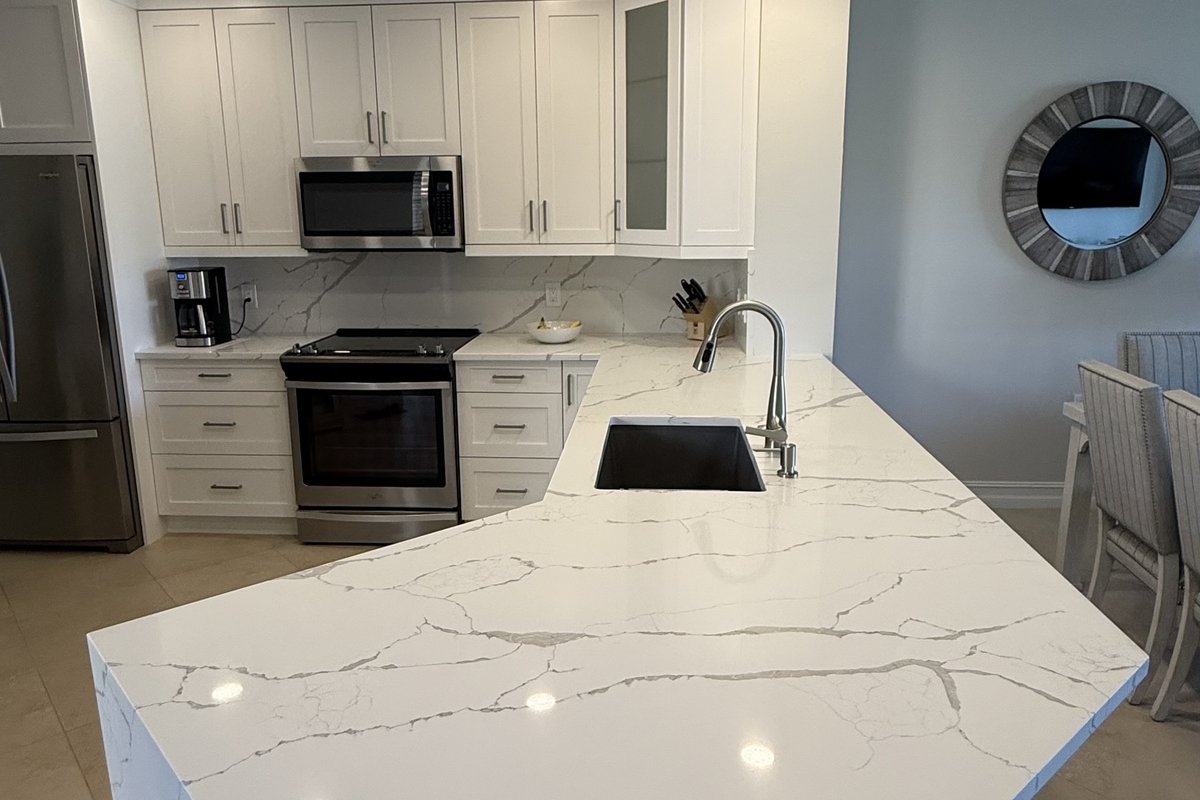
Yes, there is quartz that looks like marble, and some of it is convincing. Many quartz lines imitate Carrara-style white, with soft grey veining on a bright background. Our colors catalog includes Viatera’s Calacatta Sol and Calacatta Plata, two marble-style options you can compare against the real thing at the showroom. Browse the full range, including a quartz selection, on our quartz countertops page.
How to judge the resemblance
- Look at the full slab, not a sample. Repeating veins are easier to spot across a large surface.
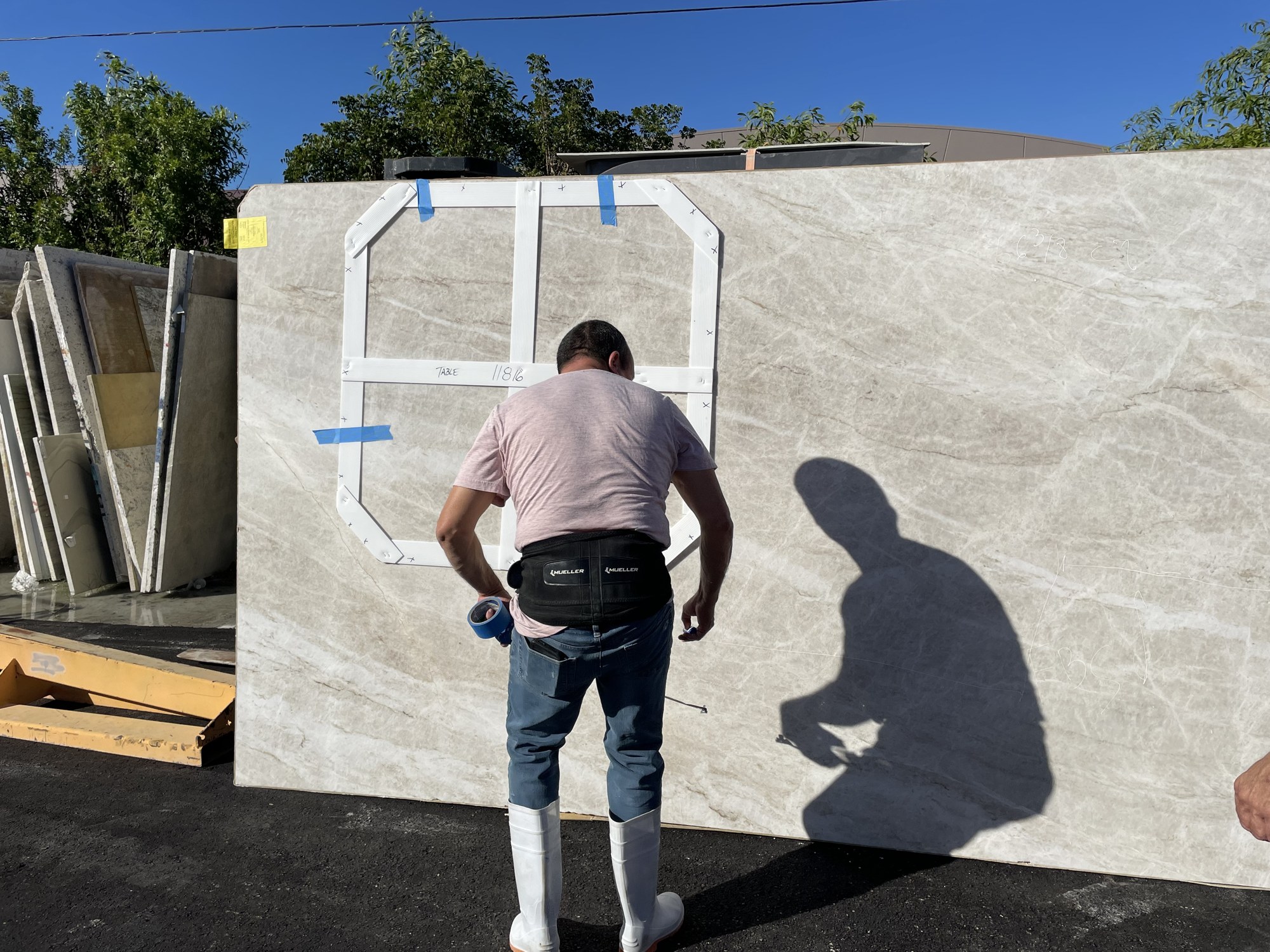
- Check the depth. Real marble has a depth in the stone that engineered products only approximate, and you’ll see it best on a full slab in daylight.
- Consider the edges and seams. Marble-style quartz can show seams more on very light colors.
- View it in your light. Whites and greys change more than people expect.
Want a deeper look at the genuine article? Our post on Calacatta marble countertops shows what the premium end of the range looks like in a finished space.
Heat, Sun and Everyday Use
Quartz is the easier daily companion, but it has limits of its own. The resin that binds the stone can scorch or discolor under direct high heat, so a trivet under hot pans isn’t optional. Cambria says its surfaces may not withstand direct heat transfer from pots and pans, and LX Hausys calls Viatera heat tolerant but not completely heat resistant. Sharp impacts on an edge can chip quartz, and a chip is harder to hide on a plain color than on a patterned natural stone.
Strong Florida sun is the other thing to plan for, since standard quartz isn’t usually recommended for direct, prolonged sun, because UV can discolor the resin over time. For a lanai or grill island, natural stone, porcelain or Dekton is the usual call.
For marble, the day-to-day habits are simple: wipe spills soon, use a tray for oils and bottles, avoid acidic cleaners and use a pH-neutral stone cleaner. We’d use a trivet and a cutting board on either surface. Both are easier to live with when the habits are built in from the first week, not after the first mark.
Where each one belongs
- Marble fits a primary bath, a powder room, a baking station or a statement island that doesn’t see heavy raw cooking.
- Quartz fits busy kitchens, kids’ baths and laundry rooms, anywhere you want a counter that takes care of itself.
- A mix is common: marble in a bathroom where you want the look, and quartz in the kitchen where the cooking happens.
Cost depends on the specific slab for both materials, and either can cost more than the other. The slab, thickness, edge profile and layout drive an estimate, so compare two actual slabs you like. If you’re weighing these two for a condo or a high-end kitchen, our Naples countertops page covers what changes when a building has its own rules.
Frequently Asked Questions
Should I get marble or quartz countertops?
If you want real stone and can live with etching and a patina, marble. If you want low upkeep and no sealing, quartz. If you cook heavily and love the marble look, ask us about quartz first.
Which is better for a bathroom vanity, marble or quartz?
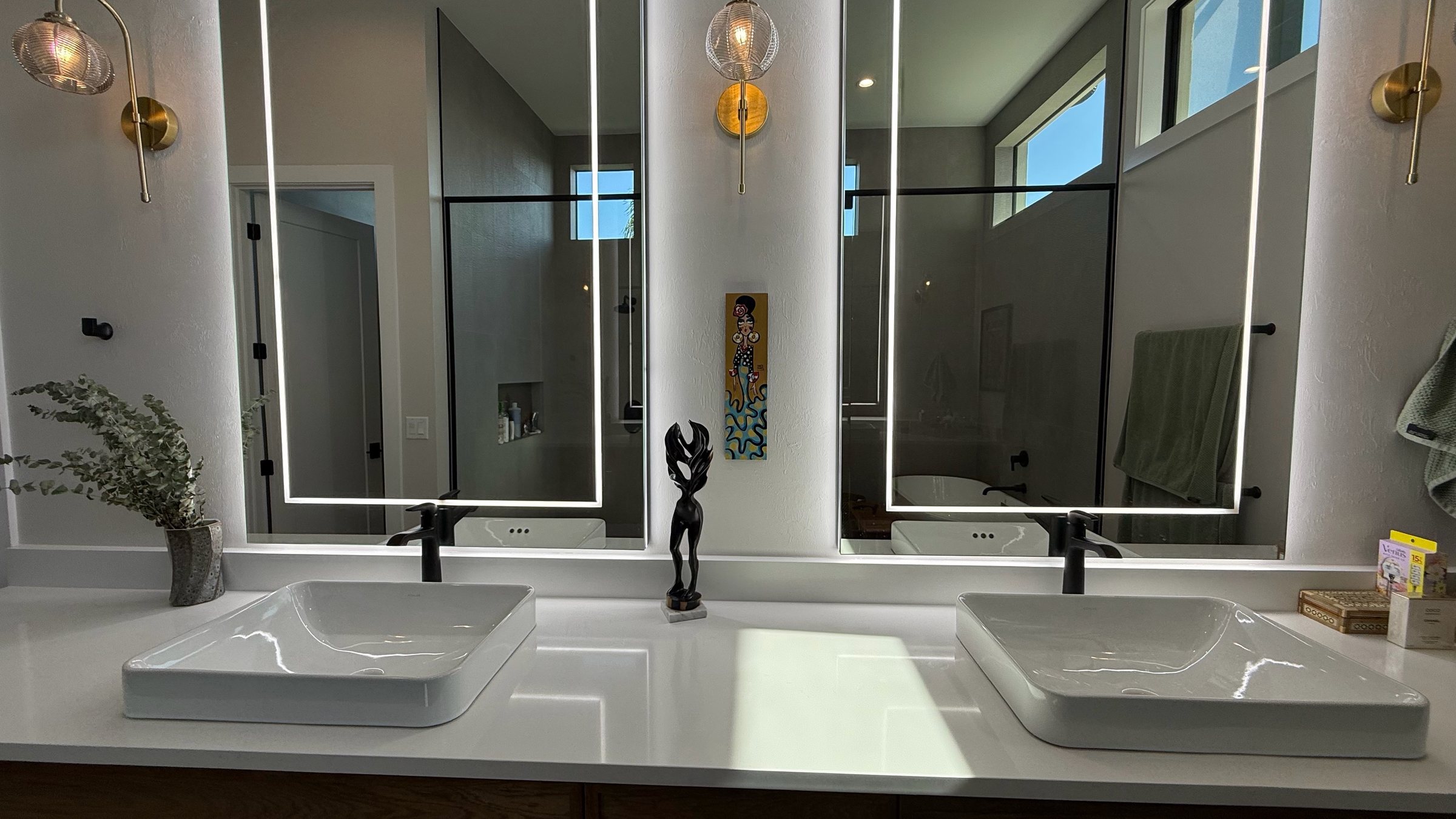
Both work. Bathrooms see fewer acids and less raw cooking than kitchens, so marble is a natural fit there. Quartz is the easier pick for a busy family bath.
Is there quartz that looks like marble?
Yes. Many quartz lines imitate Carrara or Calacatta, including Viatera’s Calacatta Sol and Calacatta Plata. Look at the full slab to judge how close it comes.
Do high end homes use quartz countertops?
Quartz and marble both show up in higher-end kitchens, along with granite and quartzite. The choice follows the look the owner wants and how the room is used, not the price of the house.
Torn between the two? Call (239) 362-0404 and tell us how you cook, or request an estimate and compare a marble slab and a marble-style quartz slab side by side.