

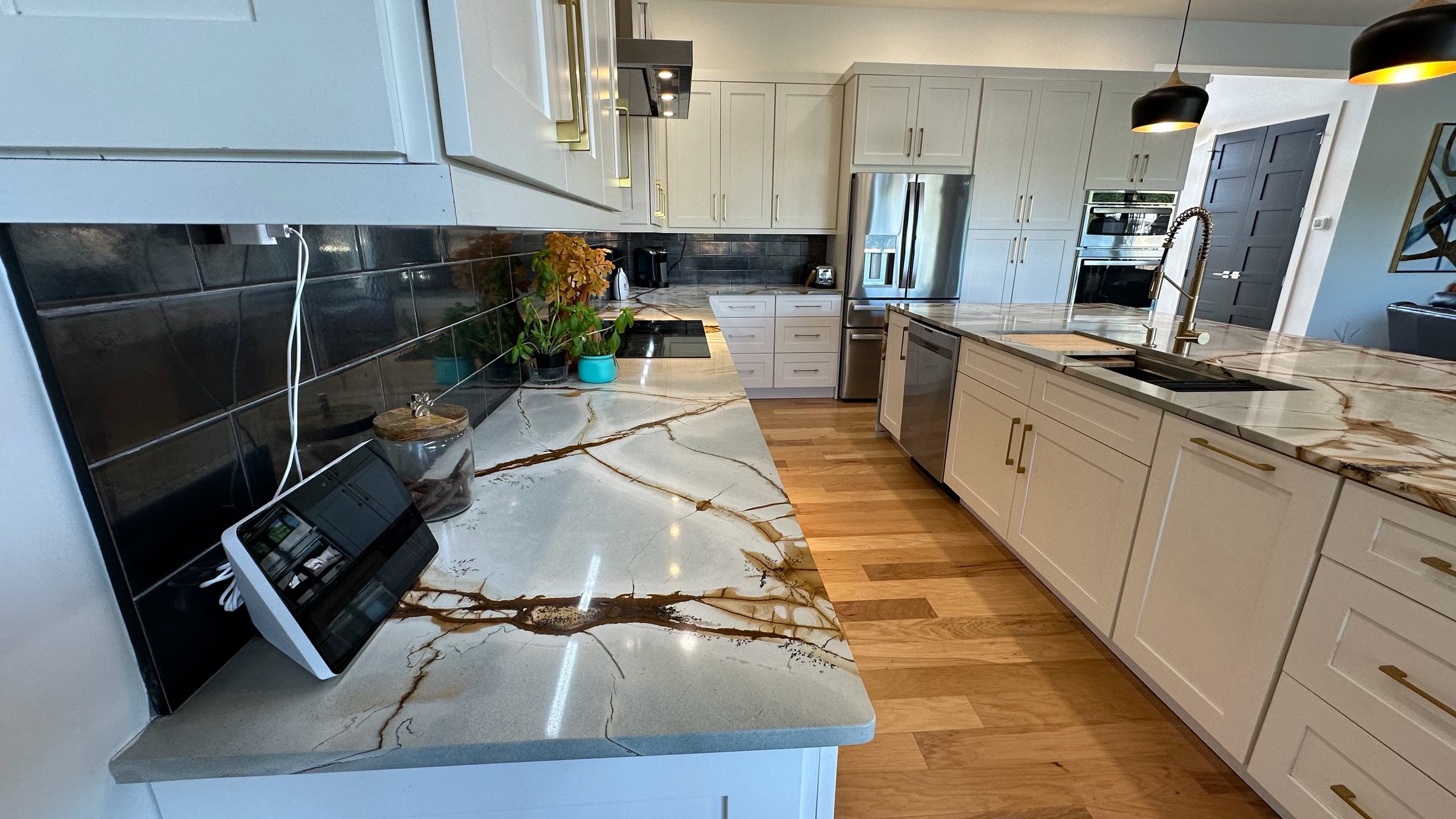
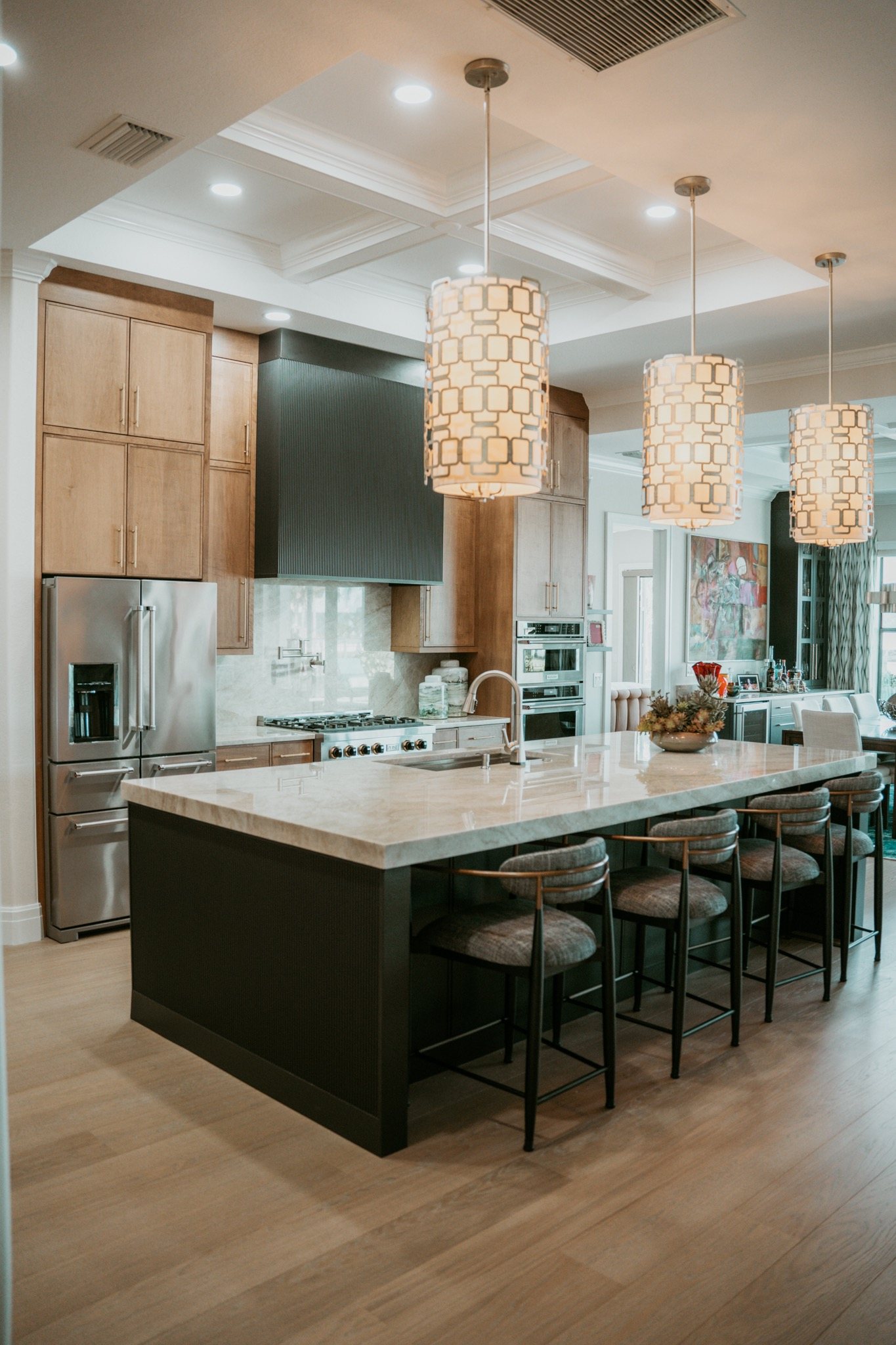
Calacatta Marble Countertops: The Epitome of Luxury Design
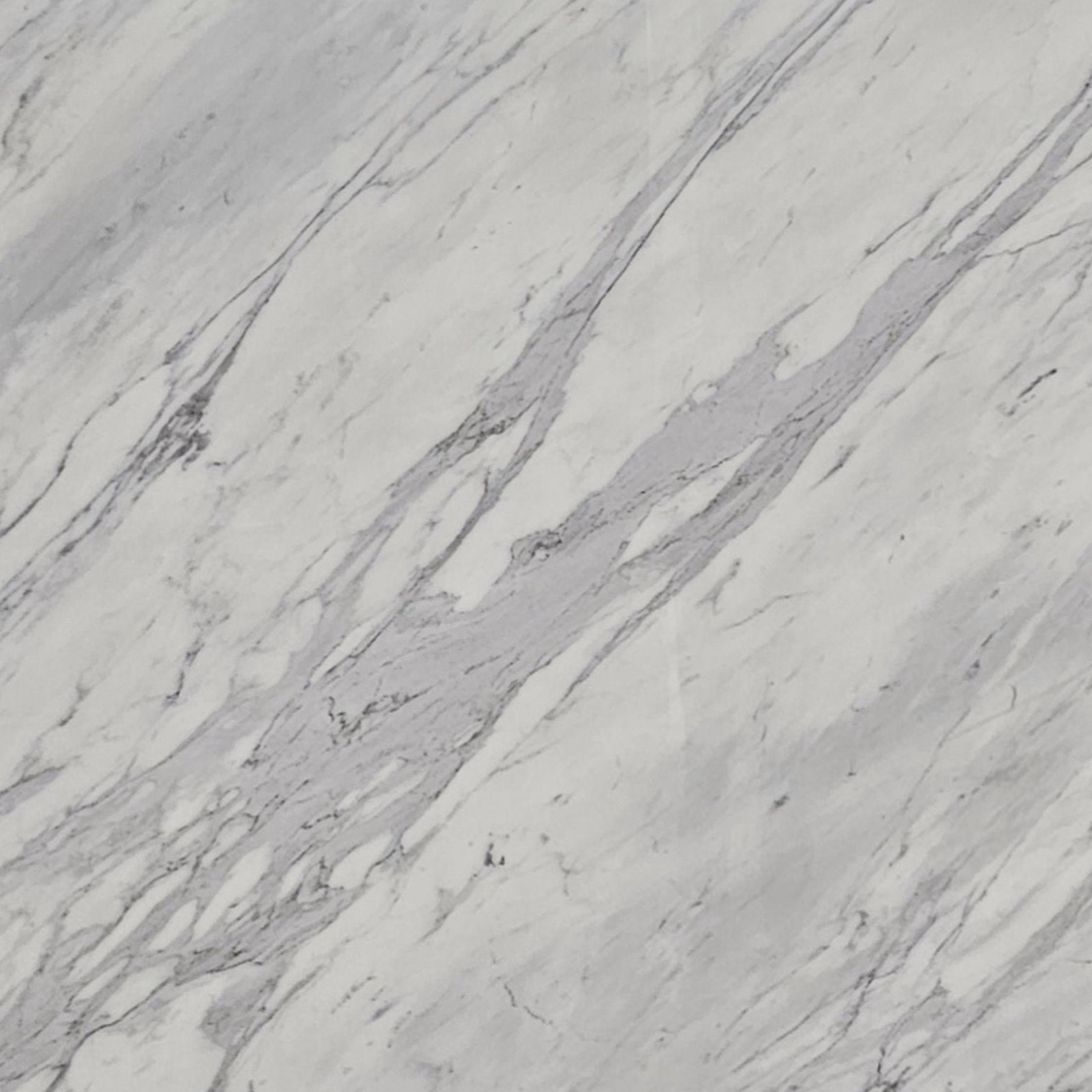
Calacatta marble countertops are known for bold veining against a bright white to warm white background. The stone comes from the Carrara region of Italy, and it is a dramatic choice for a kitchen or bathroom. It also asks more of you than an engineered surface, so this guide covers what makes it distinctive and how to live with it.
Calacatta Marble Countertops: What Makes the Veining Different
Calacatta is often compared with Carrara, its better-known cousin. Carrara tends toward softer, more even gray veining. Calacatta usually has thicker, more dramatic veins in gray, gold or brown, set against a whiter background, which makes each slab look different from the next.
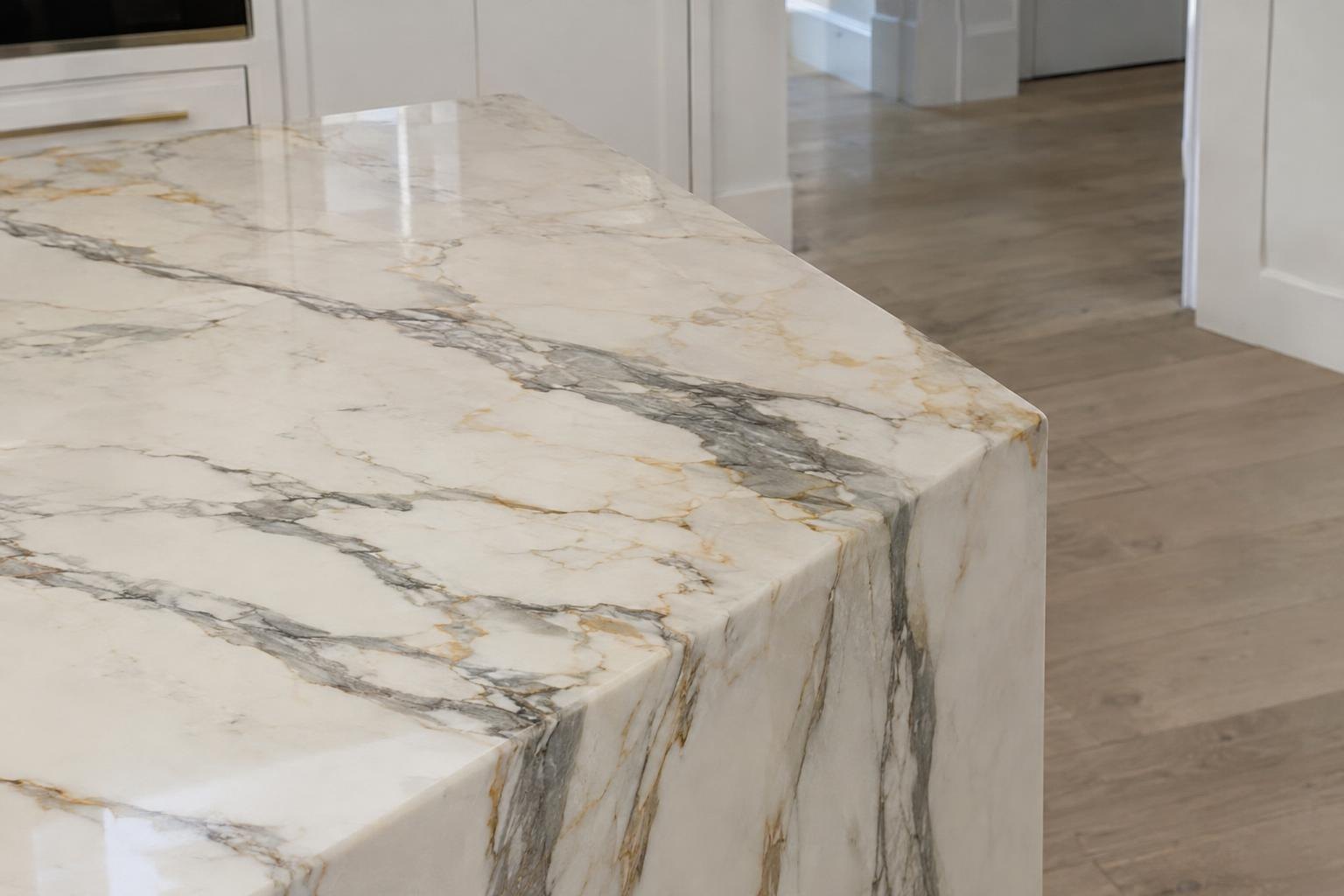
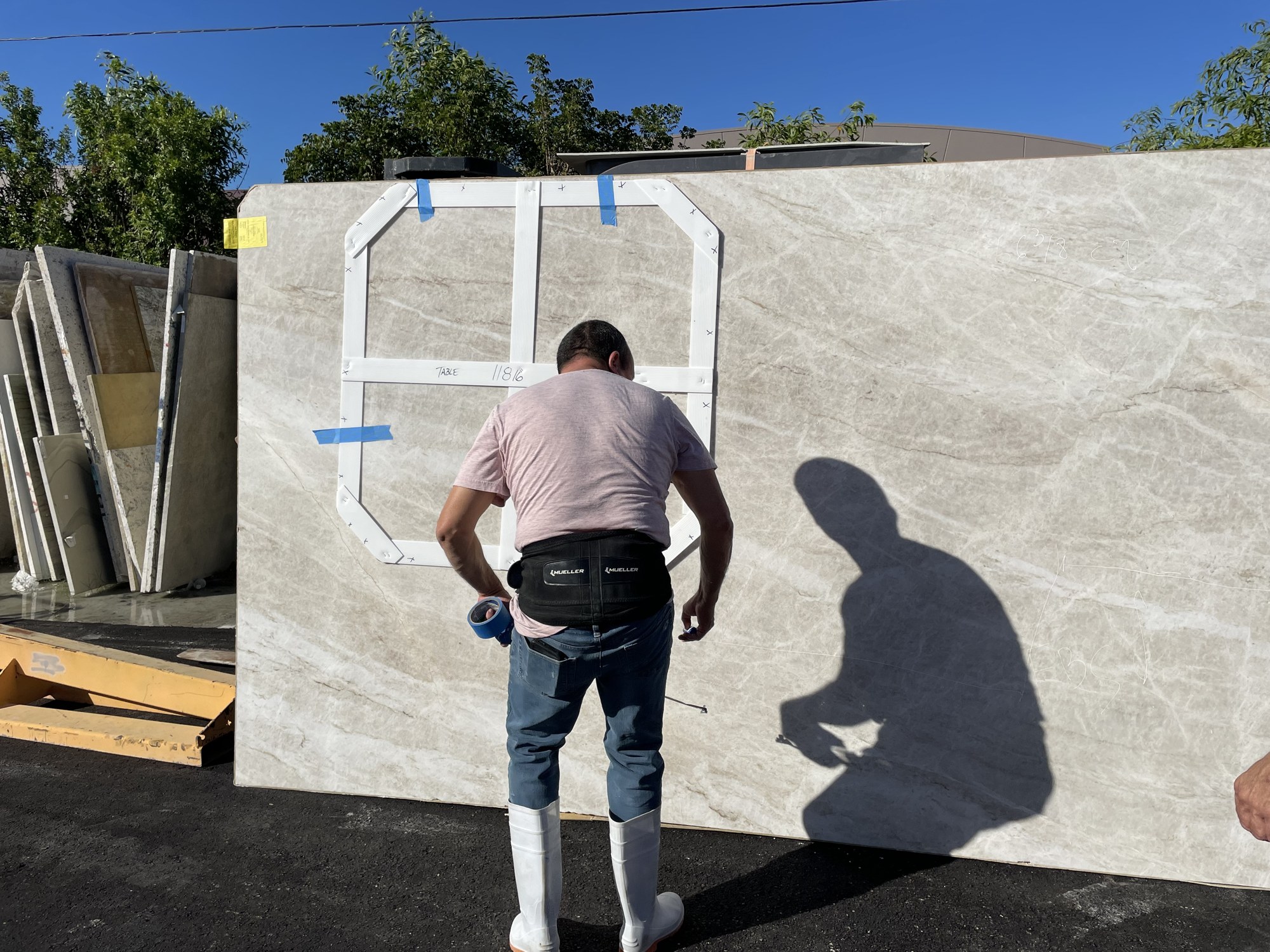
Because the pattern is so pronounced, the slab matters more than the name. Two pieces labeled Calacatta can look very different, so we encourage you to see the full slab before you choose.
Living With Calacatta Marble in a Kitchen
Marble is a calcareous stone, which is sensitive to acids. Lemon juice, vinegar, tomato sauce and wine can leave dull marks called etching, and over time a marble counter develops a soft patina. Some homeowners love that lived-in look, and others prefer a surface that stays as it was installed. Neither is wrong, but it is worth deciding which one you are before the slab is cut.
Heat deserves respect too. The Natural Stone Institute recommends trivets or mats even for stones that can withstand heat. On the plus side, many bakers like marble for pastry work because the surface stays cool.
If you are thinking about a busy family kitchen, be honest about habits. Do you set hot pans down without thinking, or leave citrus on the counter? Marble rewards people who wipe up as they go, and a trivet and a cutting board become part of the routine.
Caring for Calacatta Marble
Care is straightforward once the habits are in place:
- Clean with a neutral cleaner and warm water. Avoid vinegar, lemon and other acidic products.
- Wipe spills promptly, especially acidic ones and anything oily.
- Use trivets and cutting boards to protect the finish.
- Ask about sealing. The Natural Stone Institute's position on sealing says it makes sense in many cases to seal marble with a quality sealer, and the right schedule depends on the stone and the sealer.
Where Calacatta Looks Best
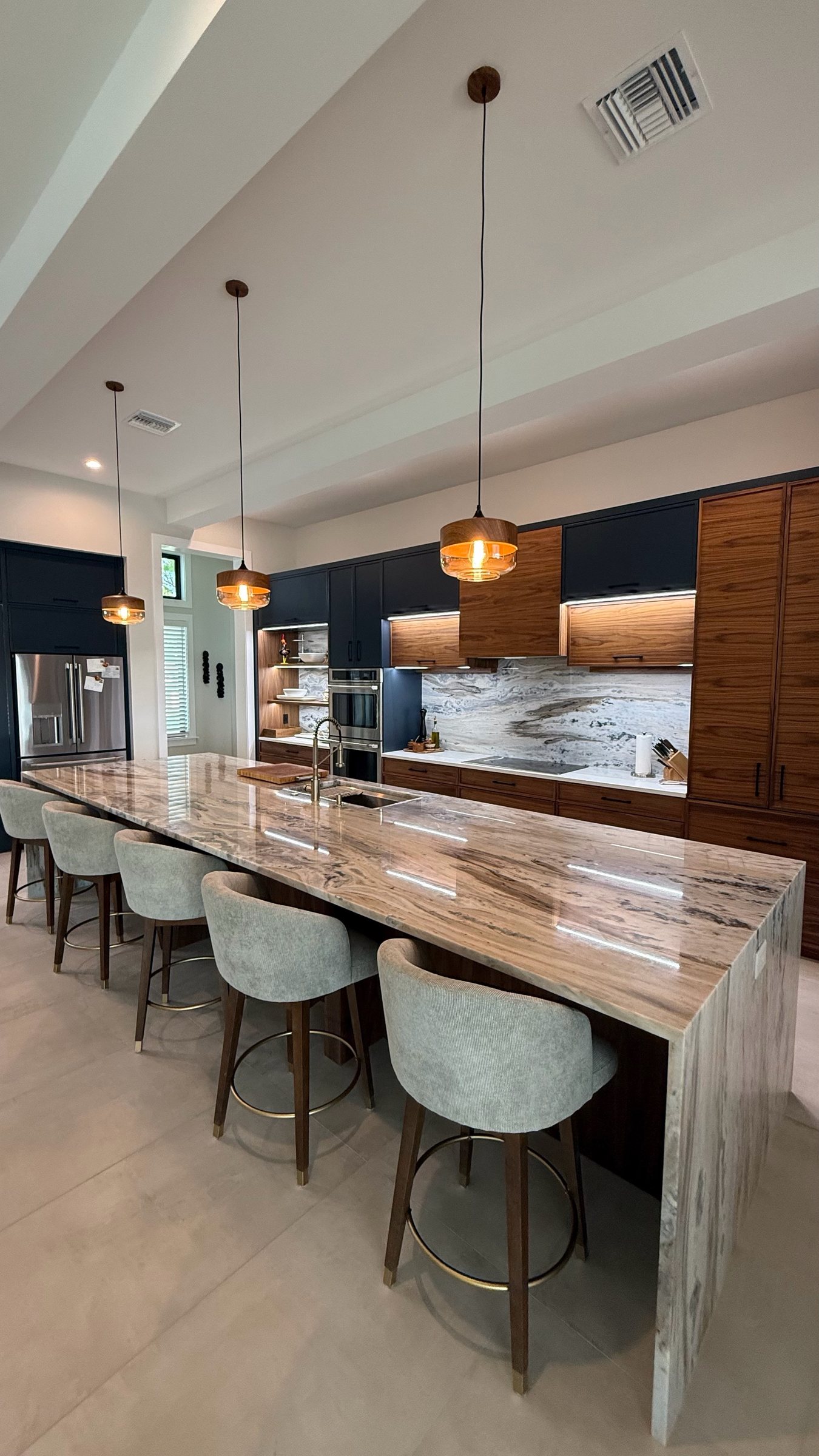
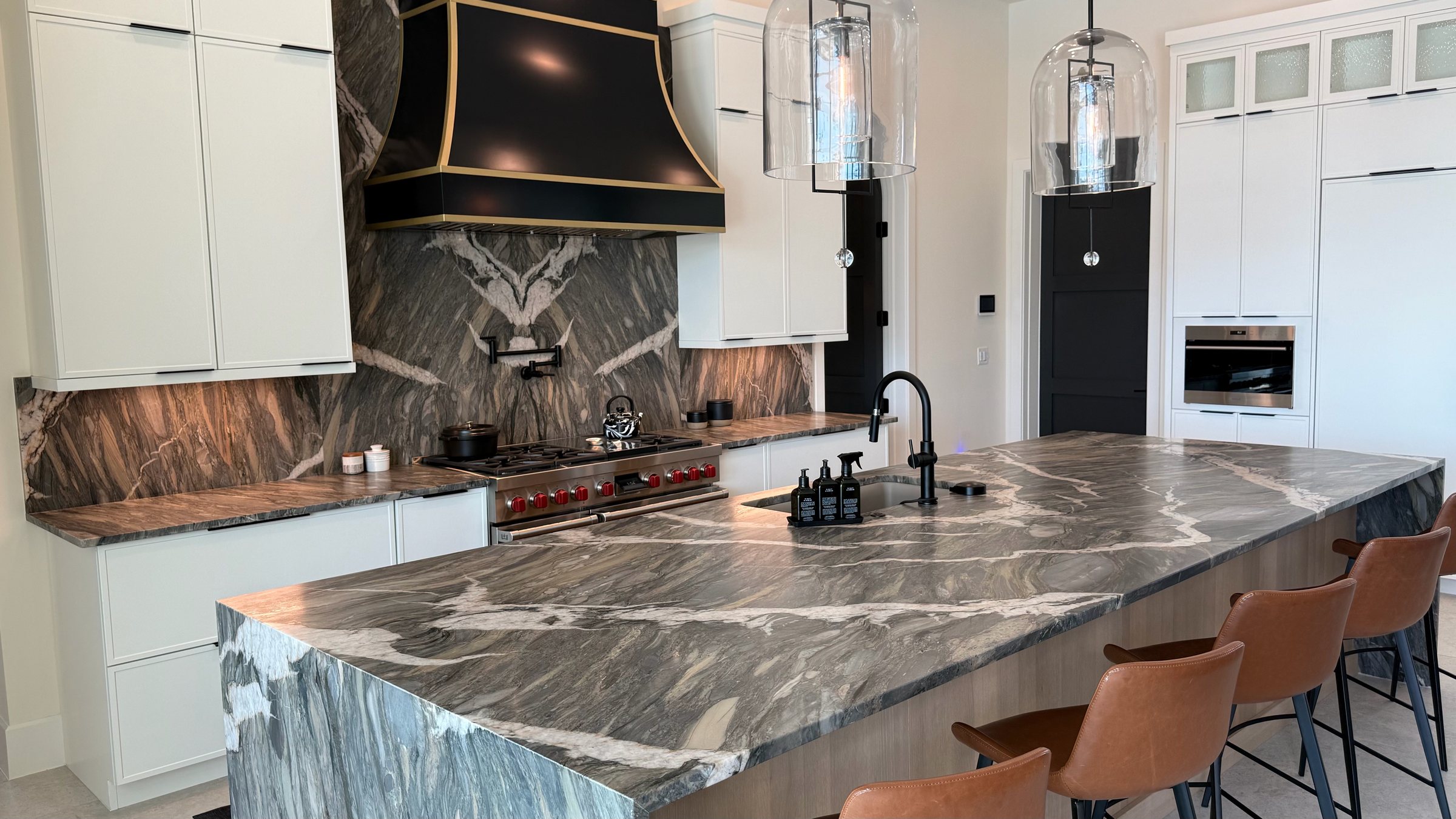
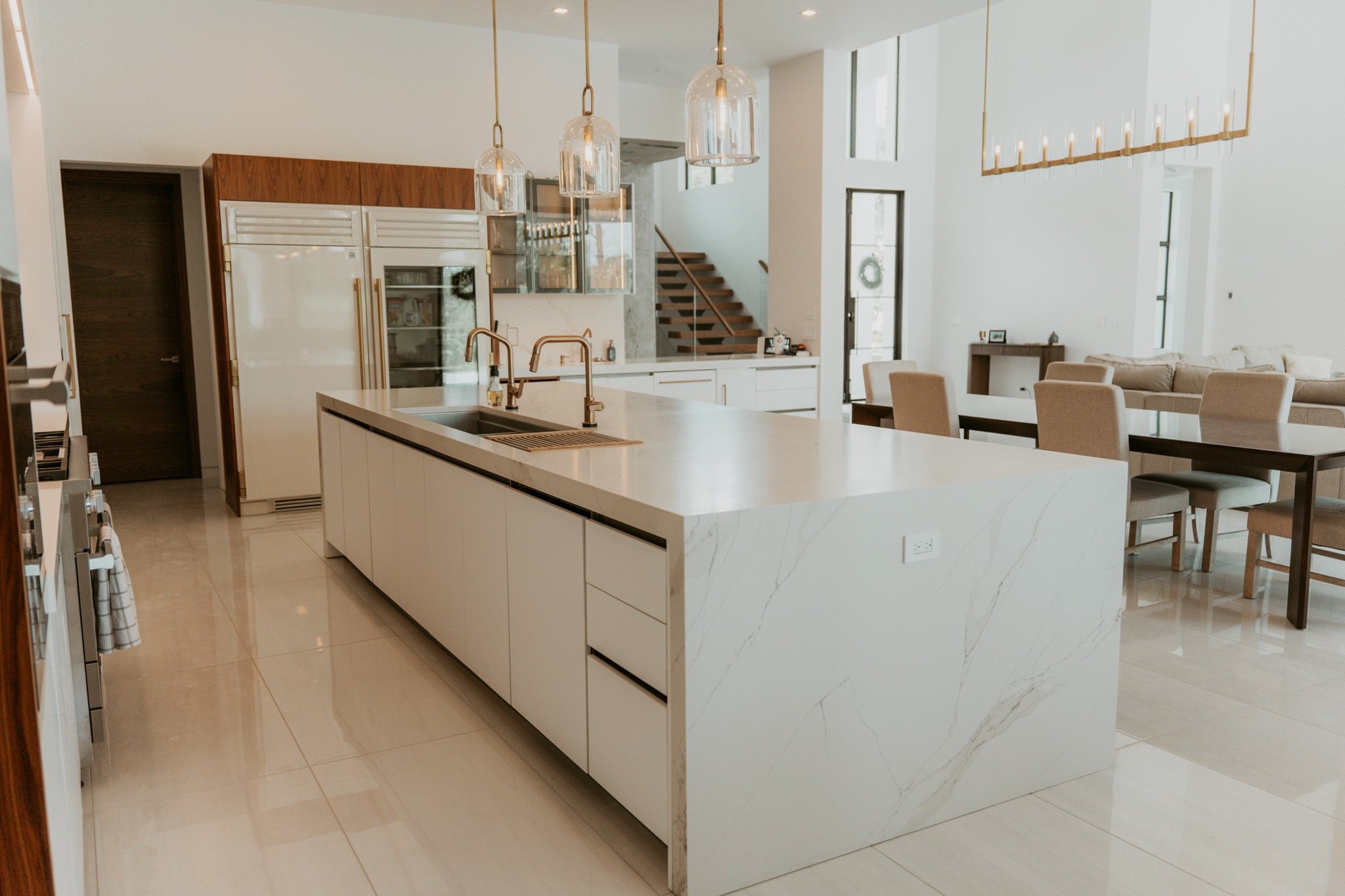
Calacatta shines where the veining can be seen, such as full-height backsplashes, waterfall islands and bathroom vanities. A waterfall island lets the pattern run from the top down the side of the cabinets, and slab layout decides how the veins meet at the corner.
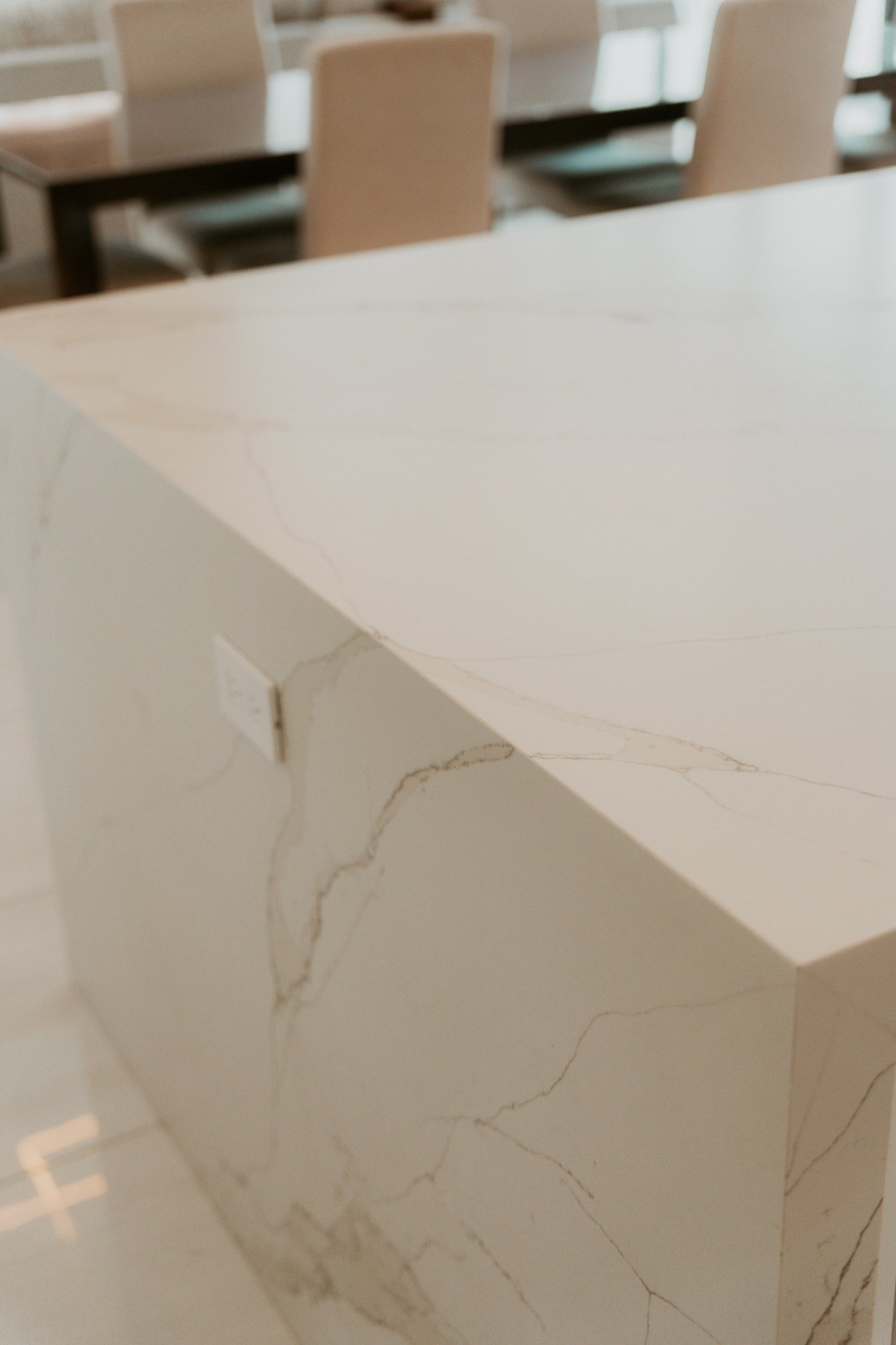
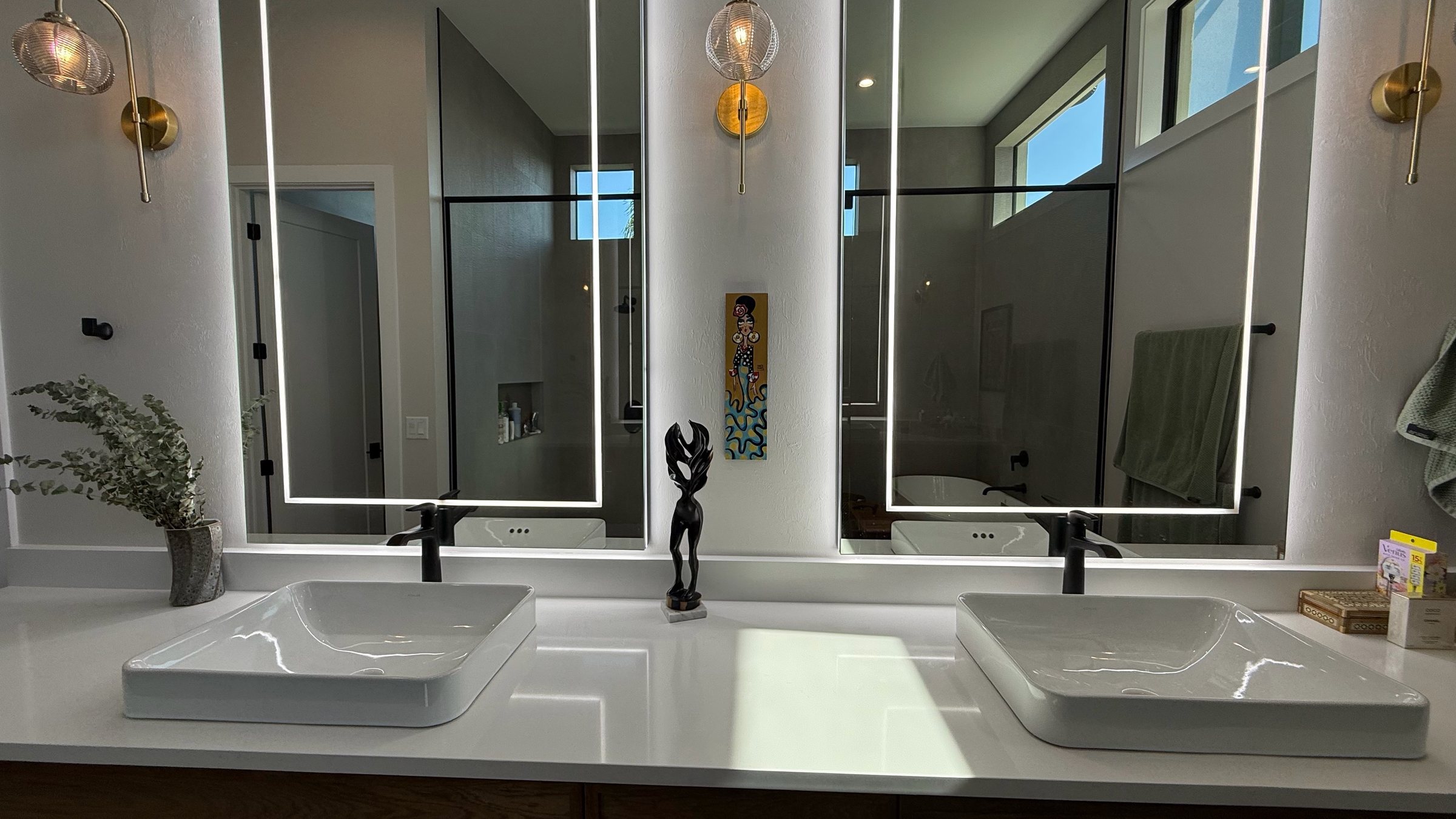
In a bathroom, the same veining works on a vanity top or a shower wall, where a single slab can run without interruption. Ask to see how the pattern would sit around the sink and mirror before you decide.
Our marble countertops, kitchen countertops and bathroom countertops pages show where we use it. Our team uses digital templating and in-house fabrication, and the stretch from templating to installation is 10 business days.
What to look for on the slab
- Vein pattern. Decide whether you want a few bold veins or a busier pattern across the whole surface.
- Background color. Compare the white against your cabinets and lighting, since warm and cool whites read differently.
- Where seams will fall. On an island or long run, the layout decides how the veins continue across a seam.
Is Calacatta Right for Your Kitchen?
Calacatta marble countertops suit homeowners who want a showpiece and are comfortable with a natural surface that changes slowly. If you love the look but want less upkeep, quartz and quartzite in marble-style patterns are worth comparing, and our quartz and quartzite pages explain how they differ. A visit to our Fort Myers showroom, with full slabs in front of you, is the quickest way to find out which feels right.
Frequently Asked Questions
Is Calacatta marble the same as Carrara?
No. Both come from the Carrara region, but Carrara usually has softer, more even gray veining, while Calacatta tends to have bolder veins on a whiter background.
Does Calacatta marble stain or etch?
It can do both. Oils and other liquids can stain if they soak in, and acids such as lemon juice, vinegar or wine can etch the surface. Wiping spills promptly and using neutral cleaners helps.
Does Calacatta marble need to be sealed?
The Natural Stone Institute says it makes sense in many cases to seal marble with a quality sealer. A sealer helps against stains but not etching, and the right schedule depends on the stone.
Is Calacatta a good choice for a busy family kitchen?
It can be, if you accept some patina. If you want a surface that stays exactly as installed, compare it with quartz or quartzite in a similar pattern before you decide.
Drawn to Calacatta? Call (239) 362-0404 and we will talk it through, or request an estimate to see full slabs in Fort Myers.