
Is Quartzite Harder Than Granite? Hardness, Looks and Upkeep Compared
Is quartzite harder than granite? Usually, yes, though both are hard enough that hardness rarely decides which stone is right for your kitchen. Both are hard enough that everyday knife contact and sliding cookware seldom leave a mark. What separates them in daily life is how they look, how they handle spills and which rooms they suit. Here’s what the hardness numbers mean and what to weigh alongside them.
How the Two Stones Form
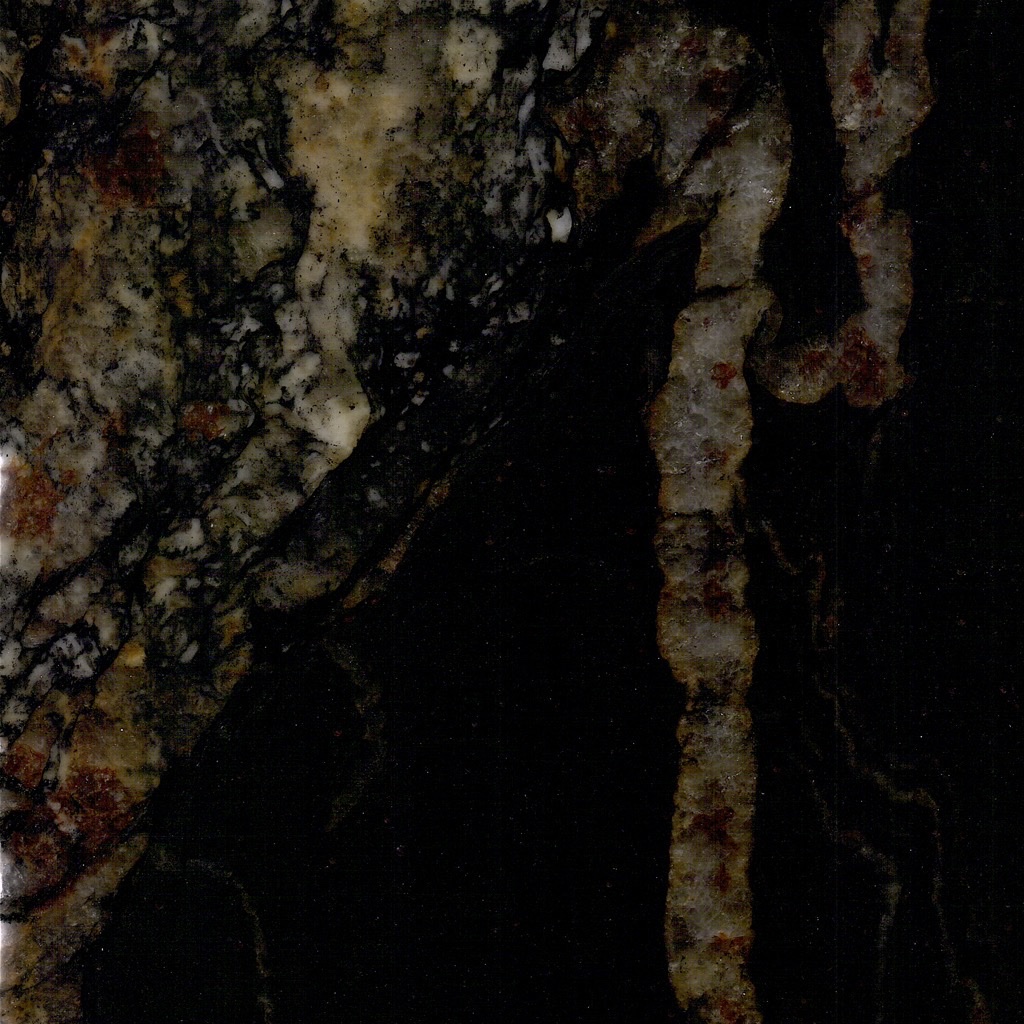
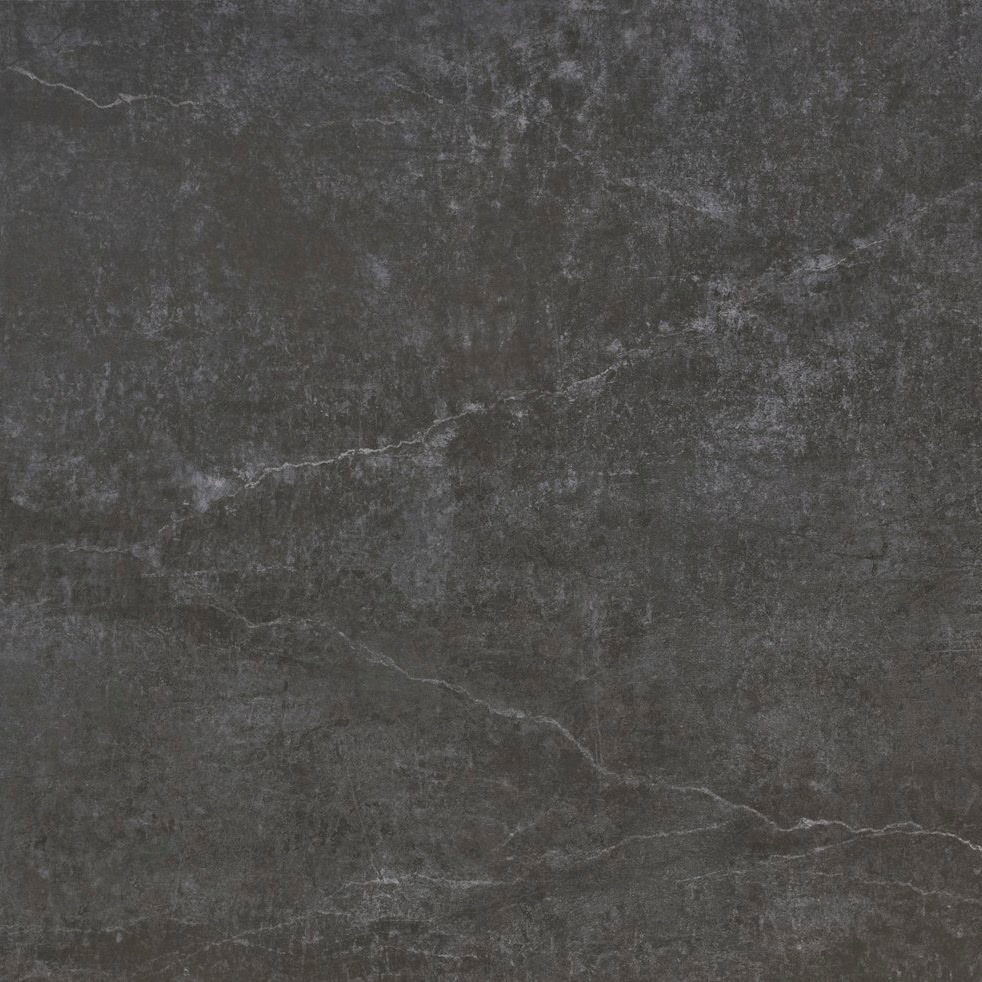
The difference starts underground. Granite is an igneous rock. According to Geology.com’s granite page, it forms from the slow crystallization of magma below the earth’s surface, and the large crystals show that it cooled slowly. Its main minerals are quartz and feldspar, which is why a granite slab looks speckled or grainy.
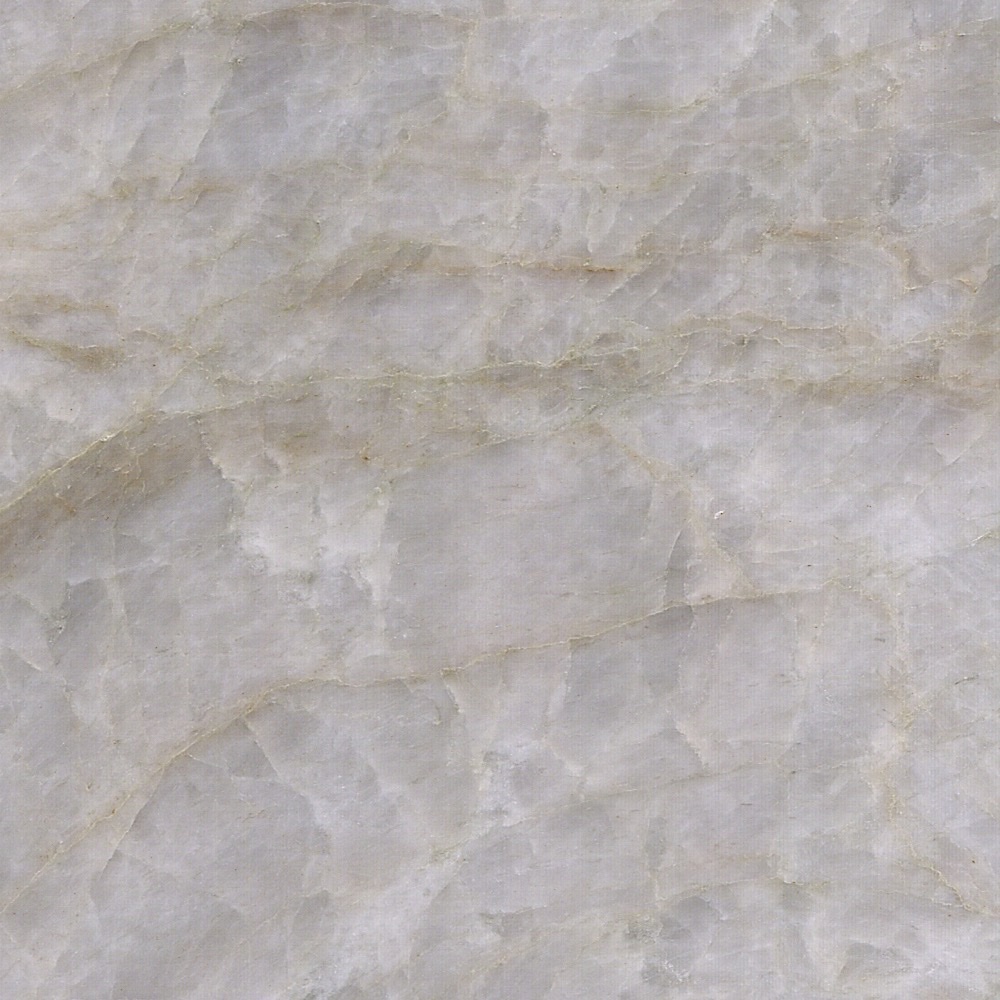
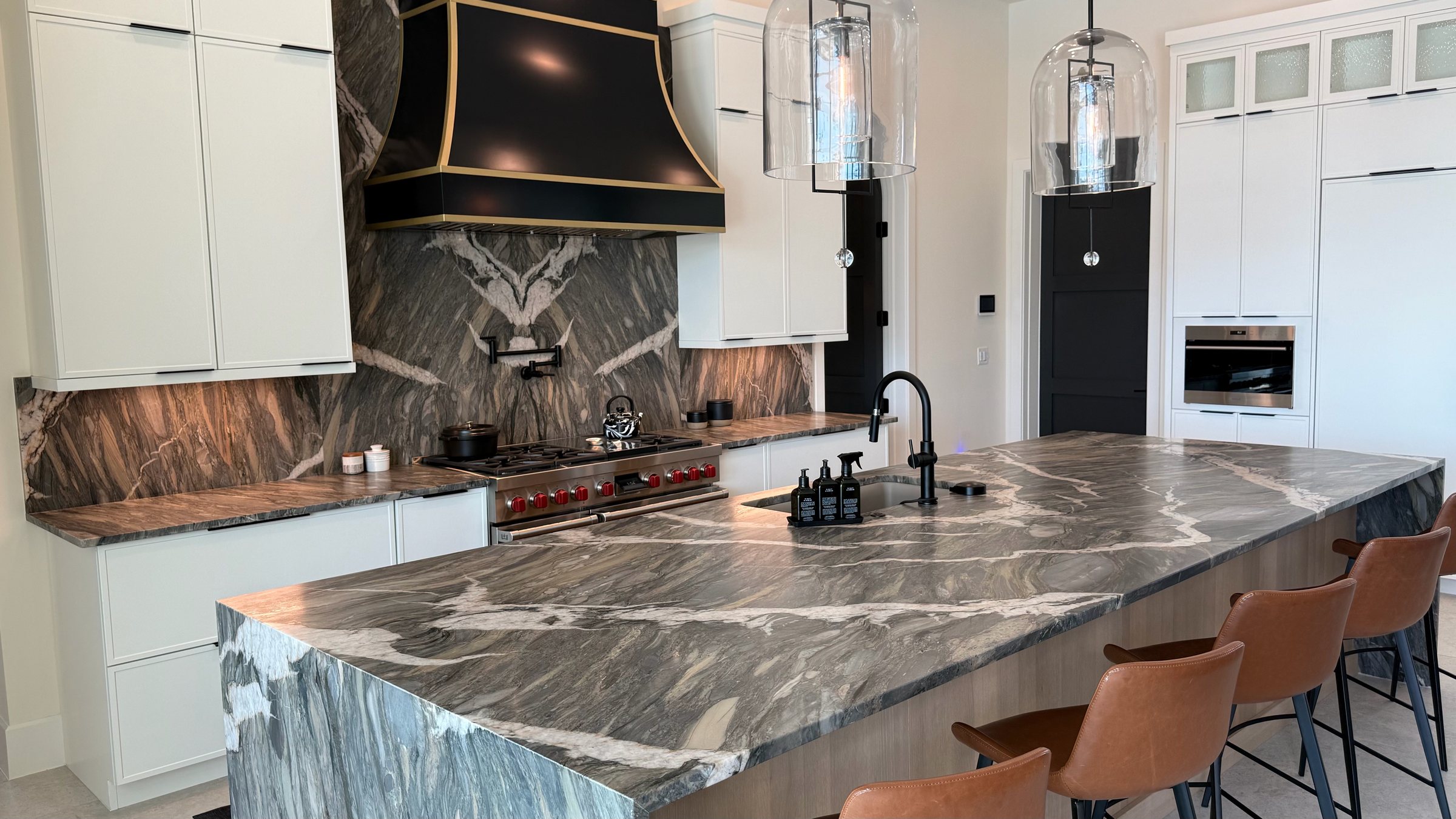
Quartzite has a different story. Geology.com’s quartzite page explains that it forms when quartz-rich sandstone is altered by the heat, pressure and chemical activity of metamorphism. The sand grains fuse into one dense rock, and the result is a stone that often shows soft, flowing veins instead of speckles.
Neither one is manufactured. Both are quarried, cut into slabs and polished. If you’ve seen quartz countertops advertised and wondered how they relate, our comparison of quartz vs quartzite covers the engineered side of that confusion.
Is Quartzite Harder Than Granite? What the Numbers Say
The Mohs scale in plain terms
Hardness here means scratch resistance, and geologists measure it on the Mohs scale. Geology.com lists the mineral quartz at 7 and orthoclase, a feldspar common in granite, at 6. It puts quartzite at about 7 as well. Granite is built from a mix of minerals, mostly quartz and feldspar, so its hardness varies with the stone. Our quartzite durability guide goes further on how that stone holds up in a kitchen.
Geology.com also says quartzite’s hardness, together with its toughness, lets it stand up better to abrasion than marble or granite in uses like countertops and stair treads. So yes, quartzite is usually the harder of the two. Just remember that the scale measures scratching, not how a stone looks, stains or handles a hard knock, which is why we treat it as one input and not the verdict.
What that means in your kitchen
Here’s the practical part, and it’s mostly reassuring. A one-point difference on a geologist’s scale doesn’t mean granite scratches easily. Granite is one of the harder countertop materials, and quartzite is harder still. You can chop on either and not see damage from normal use, though we’d still tell you to use a cutting board. It protects your knives as much as the stone.
Hardness also isn’t the same as toughness. A very hard stone can still chip if something heavy lands on an edge, and the hardest slabs are tougher to fabricate, which affects layout planning more than daily use. Don’t sit or stand on long overhangs in either material, since stone can crack there.
Check what you’re really buying
Demand for quartzite is high, and some stones sold under that name are actually softer materials such as dolomite or marble. They can look wonderful, but they scratch and etch differently. Geology.com adds a wrinkle from the other direction: in the stone trade, some quartzite is sold as “granite,” because the trade often applies that name to any hard rock that looks the part. Names on a sample tag don’t prove what a slab is, so ask how a slab was classified before you fall for it.
Veining, Staining and Upkeep
Veining and color range
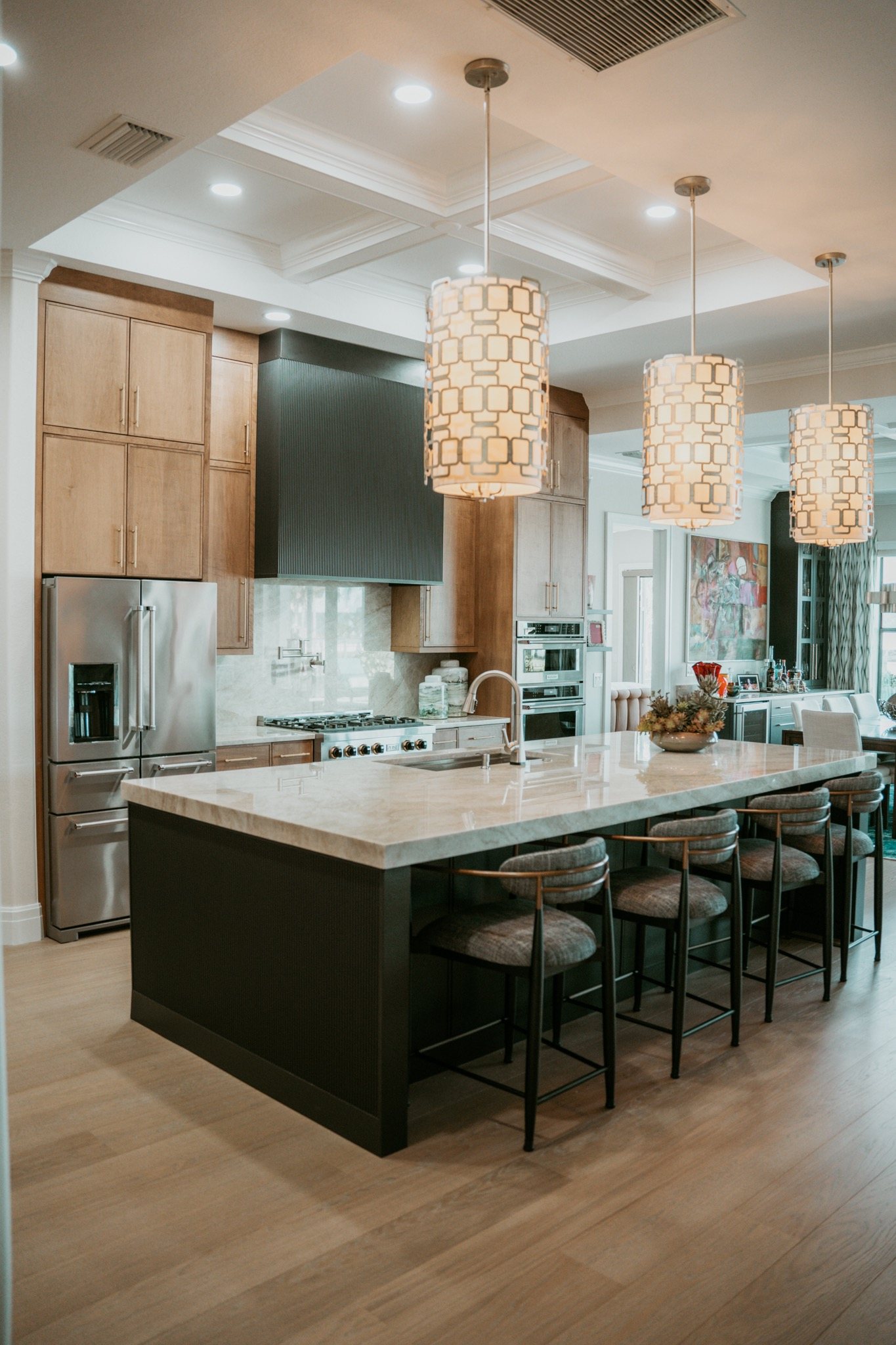
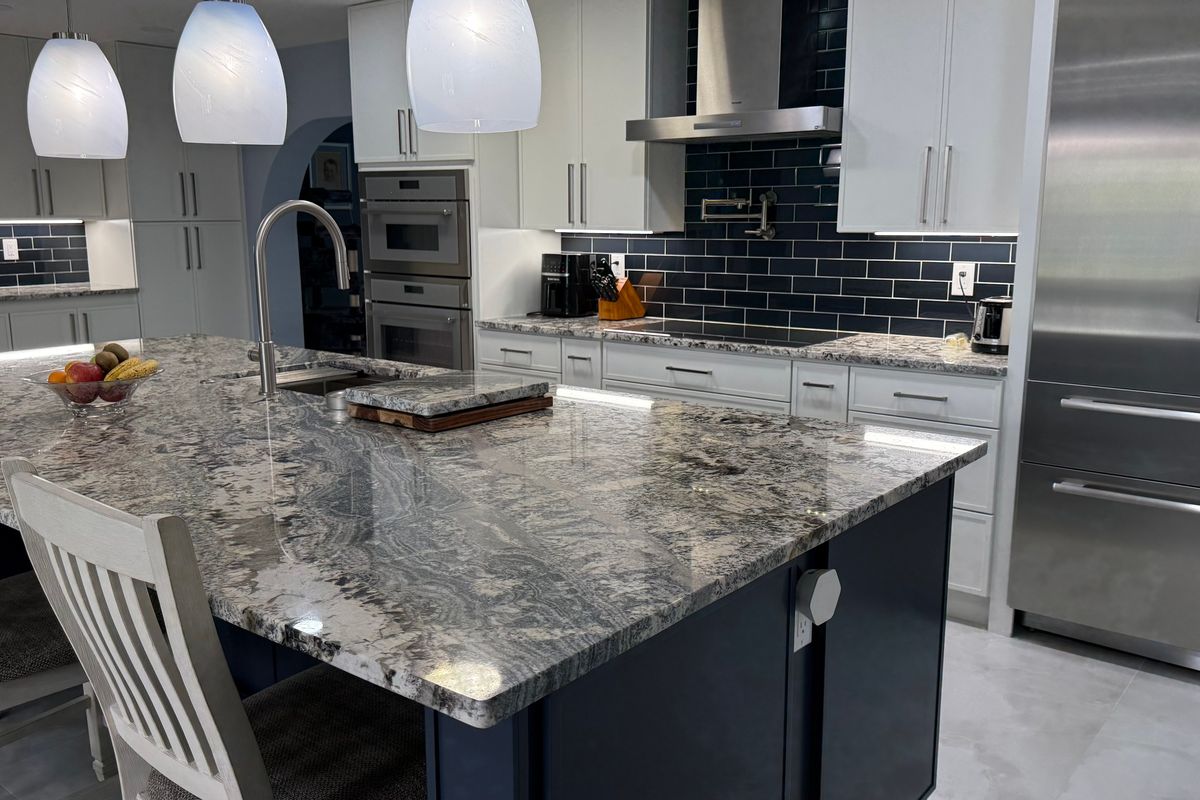
If hardness is close, looks usually decide it. Granite comes in speckled, grainy, solid-looking and heavily veined patterns, with enough range to suit nearly any cabinet style. What you see on the slab is what you get.
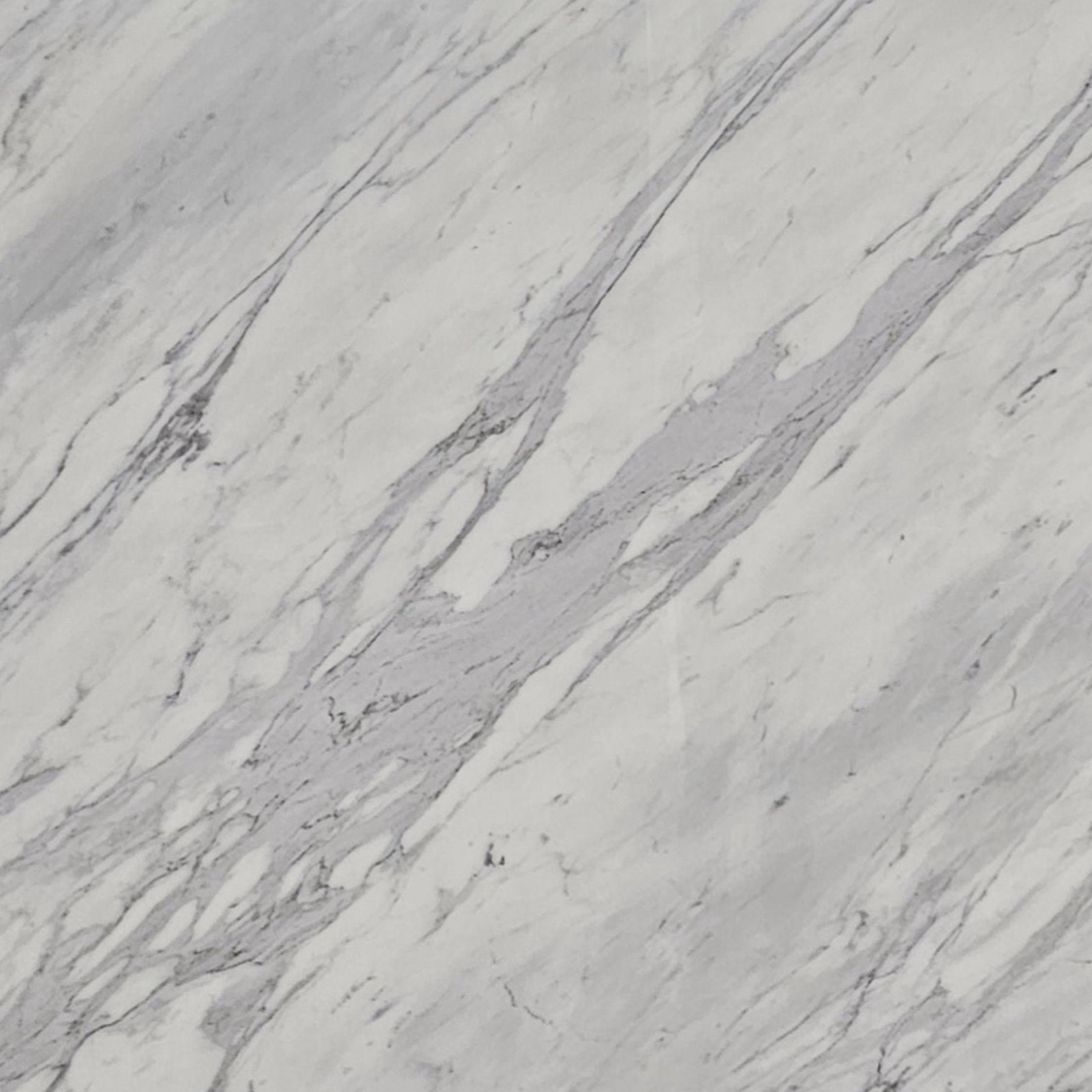
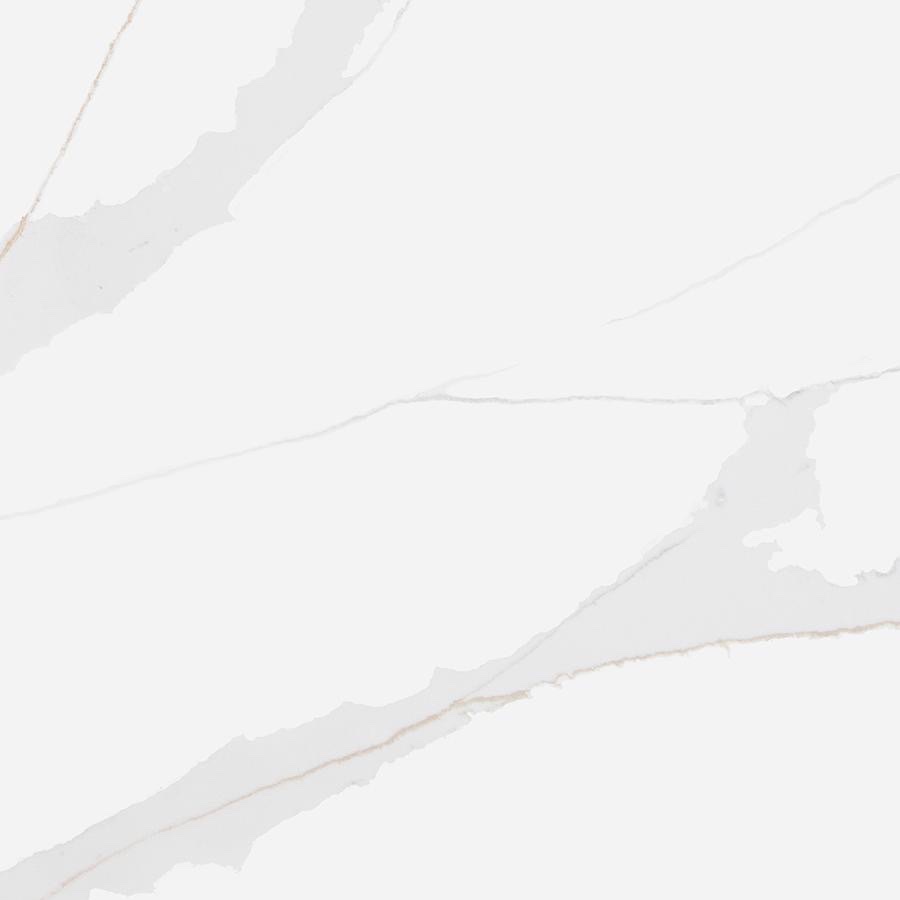
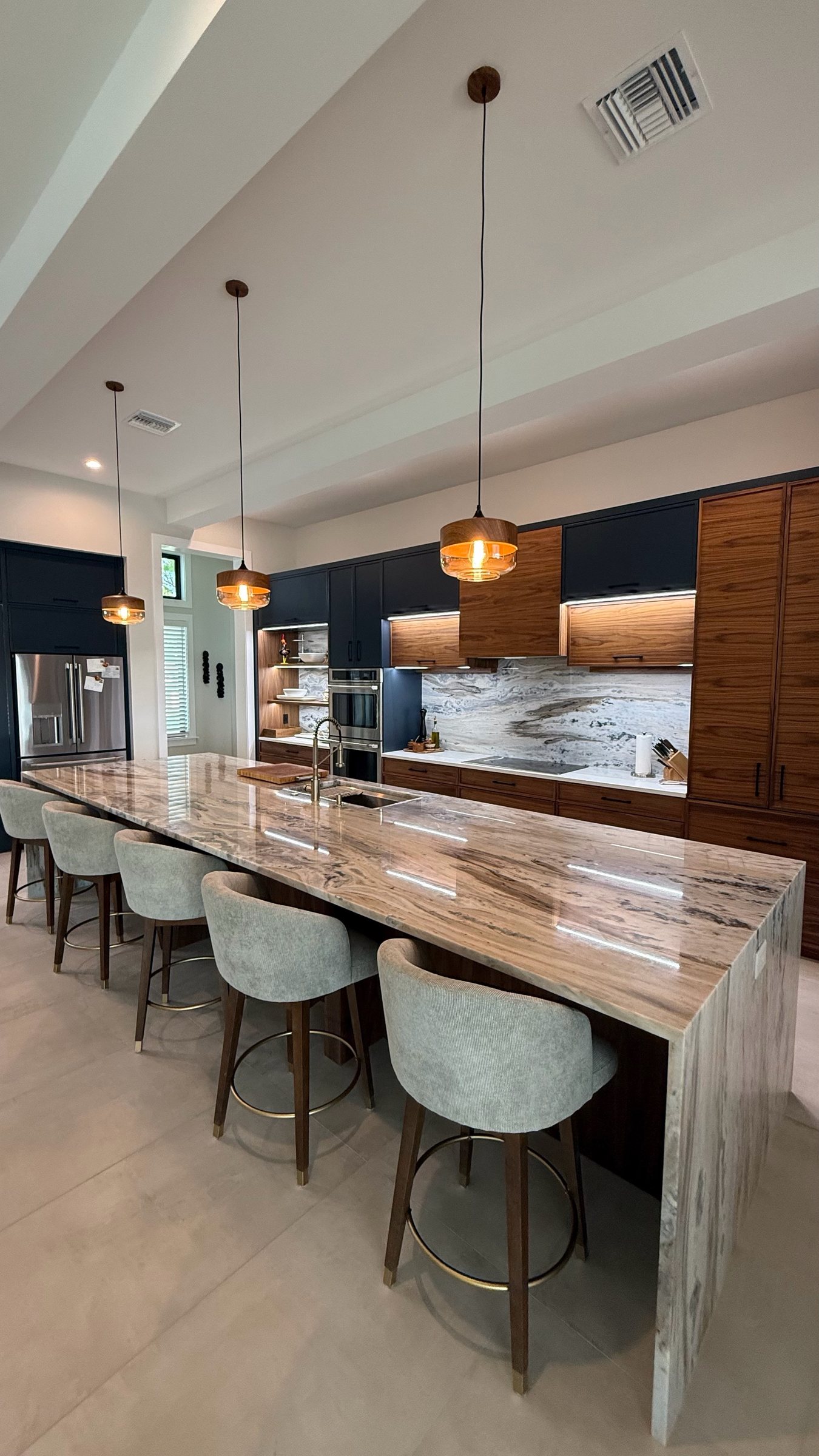
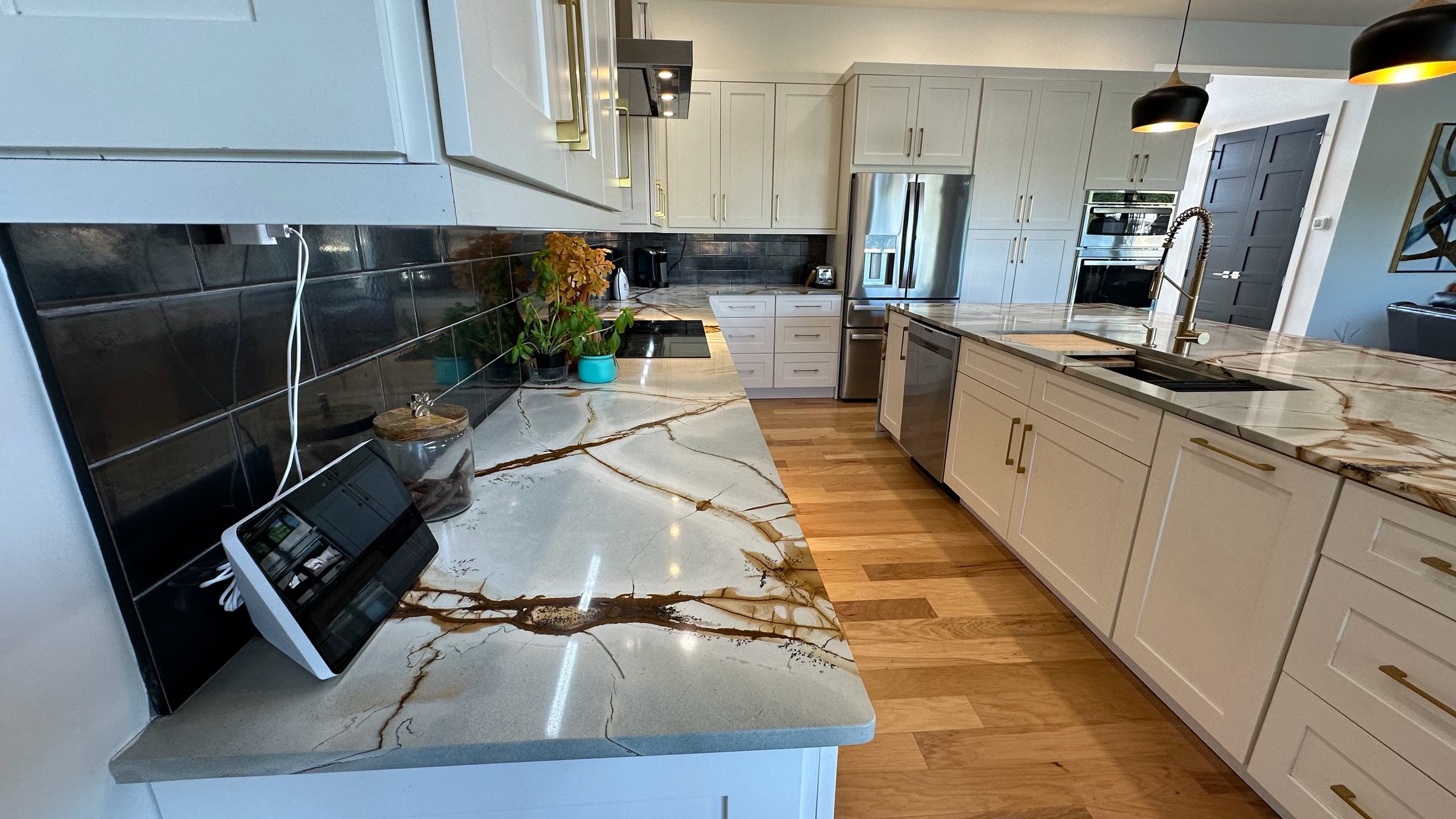
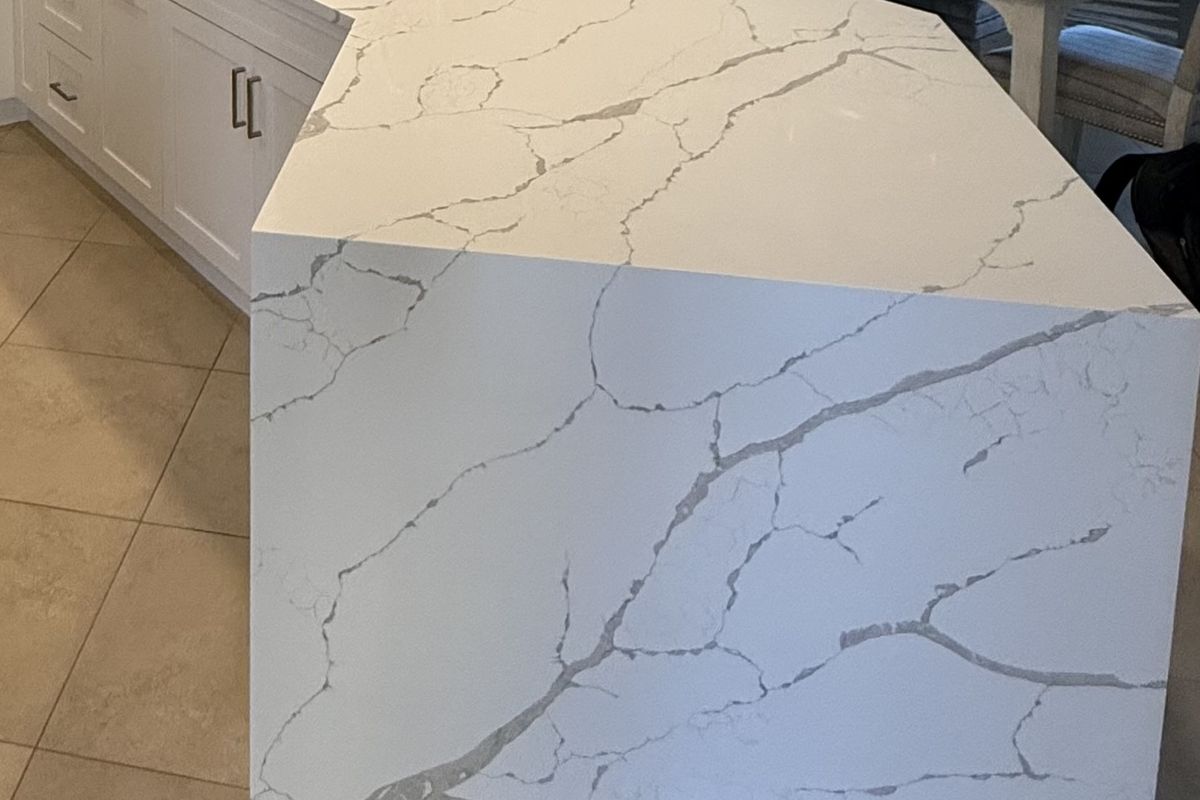
Quartzite leans toward marble-like movement: whites, creams and greys, plus soft blues and golds, with veining that reads as dramatic without being harsh. Large islands and waterfall edges are where it tends to shine, since a pattern can run across the full length. Our quartzite countertops page shows the range.
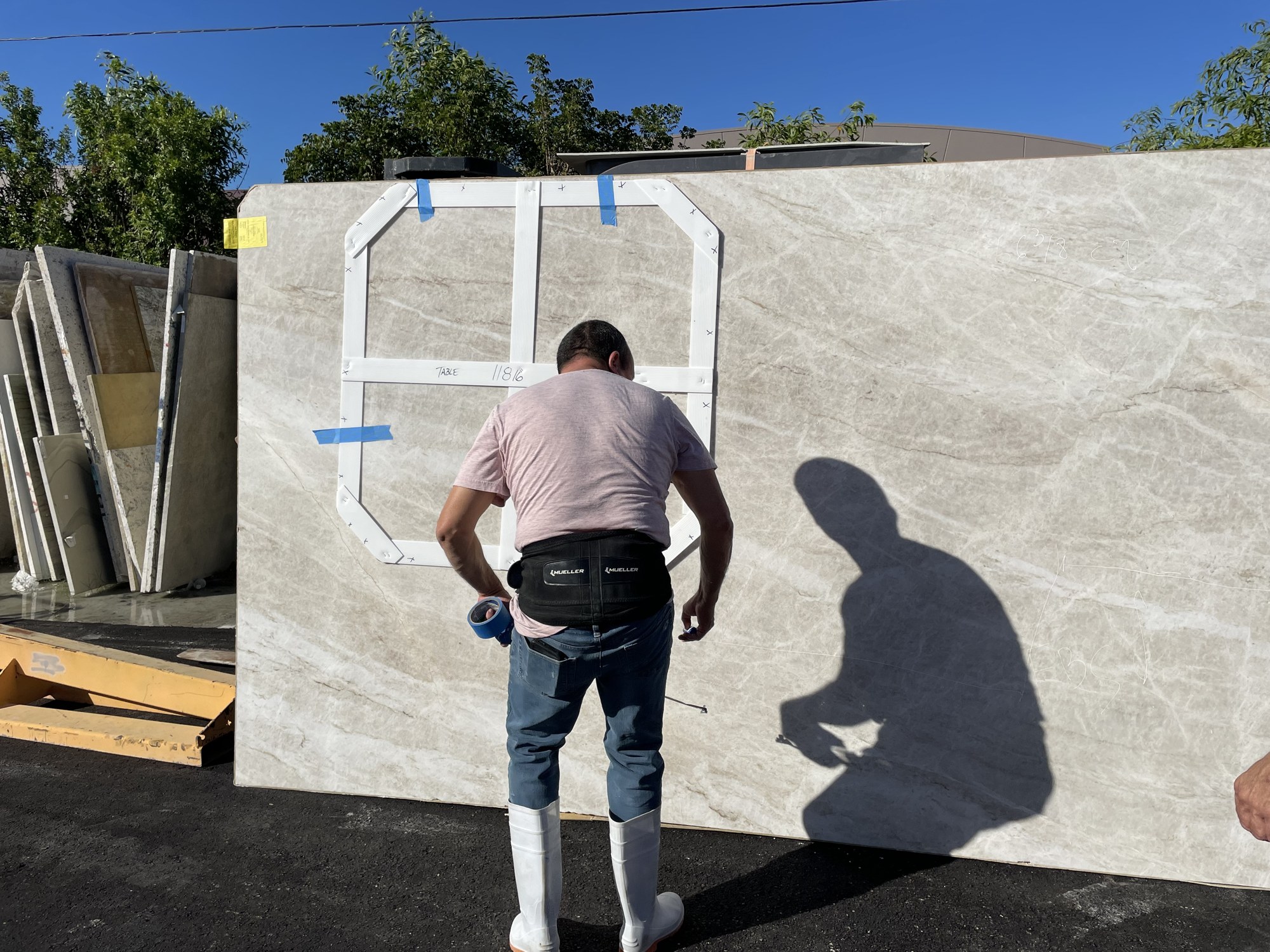
Seams and vein direction are a layout decision too. At the layout review, you approve how the slab will be cut, including where seams and veining fall, before we cut. With a strongly veined quartzite that conversation matters more than the hardness rating.
Color names only tell part of the story for either stone. Two slabs sold under the same name can differ in density of pattern, background tone and movement, so look at the whole slab. Check it under showroom lighting and, if you can, in daylight.
Staining and sealing
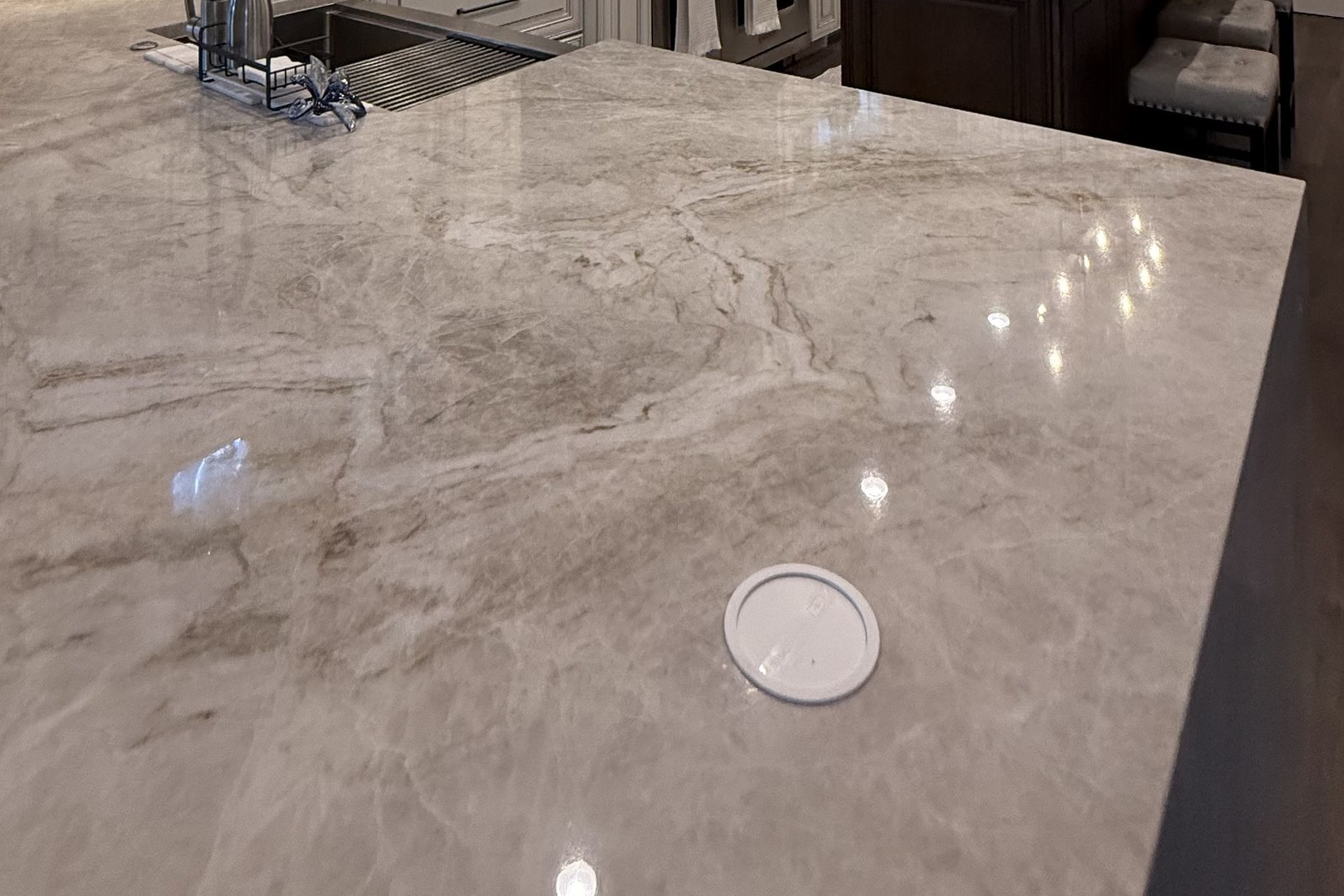
Both stones are natural and porous to some degree. Quartzite generally wants sealing, and many granites do too, though the Natural Stone Institute says most granite countertops don’t strictly require it. Denser slabs may need it less often. The Natural Stone Institute is clear that sealing makes stone more stain resistant, not stain proof, so wiping up oil, wine and coffee soon still matters.
The easy check is a few drops of water. If the stone darkens and soaks it in after a few minutes, it’s time to reseal. That works the same way on granite and quartzite.
Acids and cleaners
Granite resists acids far better than marble, and quartzite usually resists etching from lemon juice or vinegar too. For daily cleaning on either, use warm water and a pH-neutral stone cleaner. Skip harsh, acidic or bleach-based products, which can wear down the sealer and dull the finish.
Which Kitchens Suit Each Stone
- Choose granite for a busy family kitchen where you want a forgiving, natural stone with plenty of color options, or for a lanai and summer kitchen. It handles sun, heat and rain well, though some colors can fade after years of direct sun.
- Choose quartzite if you love marble’s flowing look but cook heavily, or you want a statement island where the pattern can run uninterrupted.
- Look at quartz instead if you’d rather never seal a counter and prefer consistent color indoors.
Outdoors, both stones are reasonable candidates. Granite handles sun, heat and rain well, and quartzite works for covered outdoor kitchens, though some colors of either can fade in constant direct sun. Ask us about a specific slab and where it will sit before you choose.
Once you’ve picked, we template your cabinets at your home, you approve the layout, and our in-house fabrication at our Fort Myers facility cuts the stone using CNC equipment and digital templating. From templating to installation takes 10 business days.
Many Naples buyers compare quartzite for high-end kitchens and condo remodels, and our Naples countertop page covers what changes when a building has its own rules. Our granite countertops page covers the other side of the comparison. The best value is the stone that fits how you use the space, and slab, thickness, edge profile and layout all shape an estimate, so compare two real slabs side by side.
Frequently Asked Questions
Does quartzite or granite stain more?
Sealing and prompt wiping matter more than which stone you pick. Both are porous to some degree, and denser slabs absorb less. Use the water test to see when yours needs sealing.
What is the downside of quartzite?
Quartzite needs sealing, can cost more than granite because of slab availability, and isn’t always what it’s sold as. It’s also heavy, and the hardest slabs are tougher to fabricate, which affects layout planning more than daily use.
Can I put a hot pan on quartzite?
Quartzite handles cookware heat well, but a trivet is still smart. It protects the sealer and helps avoid thermal shock near a seam.
What is the best countertop for your money?
The one that fits how you cook, clean and live. Granite and quartzite both handle daily use well, and neither is automatically the better buy, so judge them on durability, look and upkeep for your kitchen.
Not sure which stone fits? (239) 362-0404 will get you a conversation about your cabinets and cooking habits, or you can request an estimate and walk both slabs with us before you choose.