

Quartz vs. Quartzite Countertops: The Difference That Matters
The difference between quartz and quartzite is where the slab comes from. Quartz is engineered: ground natural quartz is mixed with binders and pigment and pressed into a slab. Quartzite is natural stone that was quarried, cut and polished. The names sound alike, and that confusion costs people real money when a showroom sample ends up being the wrong material for their kitchen. If you’re comparing quartz vs quartzite countertops, here’s what each one does well and where each one falls short.
One Is Engineered, One Is Natural Stone
How quartz is made
Cambria, one of the quartz brands we fabricate, describes its slabs as pure natural quartz, pigments and binders. Because the mixture is controlled, the color and pattern are planned. The slab you approve at the showroom is very close to what lands in your kitchen, and that’s a real advantage on a long island or a run of matching bathrooms.
The surface is also nonporous, which is why quartz countertops don’t need sealing. Liquids stay on top and wipe away.
How quartzite forms
Quartzite starts as sandstone. According to Geology.com’s quartzite guide, it forms when quartz-rich sandstone is altered by the heat, pressure and chemical activity of metamorphism, usually during mountain building. The grains fuse into a dense rock with a Mohs hardness of about seven.
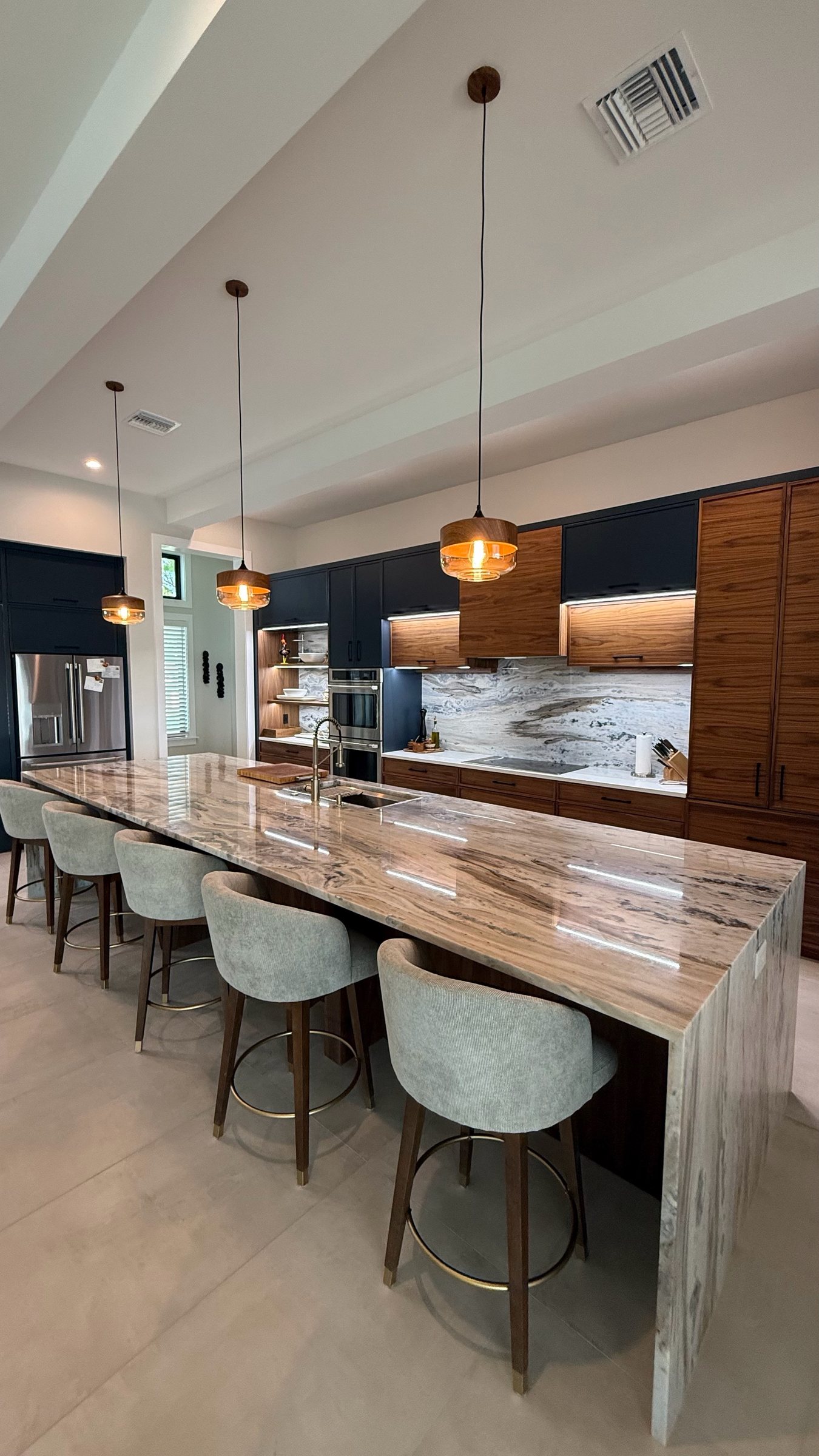
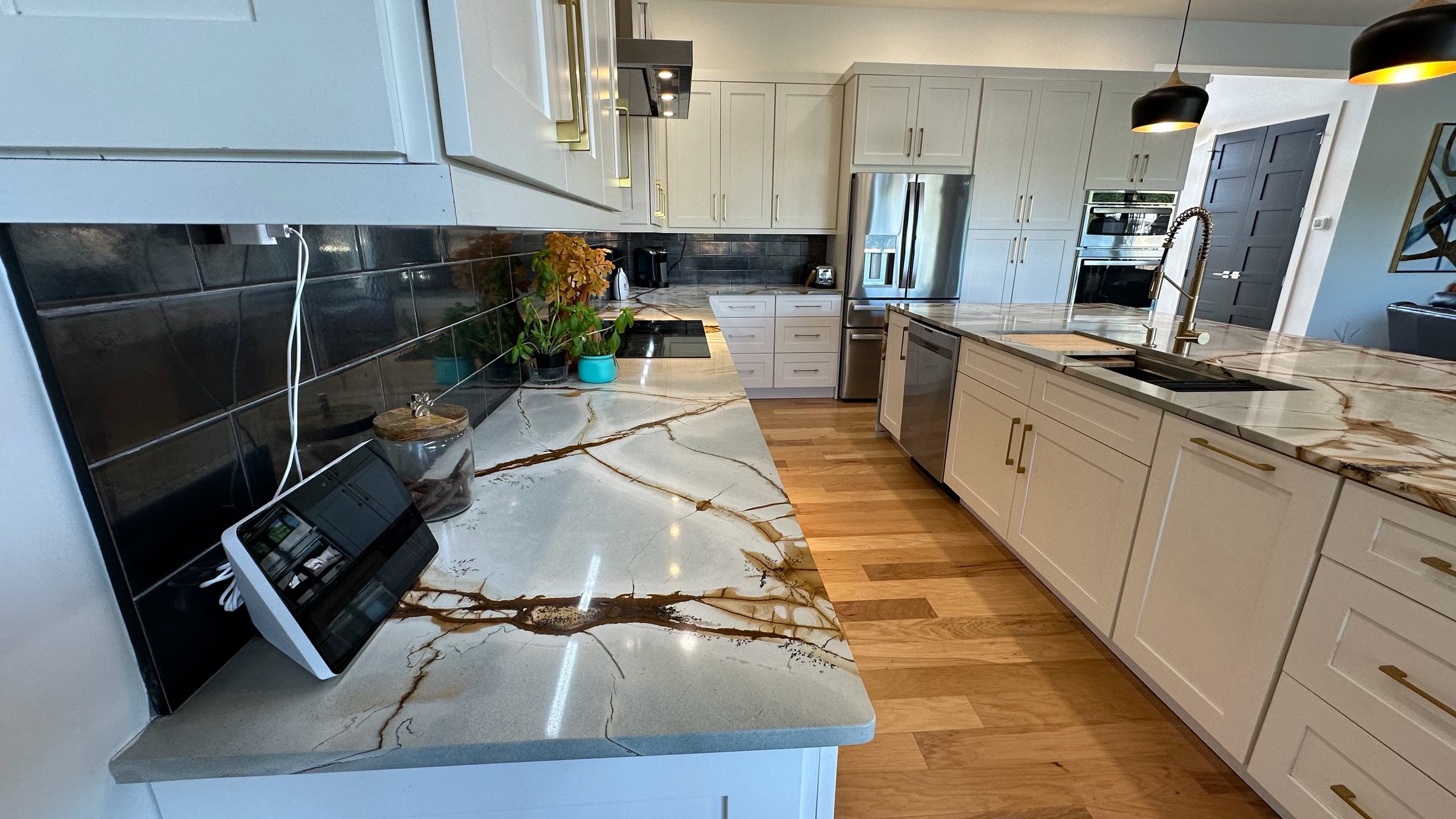
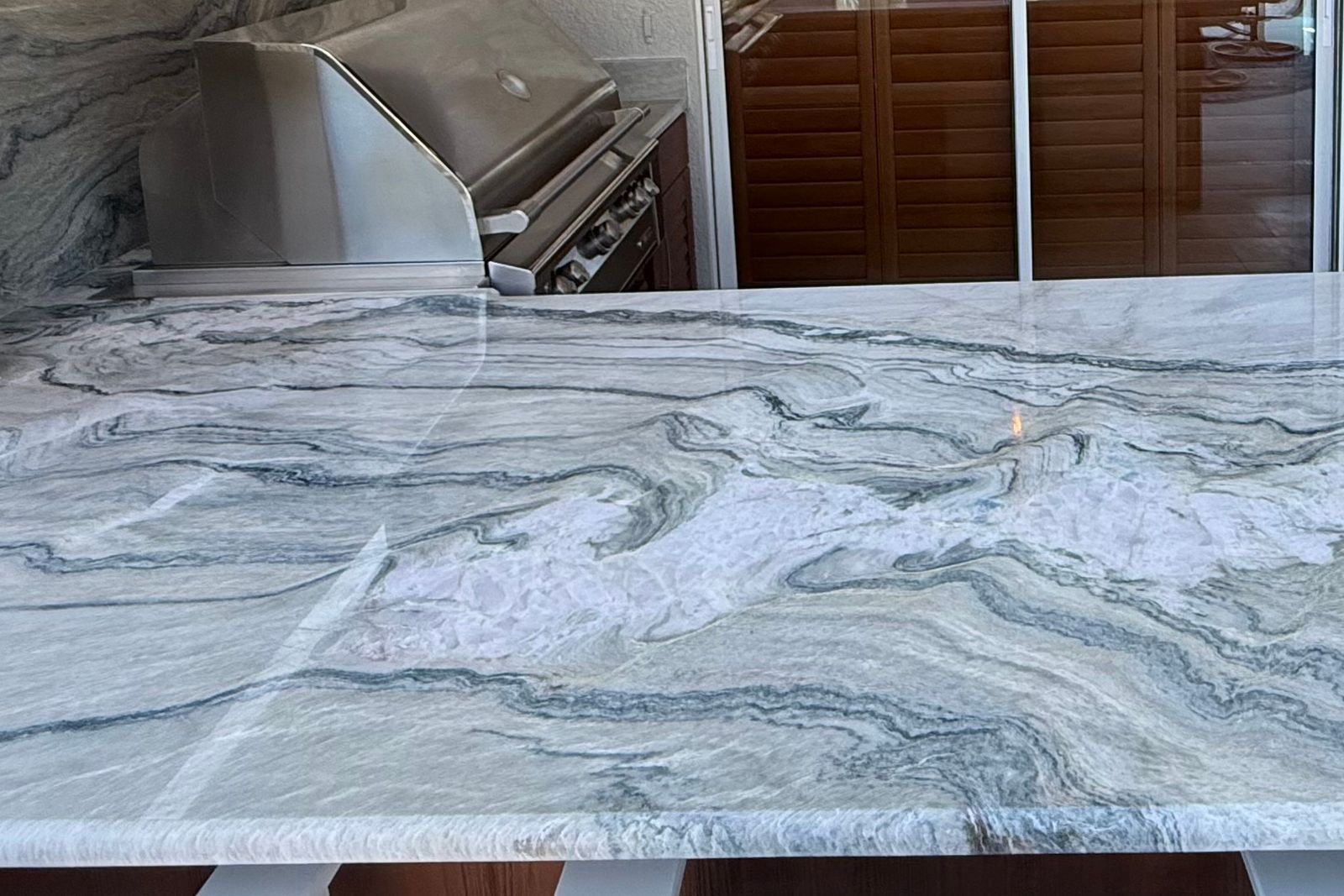
That origin explains the look. Quartzite often carries soft, flowing veining that reads like watercolor, and no two slabs match. Our quartzite countertops page shows the range of colors, from creams and greys to soft golds and blues.
The Taj Mahal mix-up
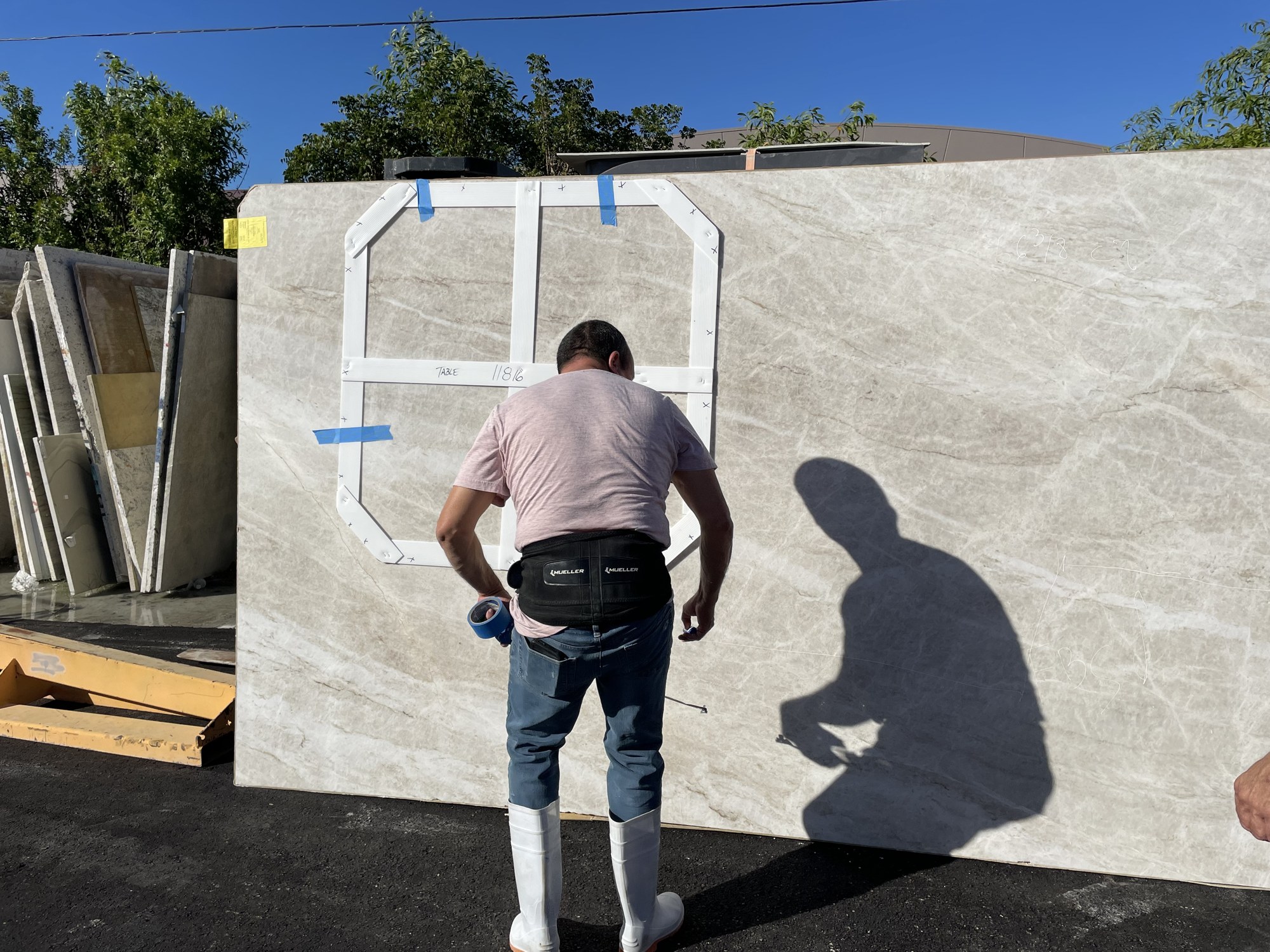
Taj Mahal is a good example of why the names trip people up. It’s a natural quartzite with creamy color and golden veining, not an engineered quartz. A few quartz colors imitate it, but the real stone is quarried, so we always suggest seeing the actual slab before you decide.
Quartz vs Quartzite Countertops: Heat, Sun and Outdoor Use
Hot pans
Quartz is held together by binders, and heat is where it’s most vulnerable: the resin can scorch or discolor under direct, high heat. Cambria’s own care guidance recommends a closed-weave hot pad or a solid trivet under pots and pans, and warns that sudden temperature changes or prolonged heat on top can cause damage. A hot mug set down briefly is fine. A pan straight off the burner can leave a mark that doesn’t come out.
Quartzite handles cookware heat better because it’s stone all the way through. We’d still put a trivet under a pot fresh off the flame, mostly to protect the sealer and avoid stress near a seam, but you won’t be as worried about the occasional slip.
Sun, lanais and outdoor kitchens
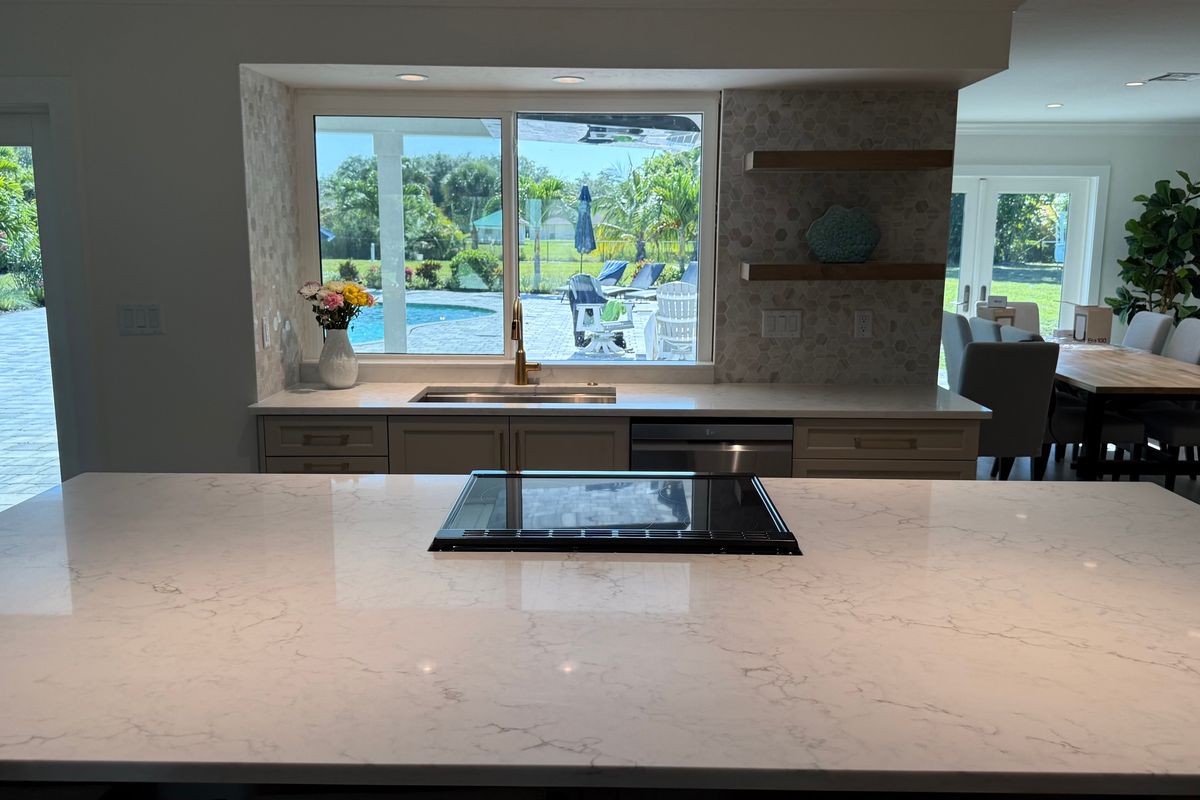
This is where the two part ways most clearly. Direct, prolonged sunlight can discolor the resin in standard quartz over time, so check your maker’s guide for its sun-exposure terms. If you want a countertop for a lanai or a grill island, quartz usually isn’t the pick.
Quartzite is a reasonable candidate for a covered outdoor kitchen, though some colors can fade in constant direct sun. Porcelain and Dekton are also worth a look outside. Our quartzite durability guide goes deeper on how the stone holds up over the years, so we won’t repeat it here.
Sealing and Everyday Care
Here the trade is simple. Quartz asks nothing of you. Cambria says its quartz never requires sealing, polishing or reconditioning, and it recommends warm water, a soft cloth and mild soap for cleaning. In fact it tells owners not to apply sealers to it at all.
Quartzite is porous, so it needs sealing, and some slabs need it more often than others. Sealing doesn’t make natural stone stain proof; as the Natural Stone Institute’s care guidance puts it, it makes the stone more stain resistant. A simple test tells you when it’s due: drop a little water on the surface. If it darkens and soaks in after a few minutes, it’s time to reseal. Denser slabs usually hold out longer.
Daily cleaning is the same for both: warm water and a pH-neutral cleaner. Skip bleach and harsh acidic products on either one, since on natural stone they can wear down the sealer and dull the polish. Wipe up oil, wine and coffee soon on quartzite rather than letting them sit.
One caution about quartzite labels
Demand for quartzite is high, and some stones sold under that name are actually softer materials such as dolomite or marble. They can still be beautiful, but they scratch, etch and stain differently. Ask how a specific slab was classified and how it should be cared for before you commit.
Looks: Consistency Versus Natural Movement
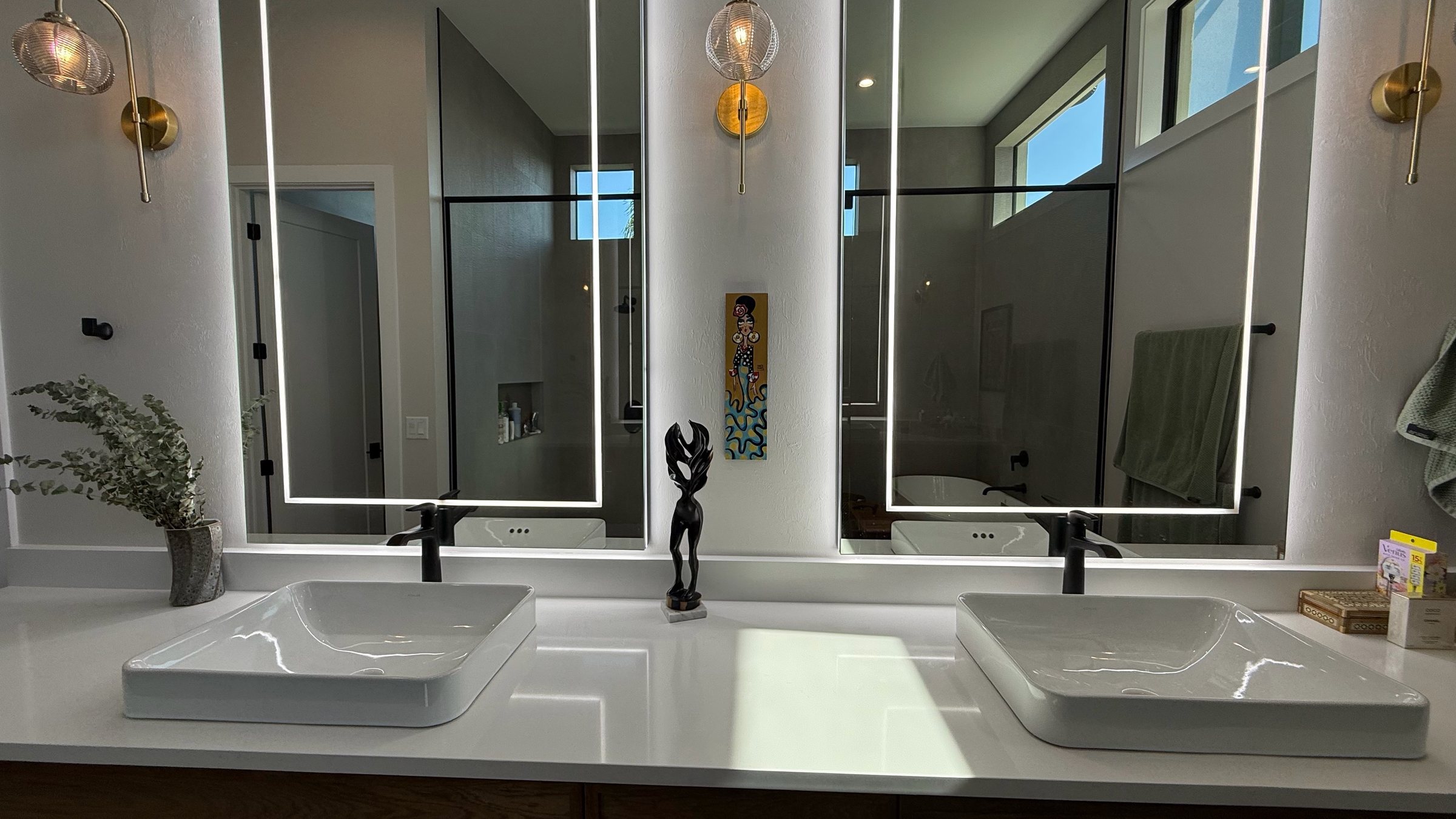
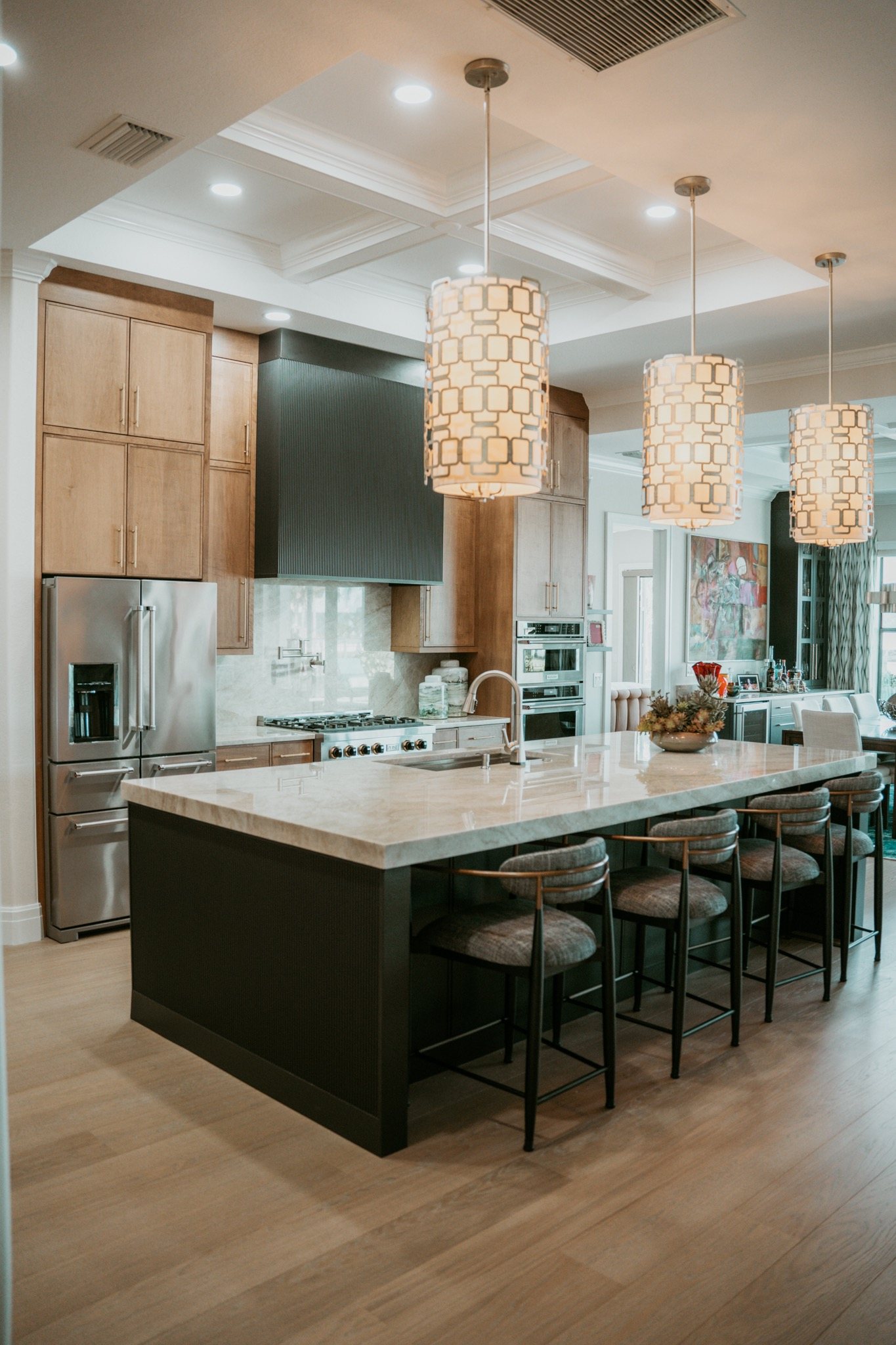
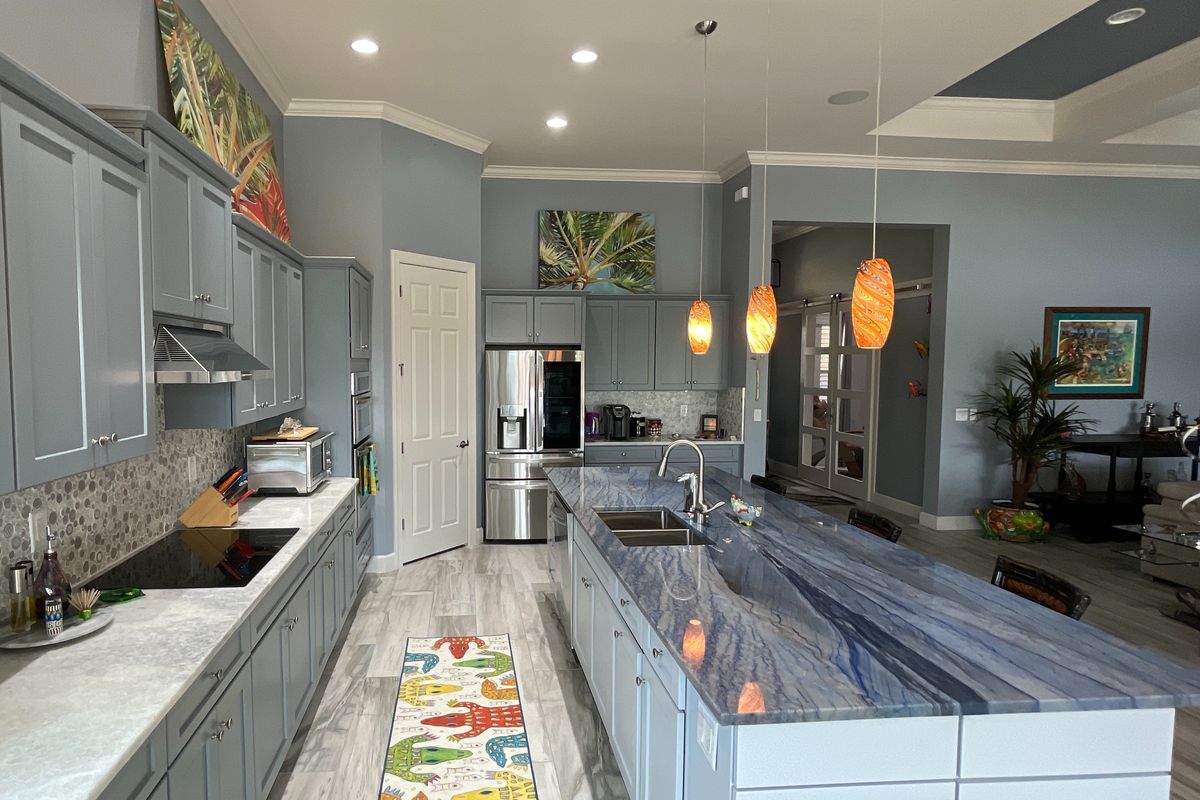
Quartz gives you control. Solid whites, soft concretes, warm neutrals and marble-style veining are all available, and the pattern repeats from slab to slab. That’s useful when you want two bathrooms to match or a large kitchen to feel calm and even. The veining is built into the slab by design, so it looks lovely but is less random than the real thing.
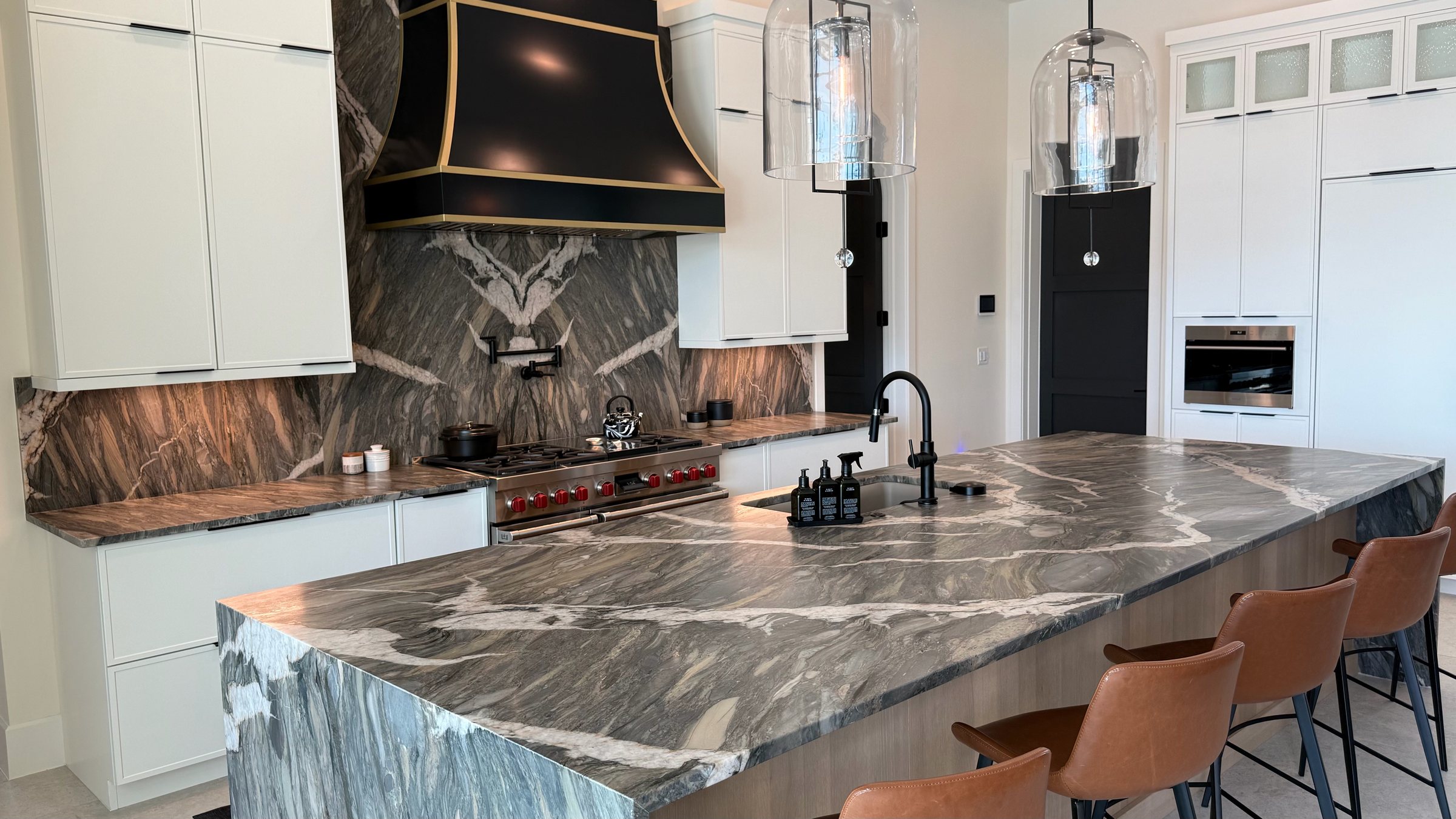
Quartzite gives you character. Veining can run across the full length of an island, and waterfall edges show it off especially well. The tradeoff is variation: what you see on the slab is what you get, including areas you may like less. That’s why we encourage you to walk the full slab instead of choosing from a small sample.
Seams matter here too. On very light quartz they can show, and with quartzite you can usually decide where a seam and a vein fall at the layout review, before anything is cut. That conversation is worth having whichever stone you choose.
Light changes both stones more than people expect, particularly whites and greys. Look under showroom lighting and, if you can, in daylight.
Choosing between them
- Pick quartz if you want predictable color, no sealing and an indoor kitchen or bath.
- Pick quartzite if you want one-of-a-kind movement, you cook hard, or the counter will sit in a covered outdoor space.
- Look at something else if you want marble’s look but not its etching. Quartzite is usually the more forgiving path.
Neither one is automatically the better value. Both materials span a wide range, and slab, thickness, edge profile and layout all shape an estimate, so the most useful comparison is two real slabs you like. If you’re in Estero, our Estero countertop page covers how we plan templating around community rules and seasonal schedules.
When you’re ready, you pick your slab at our showroom, we template your cabinets, and you approve the layout before anything is cut. Our in-house fabrication at our Fort Myers facility then cuts and finishes the stone, and the stretch from templating to installation is 10 business days.
Frequently Asked Questions
What’s the difference between quartz and quartzite?
Quartz is an engineered product made from ground quartz, pigments and binders, while quartzite is natural stone formed from sandstone. Quartz is nonporous and uniform. Quartzite is porous, needs sealing and varies from slab to slab.
Is quartz stronger than quartzite?
Not in the ways most people mean. Quartzite is a very hard stone that tolerates heat and everyday wear well. Quartz is durable too, but its binders make it more sensitive to direct heat and prolonged sun.
Can you put a hot pan on quartzite?
It handles cookware heat well, but we still suggest a trivet. It protects the sealer and avoids stress near seams. On quartz, a trivet isn’t optional.
Does quartzite need sealing?
Yes. Quartzite is porous, so it needs periodic sealing, and some slabs need it more often than others. Do the water test to see when yours is due.
Still weighing the two? (239) 362-0404 is the quickest way to ask us which one suits your kitchen, or you can request an estimate and we’ll set up a side-by-side look at real slabs.