

Does Quartz Stain? What Actually Marks It and How to Prevent It
Does quartz stain? It resists staining very well, but no countertop is stain-proof, and quartz can be marked in ways that have little to do with spilled coffee. Because it’s non-porous, wine, coffee and oil sit on the surface instead of soaking in. The marks that do happen usually come from heat, harsh chemicals, abrasives or sun, and those are preventable.
Here’s what quartz handles easily, what can change its surface, and the daily habits that keep it looking the way it did on installation day.
The Short Answer: Does Quartz Stain?
Makers use careful wording on purpose. The Viatera care and maintenance guide from LX Hausys says its quartz is non-porous and resists staining. Cambria describes its surfaces as nonporous, nonabsorbent and stain resistant. Neither one says “stain proof,” and we wouldn’t either.
Engineered quartz is ground natural quartz bound with resin and pigment. The resin fills the slab, so nothing wicks into it the way a drink can darken an unsealed natural stone. That’s the reason quartz needs no sealing.
Stain or damage?
Most people use “stain” for any mark, but it helps to separate two things. A stain is something that has soaked in. On quartz, that’s rare, though Viatera’s guide does note that some persistent stains, such as dried red wine and ink, can be stubborn, which is one more reason to wipe them up while they’re fresh. Most of what shows up is a change to the surface itself: a dull spot, a scratch, a scorch, a discolored patch or a film of mineral deposits. Each has a different cause, which is why the prevention advice differs for each.
How quartz compares with natural stone
Natural stone is porous, so a spill that sits can soak in and leave a dark spot, and that’s why many people seal granite and quartzite. Marble can also etch, which is a dull mark from acids like lemon juice or vinegar rather than a stain. Ordinary lemon juice or vinegar spills don’t etch quartz the way they do marble, and it doesn’t need a sealer, which is a big part of why people choose it for a busy kitchen.
The trade is this: quartz gives you more freedom with spills and less freedom with heat and sun. If you cook on the counter a lot or the room is bright, those limits matter more than stain resistance does.
What Quartz Resists and What It Doesn’t
Quartz does well with the everyday spills that ruin other surfaces. Here’s how it sorts out in practice.
What it handles well
- Wine, coffee, juice and cooking oil. They stay on top, and mild soap and warm water wipes them away. Cambria says a stain-resistant surface lets you leave a wine spill for a bit without worry, though we’d still wipe it promptly.
- Daily splashes. Viatera calls for plain warm water and a sponge or dish towel for routine care.
What can mark it
- Harsh chemicals. Viatera warns that oven cleaner, drain cleaner, acetone, and strong acid or alkaline products can cause permanent damage. Cambria lists bleach, paint removers, furniture strippers and tarnish cleaners as well.
- Abrasive pads and powders. They can leave scratch marks, and Cambria notes that surface markings are more visible on solid, single-color designs.
- Direct heat. The resin can scorch or discolor under a hot pan, so use a trivet or hot pad under cookware and heat-producing appliances such as air fryers and slow cookers.
- Hard water minerals. Viatera says drips and splashes left to dry, especially around faucets, build up mineral deposits.
- Rough dishes and a cutting knife. Cutting directly on quartz can scratch the finish, and Viatera cautions about ceramics with rough edges.
If you want the full routine, our post on how to clean quartz countertops covers daily care and the products to skip.
White Quartz and Yellowing
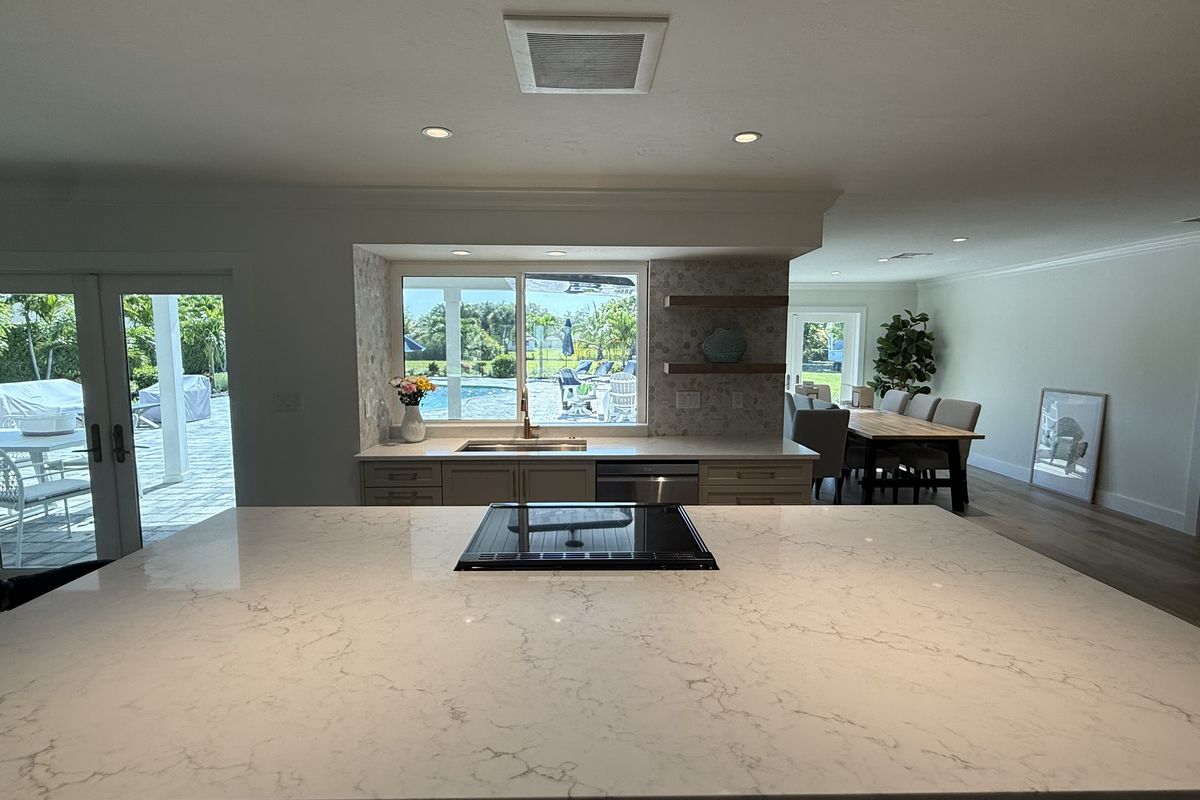
People worry about white quartz more than any other color, because a change shows. Usually the cause isn’t a stain at all. The resin that holds quartz together can discolor under direct, prolonged sunlight, so the usual advice is to keep standard quartz out of lanai kitchens and grill islands. Heat from a pan or an appliance left on the counter can discolor it too.
For Southwest Florida homes, that’s the practical point. A white quartz island that sits in a bright room is usually fine, but one beside a sliding door that gets hours of direct sun is worth planning around. Window shades or a different layout can help, and in an outdoor space, natural stone or porcelain is usually the better call. Our quartz countertops page covers the honest downsides before you choose.
Habits That Keep Quartz Looking New
Nearly everything that marks quartz can be avoided with a handful of habits. None of them take much effort.
In the kitchen
- Put a trivet or closed-weave hot pad under anything hot. Cambria points out that its surface isn’t heat-proof, and Viatera asks for a pad that lets air move beneath it.
- Use a cutting board every time you chop.
- Wipe spills as they happen, especially anything strongly colored or greasy. Rinse and dry afterward.
- Keep the harsh products under the sink. Oven cleaner, drain cleaner and paint remover should never touch the counter.
None of this means quartz is fussy. It means the surface is forgiving of spills and less forgiving of heat, sun and strong products, so the habits that matter are about those three things. Once they’re routine, most owners find quartz needs very little attention.
Cleaning and sealing
A soft cloth and mild dish soap do almost everything, because pressure and abrasives are what turn a minor mess into a scratch. Wipe and dry around the faucet too, since Viatera notes a water softener can leave mineral deposits. Skip sealers: Cambria specifically says not to apply them, because they can cause dull spots or uneven gloss.
If a mark stays
If a mark doesn’t come off with warm water, a soft cloth and mild soap, stop. Solvents, bleach and scrub pads can make a mark permanent. We won’t suggest a home remedy for something we can’t see, so check your quartz maker’s care guide and ask a stone professional what it is. If you’re comparing quartz for a new kitchen in the Bonita Springs area, our Bonita Springs countertop page has the details of how we work there.
Frequently Asked Questions
Does white quartz turn yellow?
It can, but not usually from a spill. Long exposure to direct sunlight can discolor the resin, and so can high heat. Keeping white quartz out of direct sun and using trivets prevents most of it.
Is there a white countertop that doesn’t stain?
No surface is truly stain-proof. Quartz is non-porous and stain resistant, and porcelain and Dekton are non-porous too, so they don’t need sealing. White natural stone can darken if the spill sits and the sealer is worn. Which one suits you depends on how much light the room gets and how you cook.
Can you seal quartz to prevent stains?
No, and you shouldn’t try. Quartz is non-porous, so there’s nothing to seal, and Cambria says not to apply sealers or topical treatments because they can dull the surface.
What should I do about ink on quartz?
Wipe it right away with warm water and mild soap while it’s fresh. If a mark remains, don’t reach for acetone, bleach or a scrub pad, since Viatera warns that harsh chemicals can cause permanent damage. Ask a stone professional what you’re dealing with.
Wondering how a particular quartz color will hold up in your kitchen? (239) 362-0404 is the number to call, or you can request an estimate and we’ll look at slabs with you at our showroom.