




How to Clean Quartz Countertops: Daily Care and What to Avoid
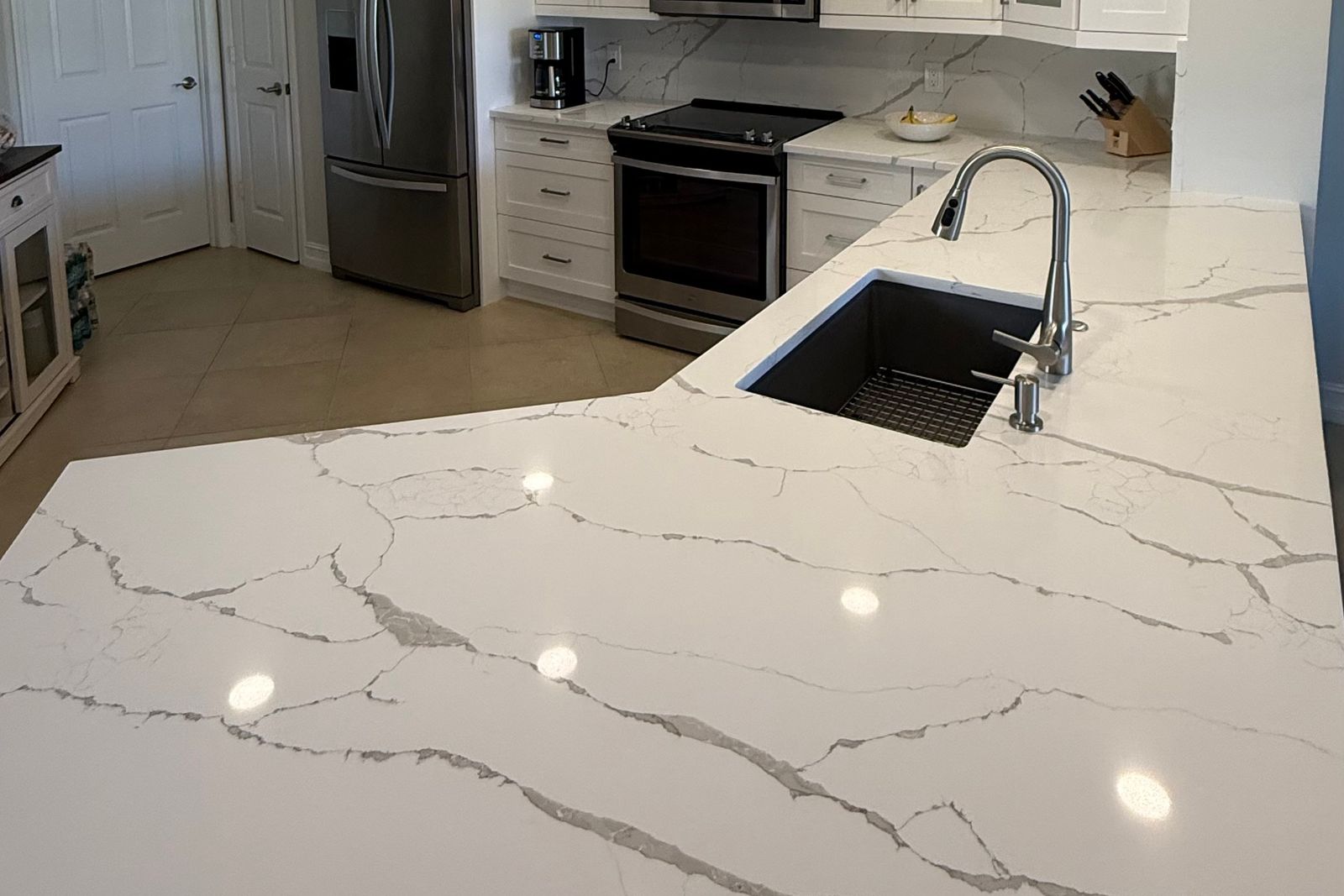
To clean quartz countertops, wipe them with warm water, a soft cloth and, if you like, a little mild soap. That handles nearly everything a kitchen throws at it. Quartz doesn’t need sealing or polishing, and the biggest risk is rarely dirt. It’s the harsh product someone reaches for to get a surface “really clean.”
Here’s the routine we’d follow, which products to keep away from the resin, and how to deal with dried-on messes without hurting the finish.
The Everyday Routine for Cleaning Quartz Countertops
Quartz is made by pressing ground natural quartz with resin and pigment into a slab. The surface isn’t porous, so liquids stay on top instead of soaking in. That’s why routine care is so light, and why makers’ guides agree on the basics.
Cambria’s product care page calls for warm water, a soft cotton cloth and mild soap if desired. The Viatera care and maintenance guide from LX Hausys adds a useful finishing step: wipe rather than scrub, rinse with clear water, and buff dry with a clean cloth.
A routine that takes two minutes
- Wipe with a soft cloth or sponge and warm water. A drop of mild dish soap helps with grease.
- Rinse with clear water so no soap film is left.
- Buff dry with a microfiber cloth. Drying keeps mineral spots from forming near the faucet.
Choosing a cloth and sponge
A microfiber cloth or a soft cotton cloth is the best tool for the job. If you want a sponge, Viatera suggests a textured one that’s suitable for non-stick cookware, and says to avoid any scrub pad that isn’t. Wiping beats scrubbing: pressure doesn’t make quartz cleaner, it just wears on the finish.
Hard water around the faucet
Mineral spots build up where water splashes and dries, and water softeners can leave deposits too, according to Viatera. Wipe splashes and drips near the sink as they happen and the buildup has little chance to start. Dry the area after you rinse a pot or fill a kettle.
Why quartz doesn’t need sealing
Some natural stone, including many granites, benefits from a sealer; the recommendation depends on the slab. Quartz is non-porous, so there’s nothing to seal. Cambria goes further and says not to apply sealers, penetrants or topical treatments to its surfaces, because they can leave dull or uneven spots. Skip any product that promises to “protect” or “condition” your quartz.

Are Clorox Wipes OK on Quartz?
It depends on the wipe and on your quartz maker, so check both. We don’t have a blanket yes, and we wouldn’t make wipes your daily routine. Soap and water cleans a quartz surface well, and wipes aren’t needed for most days.
When you do want to disinfect, the label is your guide. The EPA’s page on registered disinfectants explains that disinfectants are pesticides, that you should follow the directions for use, and that the surface needs to stay visibly wet for the full contact time. Then rinse and buff dry.
What the quartz makers say
The two makers we work with don’t read the same. Cambria warns against bleach and against strong alkaline or acid cleaners at any pH. Viatera says bleach and products containing bleach shouldn’t be used, though its guide does list a few household multi-surface cleaners and one quaternary disinfectant as suitable, with a rinse and dry afterward.
Because the guidance differs, read the care guide for your own brand. If you’re not sure which brand you have, your installation paperwork is the first place to look. Our quartz countertops page explains how the material is made and what to expect from it.
Products That Can Dull or Damage the Resin
The resin in quartz is what gives it a uniform look and a non-porous surface, and it’s also the part chemicals and abrasives can harm. Keep these away from it.
- Abrasive scrub pads and powders. Cambria says not to use abrasive or harsh scrub pads, and lists scouring products such as Comet, Soft Scrub and S.O.S pads. Viatera adds Magic Eraser to its do-not-use list. Abrasives can leave scratch marks, and Cambria notes that surface markings are more visible on solid, single-color designs.
- Oven cleaner and drain cleaner. Cambria warns against oven cleaners, and Viatera names both oven and drain cleaner. Viatera says contact can cause permanent damage.
- Paint removers, furniture strippers and tarnish or silver cleaners. Cambria names these as products to avoid.
- Acetone and products that contain it. Viatera lists acetone among the harsh chemicals to keep off the surface.
- Strong acid or alkaline products. Both makers caution against them.
Heat and sun matter too
The resin that holds quartz together can scorch or discolor under direct, high heat, so a trivet or closed-weave hot pad under pots, pans, slow cookers and air fryers isn’t optional. Viatera asks for a pad that lets air move between it and the counter. Cambria says its surface isn’t heat-proof.
Direct, prolonged sunlight can also discolor the resin over time, so the usual advice is to keep standard quartz off a lanai or outdoor grill island. Check your maker’s guide for its own sun-exposure terms. Our kitchen countertop page shows how we plan around heat and daily use.
Dried Food, Fingerprints and Marks That Won’t Wipe Off
Most dried-on messes are just residue sitting on a non-porous surface. Cambria says residue comes off with warm water, a soft cotton cloth and mild soap. Lay a warm, damp cloth over the spot for a few minutes to soften it, then wipe, rinse and dry.
Cutting boards and rough dishes
Cutting or chopping directly on quartz dulls your knife and may scratch the finish, and Viatera also cautions about earthenware or ceramics with rough bottoms. A board under the knife and a smooth base under a heavy bowl protect the surface better than any cleaning habit.
Matte and textured finishes
Viatera notes that smudges, fingerprints and water spots are more visible on a matte finish than on a polished one, and that’s normal. If your quartz has a brushed or honed look, expect to wipe it more often and dry it afterward.
When a mark stays
If gentle cleaning doesn’t lift a mark, stop there. Don’t escalate to solvents, bleach or scrub pads, since those cause the harm you’re trying to avoid and some of it can’t be reversed. Check your maker’s care guide, and ask a stone professional what the mark is. Prevention is your best tool: wipe spills when they happen, use trivets and cutting boards, and keep harsh products out of the kitchen cabinet under the sink.
If you’re planning a kitchen in Naples, our Naples countertop page explains what we do there.
Frequently Asked Questions
Can you use Clorox wipes on a quartz countertop?
Check your quartz maker’s care guide and the wipe’s label first. Cambria warns against bleach and strong chemicals, and Viatera says bleach products shouldn’t be used. Warm water and mild soap is the safe daily choice.
Is Windex safe for quartz countertops?
It depends on the product and the maker. Viatera’s guide lists a Windex multi-surface disinfectant cleaner as suitable, followed by a rinse and dry, while Cambria warns against strong alkaline or acid cleaners. Check the label and your own brand’s guide.
Can I use a magic eraser on quartz?
No. Viatera lists Magic Eraser among the products not to use, and abrasive pads can scratch or dull the surface.
What can ruin a quartz countertop?
Harsh chemicals such as oven cleaner, drain cleaner and acetone, abrasive pads, a hot pan set straight on the surface, and long exposure to direct sun. Most of it is preventable with a trivet, a cutting board and mild soap.
Not sure what your quartz can handle, or choosing a slab for a new kitchen? You can call (239) 362-0404 and we’ll talk it through, or request an estimate and bring along any care sheet you have.