

Quartz Countertops Pros and Cons for Southwest Florida Homes
Quartz is a good fit for most indoor Southwest Florida kitchens and baths, as long as you plan around three things: heat, direct sun and seams. Its biggest strengths are no sealing, steady color and easy daily care. Its limits are a resin that doesn’t like scorching heat, a poor record in direct sun, and a more uniform pattern than natural stone. Here are the quartz countertops pros and cons as we see them, so you can decide whether it suits the way you use your home.
What Quartz Does Well
No sealing, ever
Quartz is engineered from ground natural quartz and binders, and the surface isn’t porous. Liquids stay on top. Wine, coffee and cooking oil wipe away, and you never schedule a resealing. Cambria, one of the quartz lines we fabricate, says its surfaces never require sealing, polishing or reconditioning, and it tells owners not to apply sealers at all.
That matters in a busy household. Natural stone is a good choice for many kitchens, but it asks for a little attention now and then. Quartz asks for none.
Color you can predict
What you approve on the slab is very close to what lands in your kitchen. On a large island or a run of bathrooms that should match, that predictability is a real advantage. Natural stone varies from slab to slab, which many people love. If you’d rather not gamble on it, quartz is the calmer path.
Easy daily care
Mild soap, warm water and a soft cloth handle most messes, and the Viatera care guide adds that you should wipe rather than scrub and buff dry. For dried-on spots, a gentle, non-abrasive cleaner works. There’s no special product to buy and no schedule to remember. Compared with natural stone, that’s less to think about, especially if you share the kitchen with people who won’t read a care sheet.
A wide range of looks
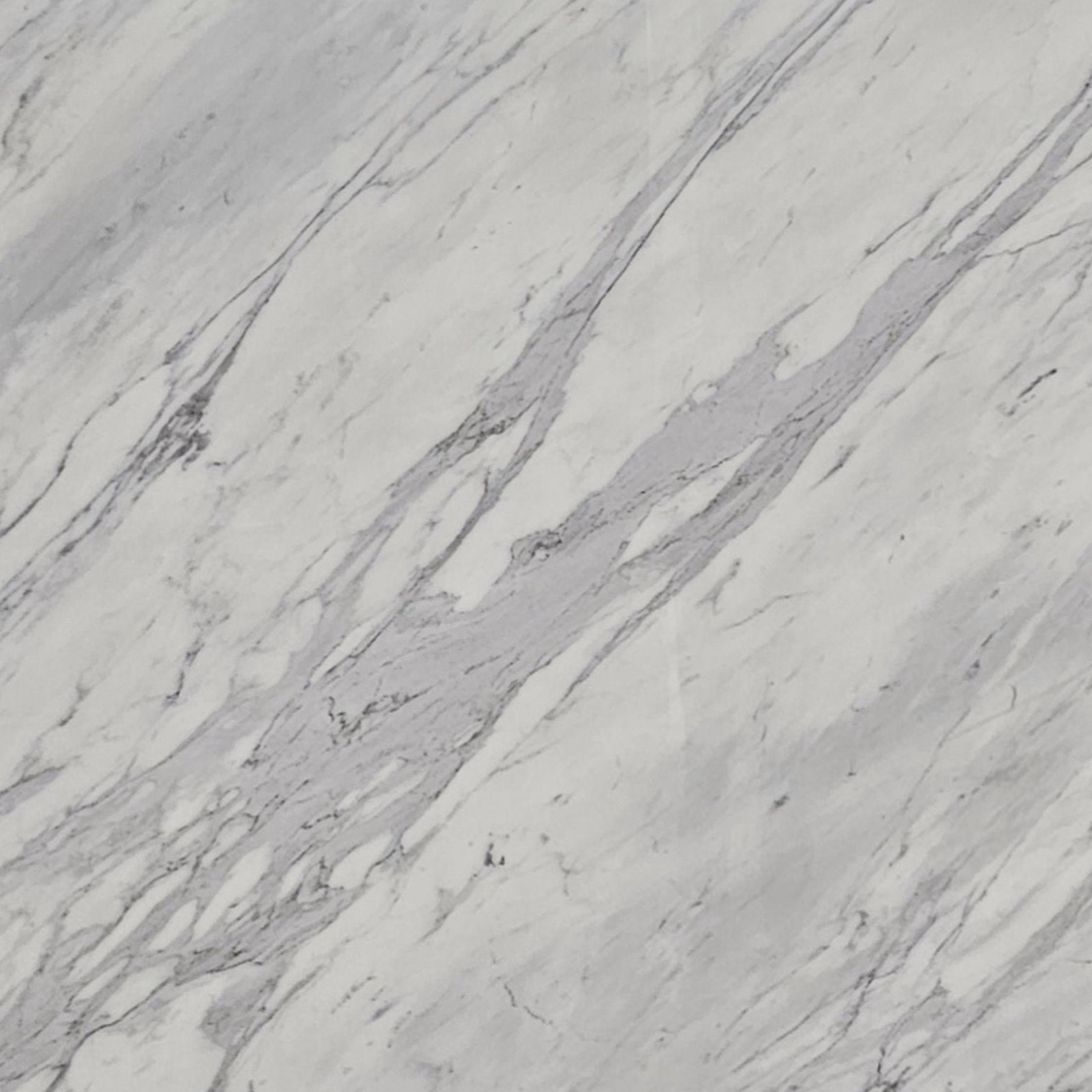
Solid whites, soft concretes, warm neutrals and bold veining are all available, so quartz works with modern and traditional cabinets. Many lines imitate Carrara-style white marble, which is popular on bathroom vanities where you want the look with fewer worries.
Honest Downsides: Heat, Sun and Seams
Heat
The resin that holds quartz together can scorch or discolor under direct, high heat, so a trivet under hot pans isn’t optional. Cambria’s care guidance recommends a closed-weave hot pad or solid trivet under pots, pans, slow cookers and air fryers, and warns that sudden temperature changes or prolonged heat can damage the surface. A hot mug set down briefly is fine. Anything straight off a burner or out of the oven is different.
Our post on whether quartz countertops are heat resistant covers what to do instead of guessing.
Direct sun and outdoor kitchens
Direct, prolonged sunlight can discolor the resin in standard quartz over time, so check your maker’s guide for its sun-exposure terms. In Southwest Florida that usually rules quartz out for lanai grill islands and summer kitchens, where the sun is strong and constant. Natural stone, porcelain or Dekton are the usual calls there.
Edges and chips
A hard knock on an edge or corner can chip quartz, and a chip is harder to hide on a plain or lightly patterned surface than on a busy natural stone. Careful handling during installation and a sensible edge profile help. Day to day, it’s mostly a matter of not dropping a heavy pot on a corner.
Seams and pattern
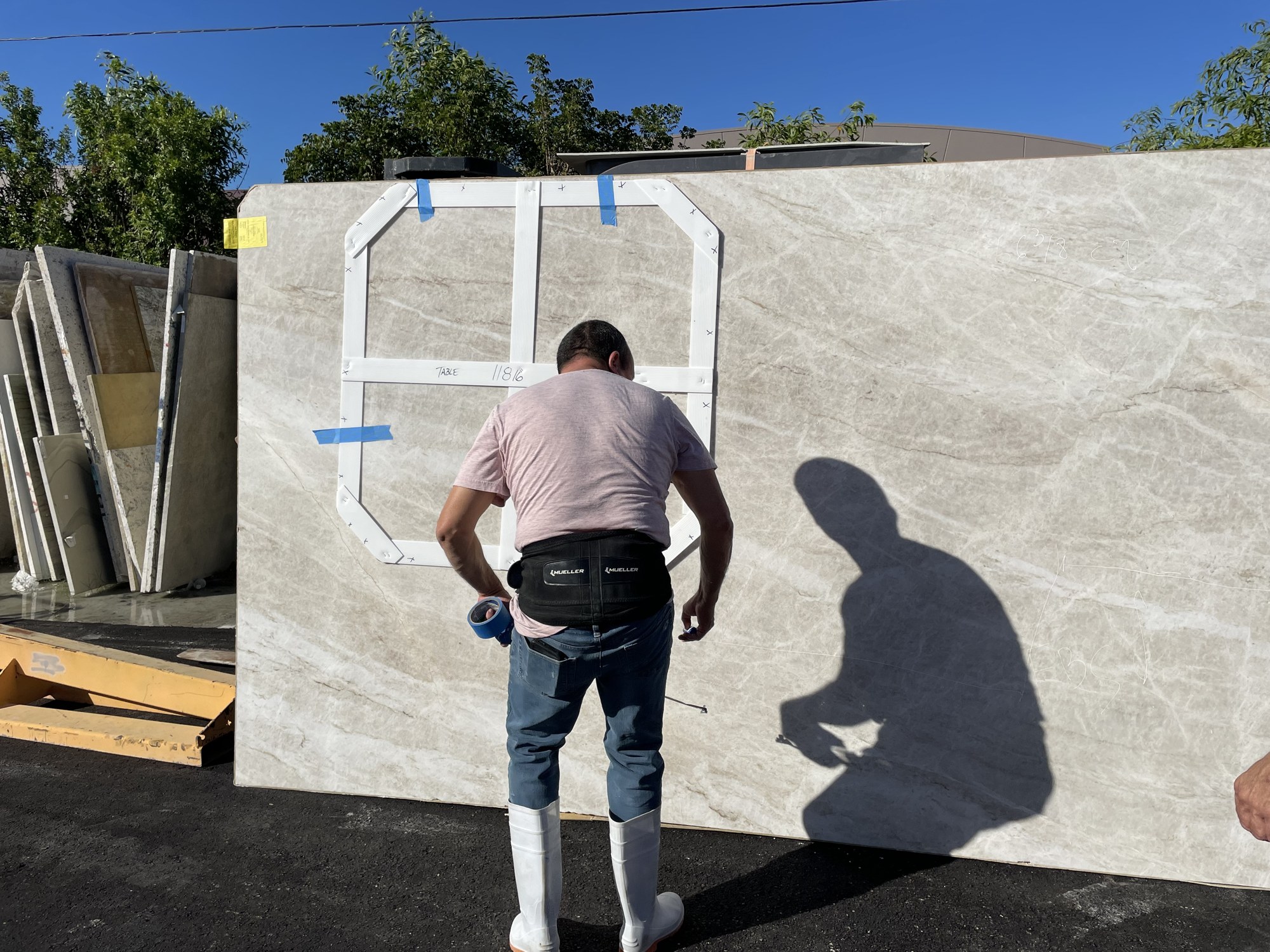
On very light colors, seams can show. Veining on quartz is built into the slab by design, which looks lovely but is less random than the real thing, so a long run may repeat. We plan seam placement at the layout review, where you approve how the slab will be cut before we cut it. Our in-house fabrication at our Fort Myers facility uses CNC equipment and digital templating, and you approve the layout before we cut.
Quartz Countertops Pros and Cons Next to Natural Stone
Quartz isn’t better or worse than natural stone. It makes different trades, and a Florida home tilts those trades in particular ways.
Versus granite and quartzite
Quartz countertops win on maintenance and consistency. Granite and quartzite win on heat tolerance and outdoor suitability, and they give you a one-of-a-kind pattern that quartz can only imitate. The tradeoff is sealing. The Natural Stone Institute notes that sealing makes stone more stain resistant rather than stain proof, and that while many stones can withstand heat, trivets are still recommended.
If you’re weighing quartz against quartzite specifically, our guide to quartz vs quartzite breaks down how the two differ.
Versus marble
For durability and upkeep, quartz is usually the easier choice. It resists stains, and ordinary lemon juice or vinegar spills don’t etch it the way they do marble. Marble gives you real veining and a patina some homeowners love. If you want that look with less fuss, quartz is worth a look. If you want the genuine stone, marble is still available from us.
What changes in a Southwest Florida home
Most of the advice above is the same anywhere. Florida adds one big variable, which is the sun. A kitchen that stays indoors suits quartz well. A kitchen that opens onto a lanai or an outdoor space needs a plan for where the stone sits, because the indoor island and the outdoor grill counter often shouldn’t be the same material. If your home sits empty for part of the year, quartz’s no-sealing routine means there’s nothing to catch up on when you return.
Who Should Choose Something Else
- Heavy cooks who set pans down fast. Granite or quartzite handles cookware heat better, though we’d still keep a trivet nearby.
- Outdoor kitchens and sun-soaked spaces. Choose natural stone, porcelain or Dekton, and confirm the specific color is rated for outdoor use.
- People who love natural variation. If you want the pattern to be unpredictable and unrepeatable, a natural slab will satisfy you more than quartz.
If you choose quartz anyway
A few habits keep it looking the way it did on the showroom floor. Keep a trivet by the stove and use it every time. Use a cutting board, which protects your knives as much as the surface. Keep the counter out of constant direct sun. Check the manufacturer’s care and sun-exposure terms for the exact line you pick, since they differ from brand to brand.
Before you commit, look at the full slab, not a small sample, in showroom light and in daylight if you can. Lighting changes quartz more than people expect, particularly whites and greys, and seams are easier to judge on a whole slab.
Both quartz and natural stone span a wide range, and the slab, edge profile and layout shape your estimate, so compare two real slabs side by side rather than materials in general. Our Cape Coral countertop page explains how templating and layout review work for homes there.
Frequently Asked Questions
What’s the downside of quartz countertops?
Heat and sun are the two real ones: the resin can scorch under a hot pan, and long direct sunlight can discolor it. After that it’s taste, since the pattern is more uniform than natural stone and seams are easier to see on very pale colors. A trivet and an indoor spot take care of most of it.
Why avoid quartz countertops?
You’d skip it for an outdoor kitchen, for a spot in constant direct sun, or if you want a natural, unpredictable pattern. For an indoor kitchen or bath where you want no sealing and steady color, it’s a strong choice.
Does white quartz turn yellow?
Discoloration is linked to direct, prolonged sun, because UV can affect the resin over time. Keeping quartz indoors and out of constant direct sun is the practical answer, and manufacturer terms on sun exposure vary, so check them for the specific line you choose.
Ready to see quartz in person? You can call (239) 362-0404 to talk through your kitchen, or request an estimate and we’ll set out a few slabs side by side.