


HomeBy ProjectRepair
Assessment & repair
Stone Countertop Repair
Stone is durable, not indestructible. A dropped pan can chip an edge, a seam can open, and a spill left overnight can leave a mark. HB Marble & Granite can look at damage on your stone countertops and tell you whether a repair makes sense. This page explains the common repairs and how to know when replacing is the better call.
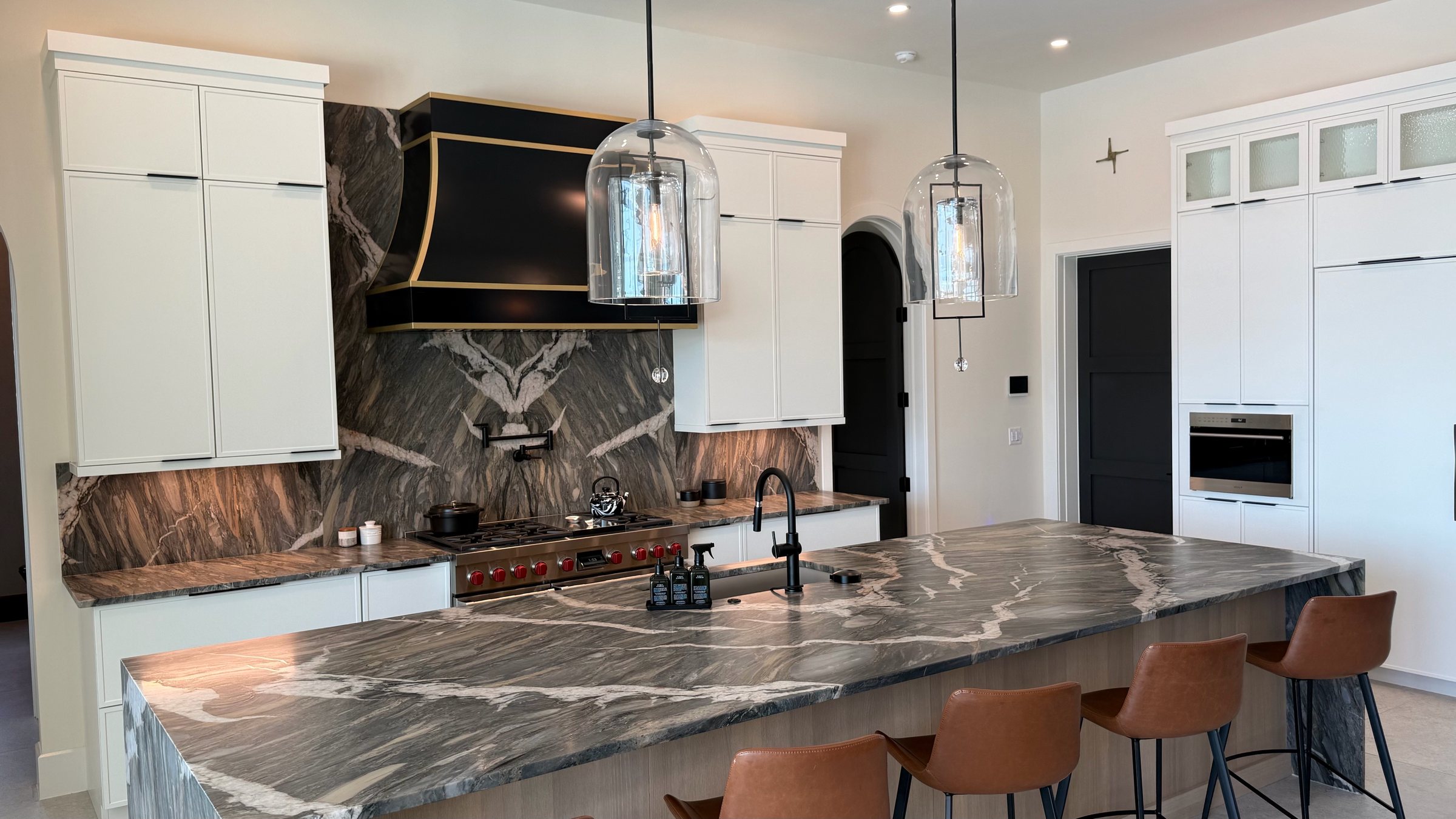
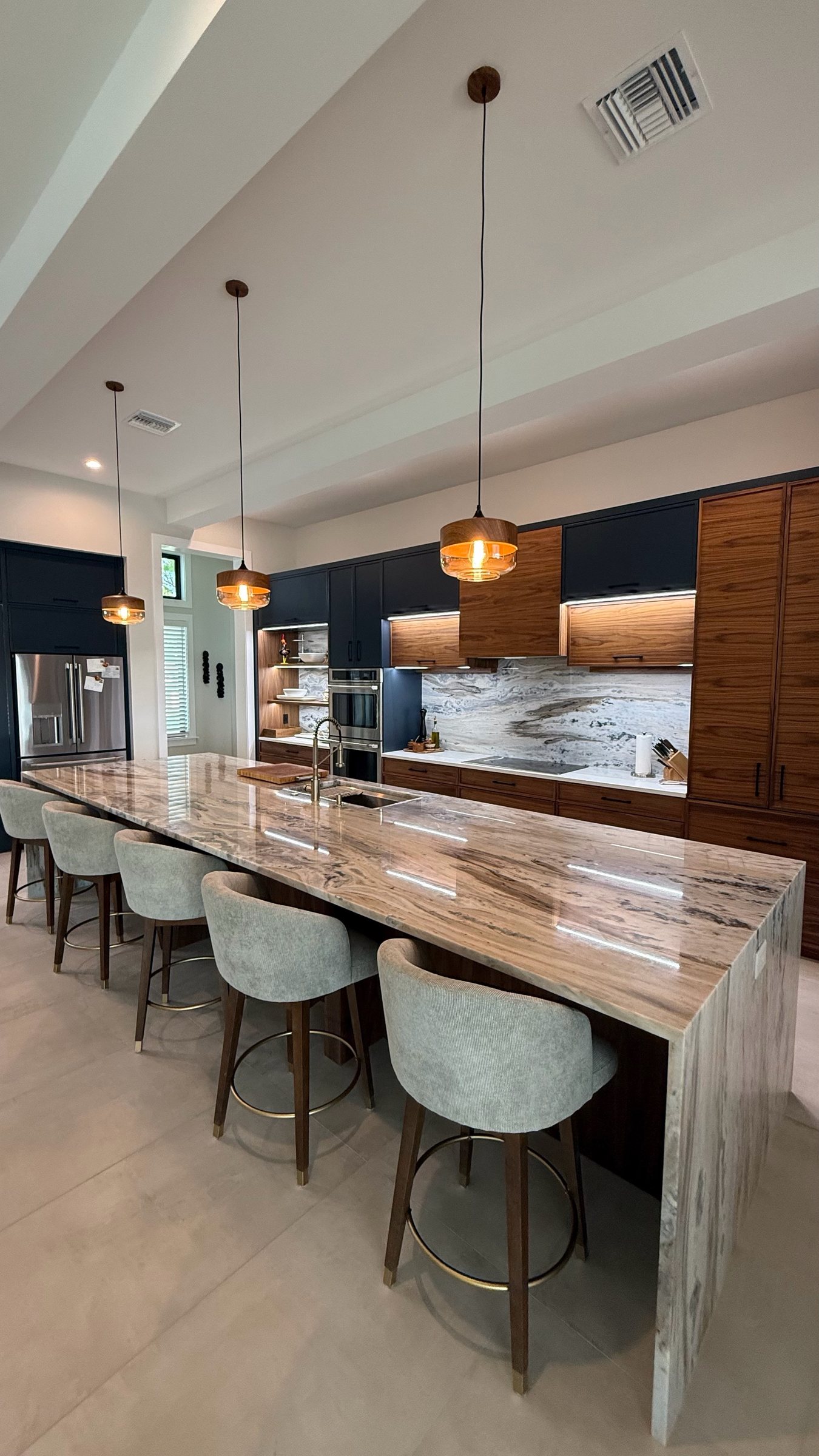
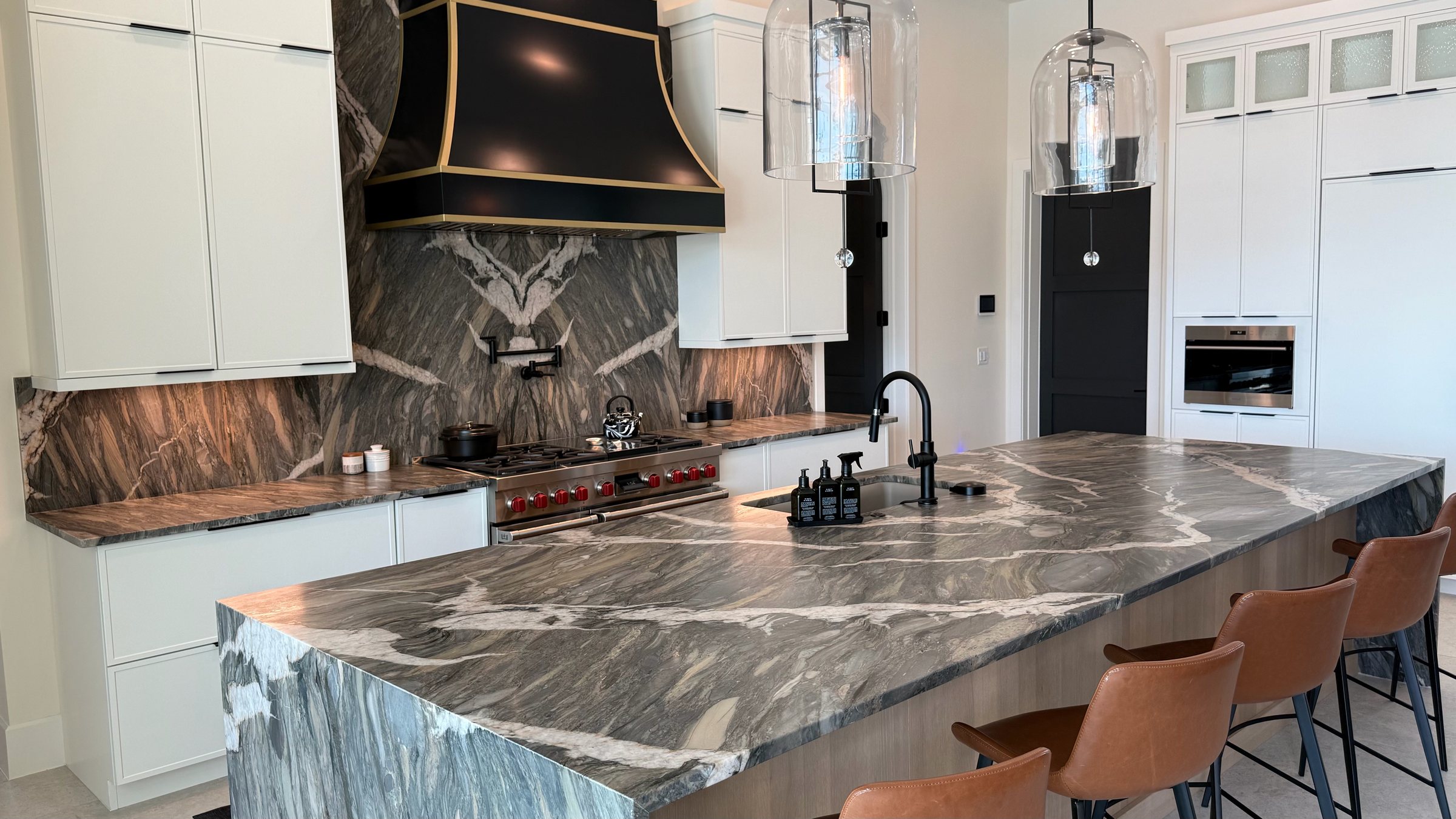
Veined island · HB project
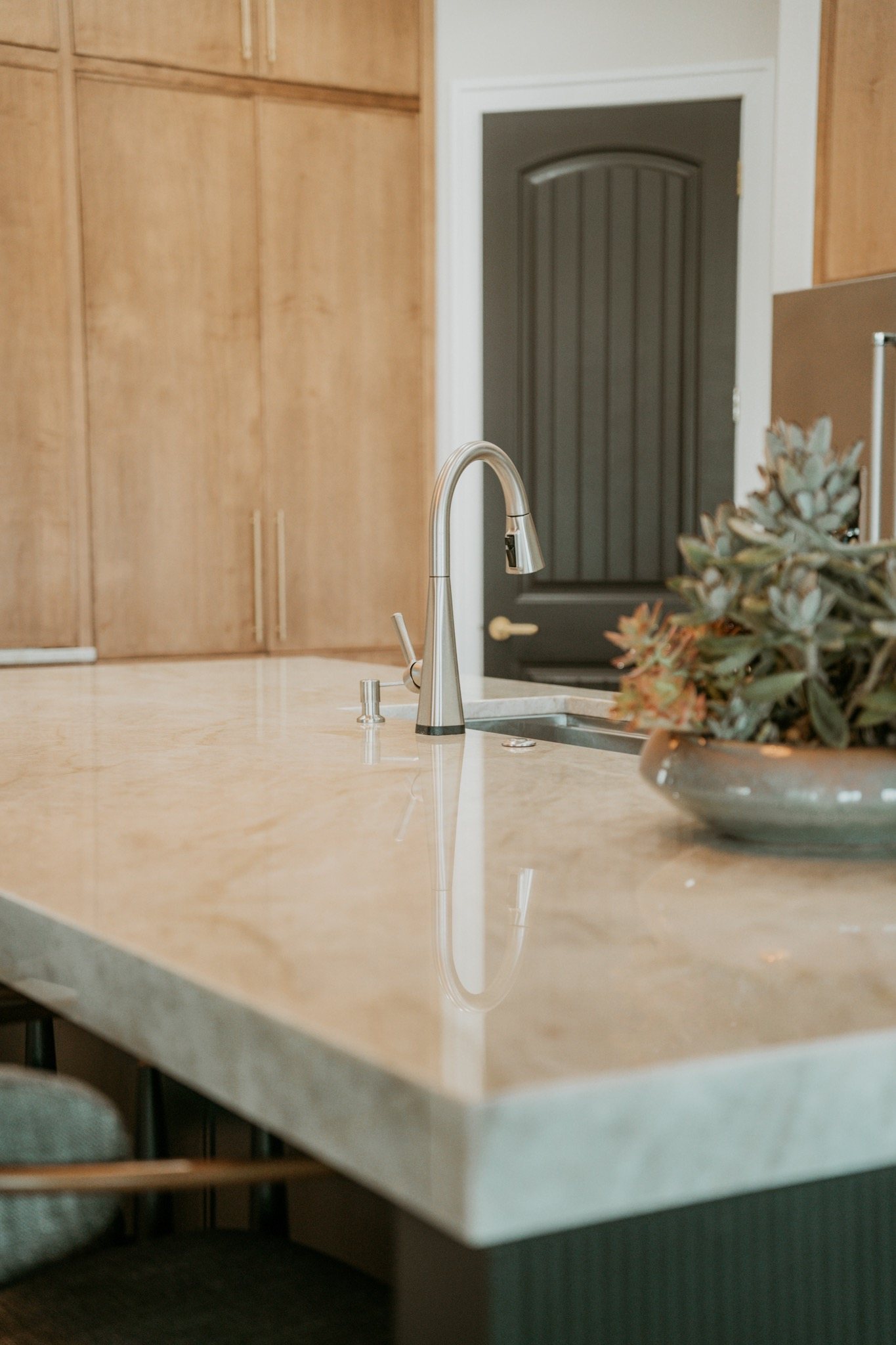
Island edge detail
Repair
Common Repairs We Can Assess
01
Chips and edge damage
Small chips on an edge or corner are typically filled with color-matched epoxy or resin, then smoothed and polished. How well it blends depends on the stone’s pattern.
02
Cracks
A hairline cosmetic crack can often be stabilized with epoxy. A crack running through the full thickness, especially near a sink or cooktop cutout, is a structural question that may need more than a fill.
03
Seams
Seams can open or settle out of level. Repair usually means cleaning, re-leveling and re-bonding with color-matched adhesive.
04
Sealing and resealing
Granite, quartzite, marble and dolomite are porous and should be resealed on a regular basis. Quartz and porcelain don’t need sealing.
05
Etch marks and dull spots
Acids leave dull marks on marble and some other natural stones. Honing and polishing can often improve them, though deep etching may remain visible.
06
Stains
Oil and water stains on natural stone can often be drawn out with a poultice, an absorbent paste left on the stain and then removed. Results depend on how long the stain sat and how deeply it soaked in.
07
Undermount sink re-securing
If a sink has sagged or pulled away from the underside of the stone, we can look at it and tell you what’s involved.
We assess each of these case by case. Repairs improve damage, and an honest assessment will tell you how visible the result is likely to be.
Repair
Repair or Replace?
Repair makes sense when the damage is limited and the rest of the stone is sound: a chip, a worn seam, a single stain or a dull patch. Replacement, or replacing just a section, becomes the better option when a crack travels through the slab, when damage is widespread, when the stone has broken near a cutout, or when repeated repairs would cost more than new tops. Sometimes a small section can be replaced if a matching slab is available, but matching natural stone depends on what’s on hand.
If you’re weighing a full replacement, our installation process page outlines what that project looks like.
Checklist
What to Send Us
A quick description and a few photos go a long way. Include:
- Stone typeGranite, quartz, quartzite, marble, dolomite or porcelain, if you know. Our pages on granite, quartz, quartzite and marble can help you identify it.
- Location of damageEdge, seam, near the sink, or middle of the counter.
- Close-up and wide photosOne close to the damage and one showing the whole countertop in good light.
- What happenedA dropped item, an old stain, a spill or a gradual change.
Send details through our contact page and we’ll follow up.
Prevention
Preventing the Next Repair
Sealing natural stone on schedule, using trivets and cutting boards, wiping spills quickly and avoiding harsh or acidic cleaners will prevent many of the problems above. Don’t stand or sit on overhangs, which is a common cause of cracking.
Questions
Repair FAQs
Another question about repair? Call the showroom and talk to someone who works with the stone every day.
Can a chipped countertop be repaired?
Often, yes. Small chips are usually filled with color-matched epoxy and polished smooth. We’d need to see photos first, because the size of the chip and the stone’s pattern affect how well it blends.
Can a cracked granite countertop be fixed?
It depends on the crack. Hairline cosmetic cracks can often be stabilized. A crack that runs through the stone near a sink or cooktop is a structural concern, and replacement may be the sensible choice.
Free estimate
Get a free estimate for your countertops.
Call (239) 362-0404 or request an estimate to send photos for a repair assessment.