
HomeCountertopsQuartz
Engineered stone
Quartz Countertops in Southwest Florida
Quartz is the countertop for people who want a clean, consistent look without a maintenance routine. HB Marble & Granite fabricates and installs quartz for kitchens, bathrooms, laundry rooms and bars throughout Southwest Florida, from the showroom slab selection through templating, layout approval and installation.
Unlike granite or marble, quartz is engineered. Manufacturers combine ground natural quartz with resin and pigment, then press the mixture into slabs. The result is a surface that’s non-porous, uniform from slab to slab, and available in everything from plain whites to convincing marble-style veining.
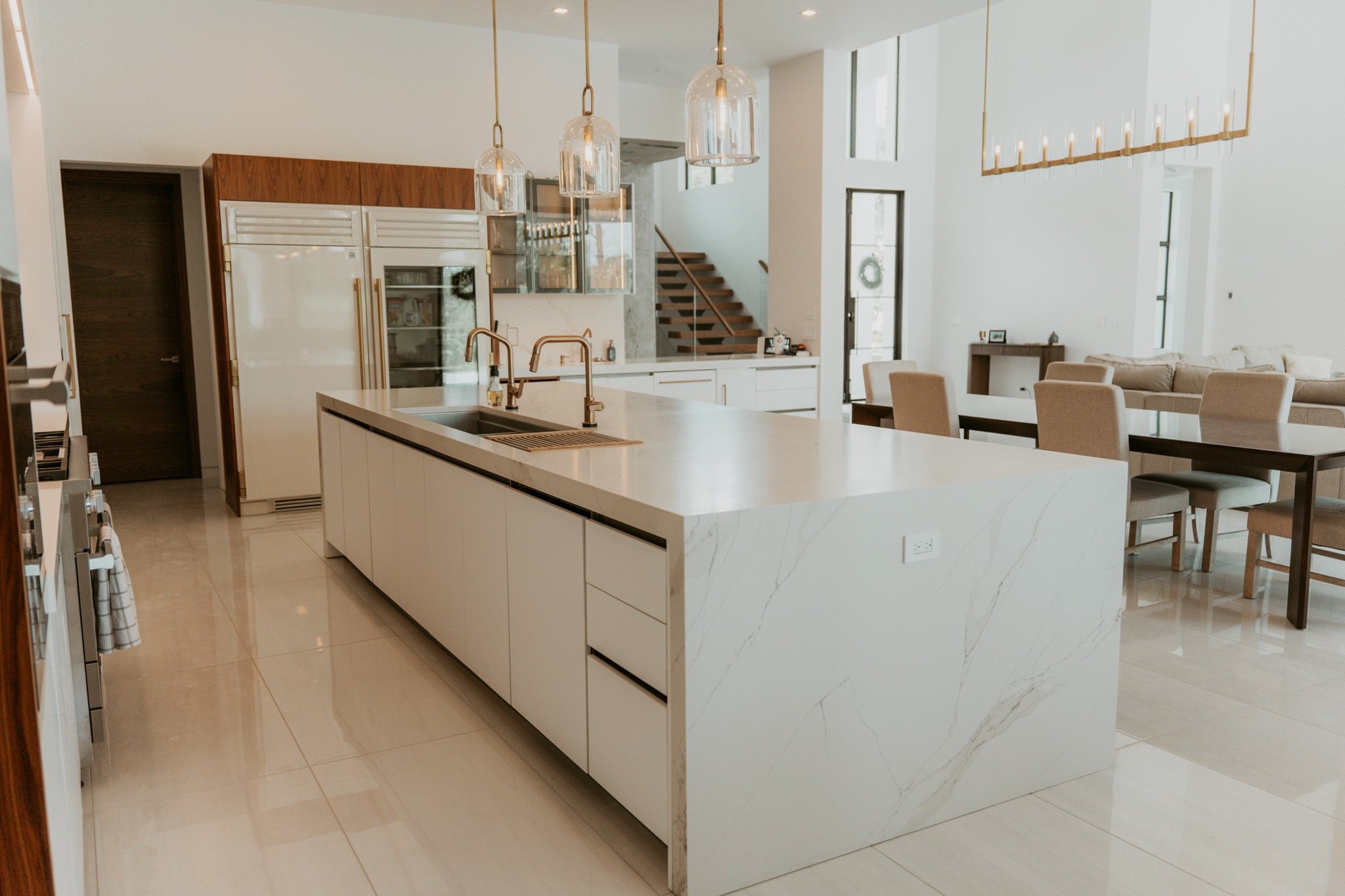
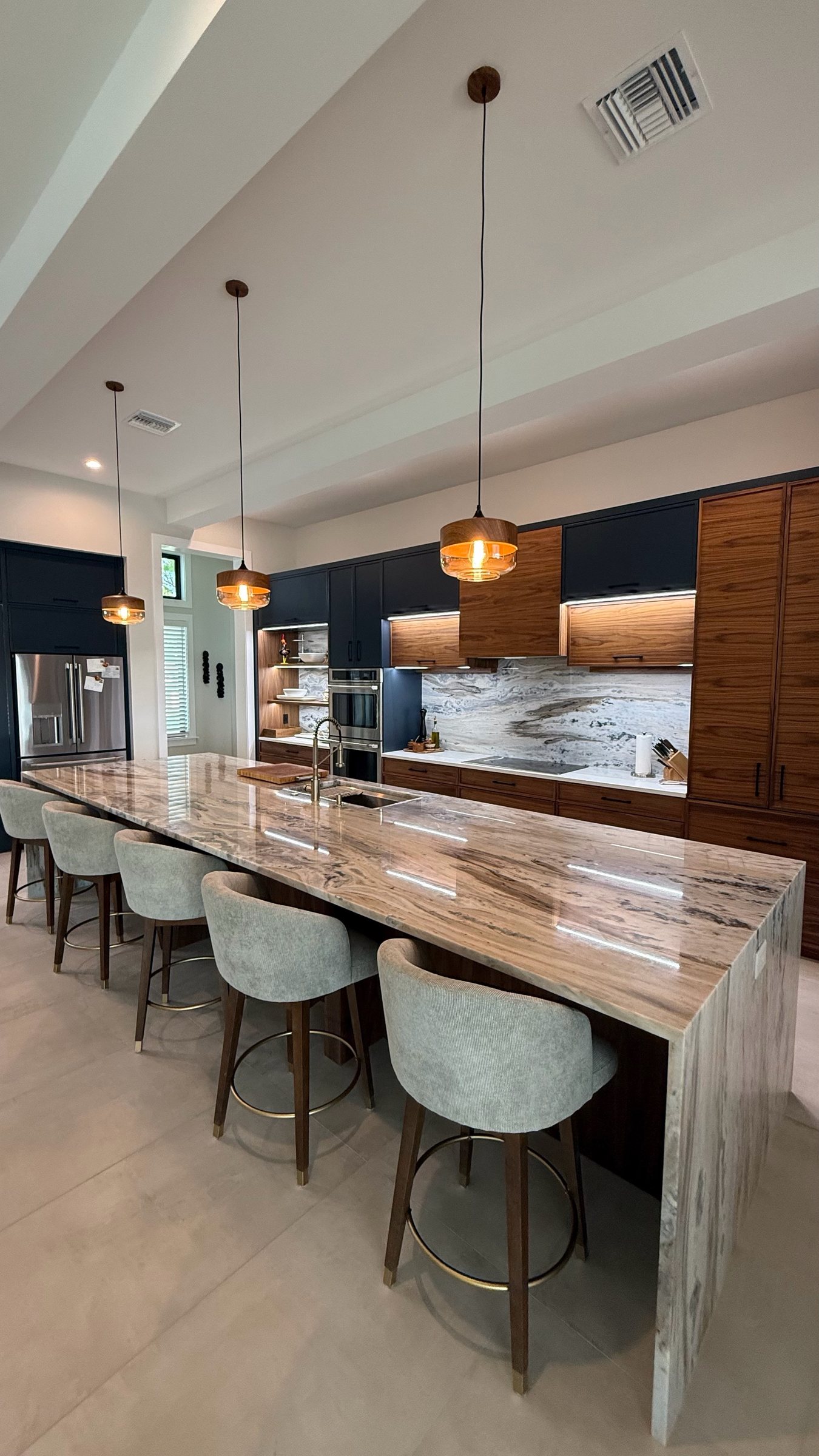
HB project · Quartz island

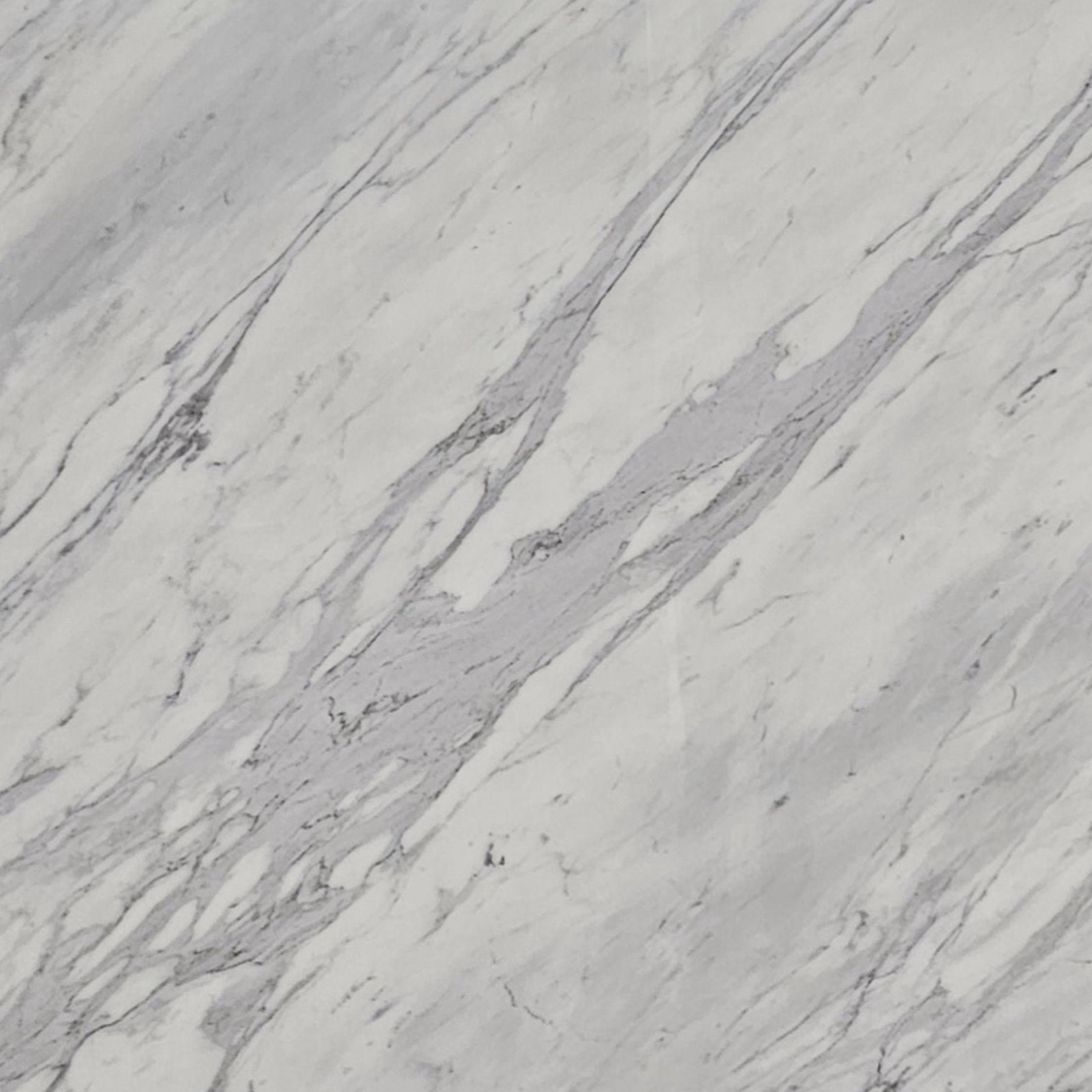
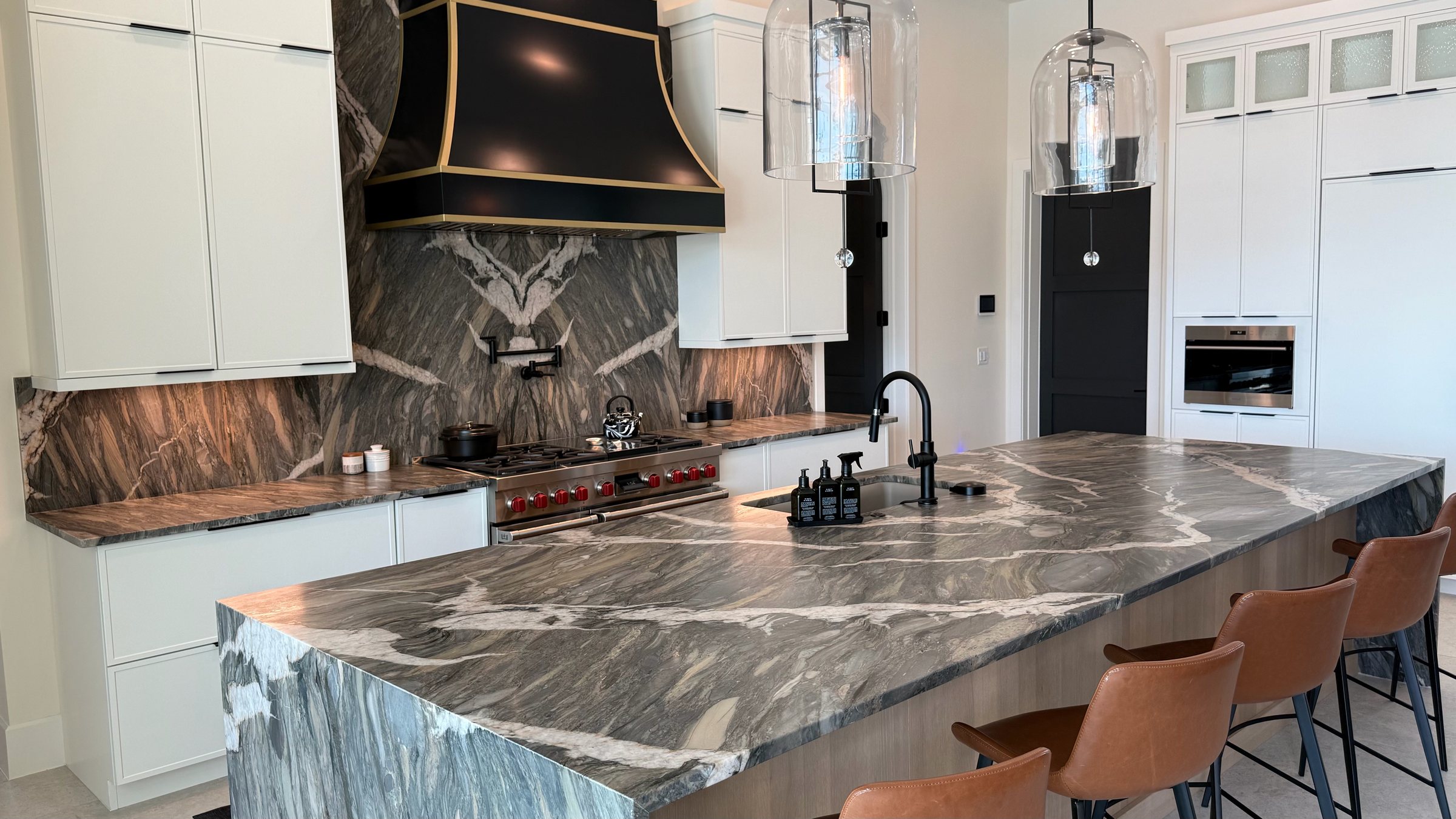
Viatera Calacatta Sol quartz, slab detail
Makeup
Ground quartz, resin and pigment
Sealing
None
Heat
Trivet under hot pans
Outdoors
Not for direct, prolonged sun
Pattern
Consistent slab to slab
Strengths
Why People Pick Quartz
01
No sealing
Because the surface isn’t porous, liquids stay on top. Wine, coffee and cooking oil wipe away, and you never schedule a resealing.
02
Predictable color
What you approve on the slab is very close to what lands in your kitchen. That’s a real advantage on a large island or a run of baths that should match.
03
Easy daily care
Mild soap and water handles most messes. Gentle, non-abrasive cleaners work for dried-on spots.
04
Wide look range
Solid whites, soft concretes, warm neutrals and bold veining are all on the table, so quartz suits both modern and traditional cabinets.
Trade-offs
Honest Downsides of Quartz
Every material trades something, and quartz is no exception. The resin that holds the stone together can scorch or discolor under direct, high heat, so a trivet under hot pans isn’t optional. Sharp impacts on an edge can chip the surface, and a chip is harder to hide than on a patterned natural stone. Veining on quartz is printed through the slab by design, which looks lovely but is less random than the real thing.
Then there’s the sun. Most manufacturers don’t recommend standard quartz for direct, prolonged sunlight, because UV can discolor the resin over time. For a lanai or grill island, natural stone or a porcelain or Dekton slab is the usual call, and our outdoor kitchen countertop page explains the options.
Heat
Can You Put Hot Coffee on Quartz?
A hot mug is generally fine for a moment, but a pot, pan or baking sheet straight from the heat is where damage happens. Our blog post on whether quartz countertops are heat resistant goes into the details and shows what to do instead.
Comparison
Quartz Compared With Natural Stone
If the idea of sealing a countertop sounds like a chore, quartz removes the question entirely. If you like unpredictable, one-of-a-kind patterns, granite or quartzite gives you something quartz can only imitate. Marble-style looks sit somewhere in between: many quartz lines mimic Carrara-style white, which suits a bathroom vanity where you want the look with fewer worries.
For picking an actual color, start with our color and slab guide, then see the slabs at the showroom. Lighting changes quartz more than people expect, particularly the whites and greys.
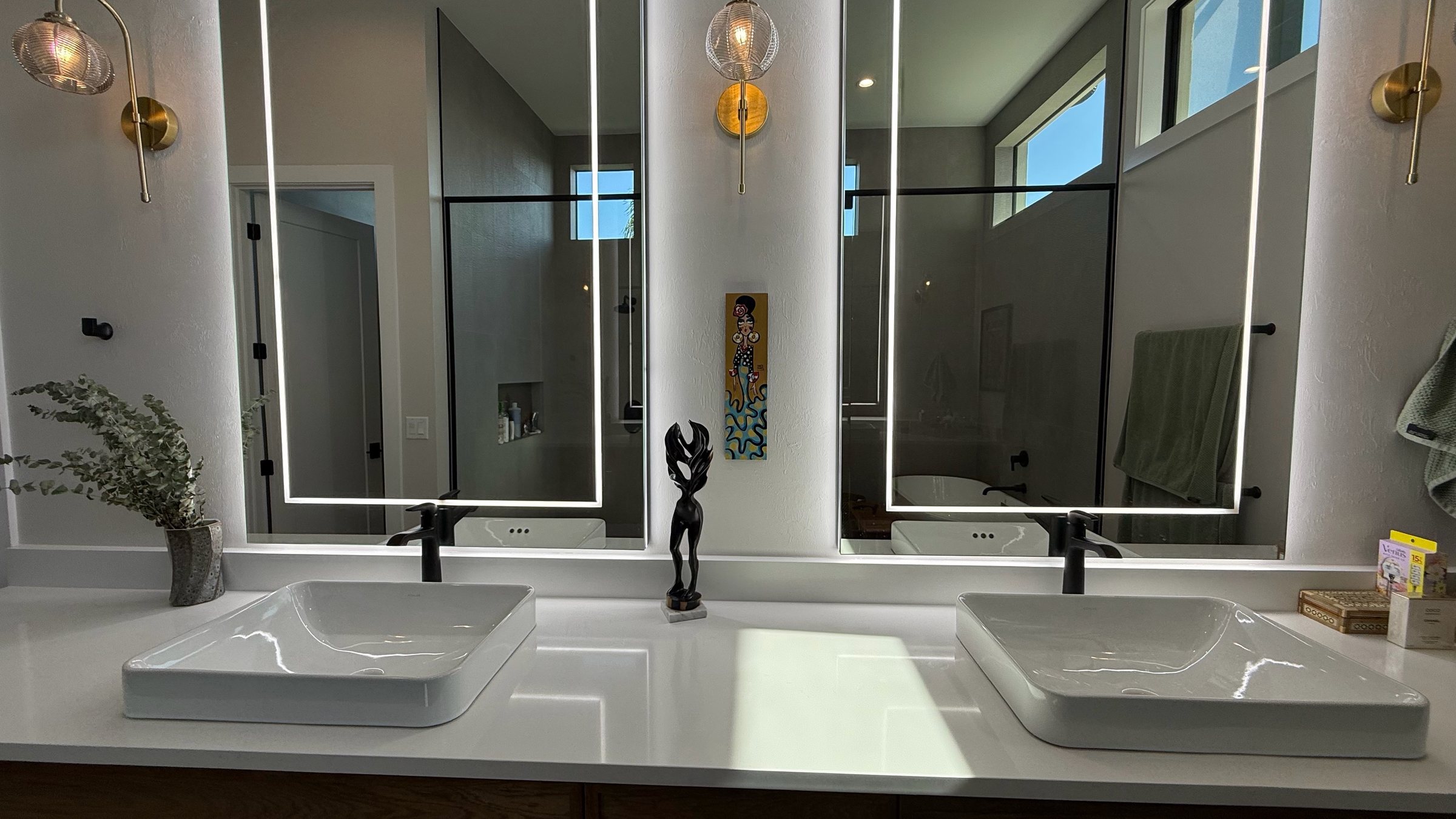
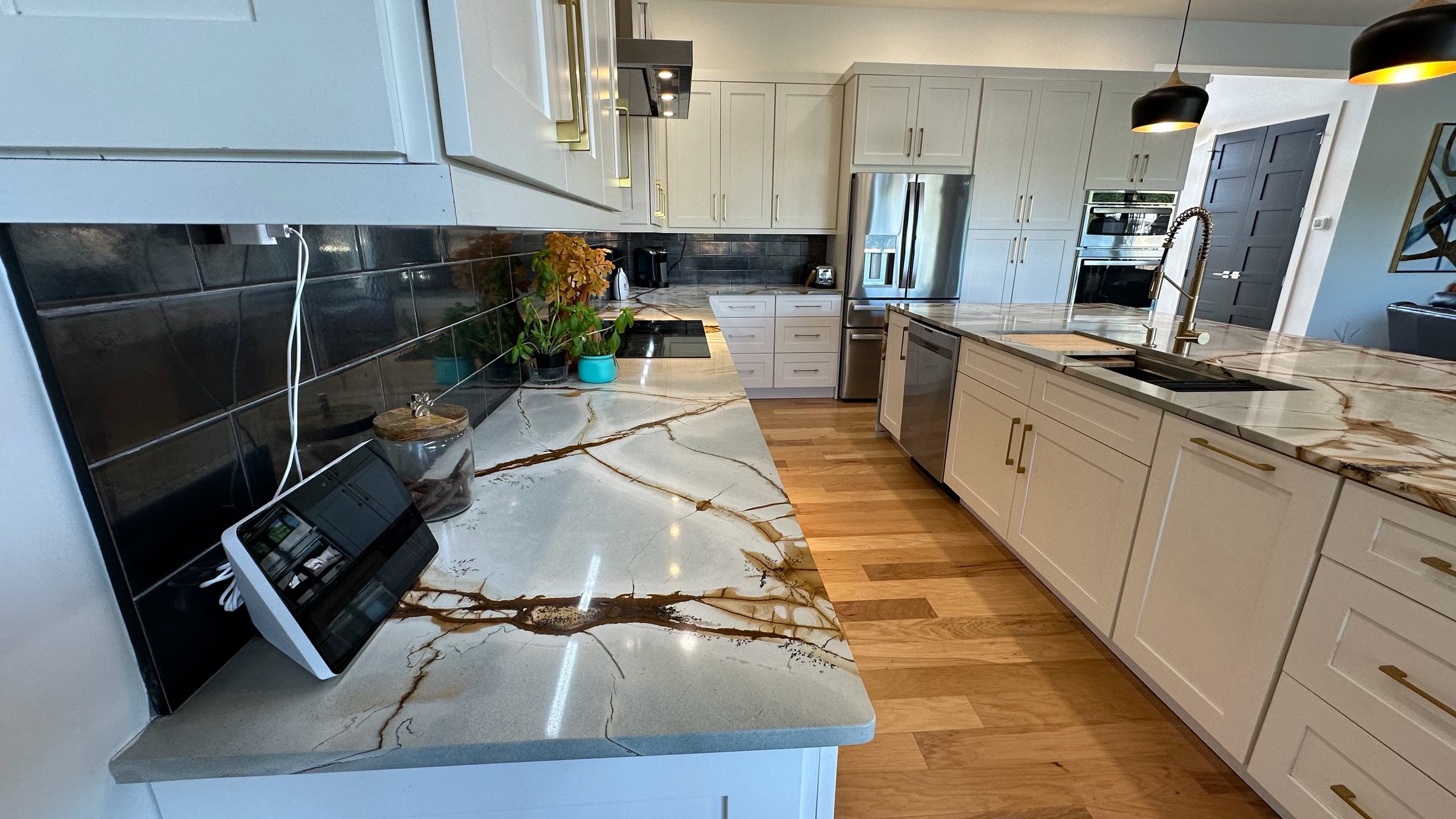
Vanity top · HB project
Compare materials
How quartz compares with the other four.
How the five compare on heat, scratches, stains and sealing. See the slabs side by side at our Fort Myers showroom.
Quartz
This page
Heat
Medium
Scratch
High
Stain
High
Sealing
Never
- High
- Medium
- Low
Questions
Quartz Countertop FAQs
Another question about quartz? Call the showroom and talk to someone who works with the stone every day.
What is the downside of quartz countertops?
The main drawbacks are heat sensitivity, since the resin can scorch under a hot pan, and limited suitability for direct sun, which can discolor it. Quartz also has a more uniform pattern than natural stone, and seams can show on very light colors. Trivets and an indoor location solve most concerns.
Can I put a hot cup of coffee on quartz?
Yes, a hot mug set down briefly won’t hurt it. Anything that’s been on a burner or in the oven is different. Use a trivet for pots, pans and baking dishes, because direct high heat can leave a mark that’s permanent.
Is quartz a better countertop than marble?
For durability and upkeep, usually yes. Quartz resists stains and doesn’t etch from lemon juice or vinegar. Marble offers real veining and a patina some homeowners love. If you want that look with less fuss, look at quartz; if you want the genuine stone, see our marble countertops.
Is Taj Mahal quartz or quartzite?
Taj Mahal is a natural quartzite, not quartz. The name confuses people because the two words sound alike, but quartzite is quarried stone and quartz is engineered. Our quartzite page explains the difference.
Free estimate
Get a free estimate for your countertops.
Call (239) 362-0404 or request an estimate to plan your quartz kitchen or bath.