
HomeCountertopsPorcelain & Dekton
Porcelain · Sintered stone
Porcelain Countertops & Dekton in Southwest Florida
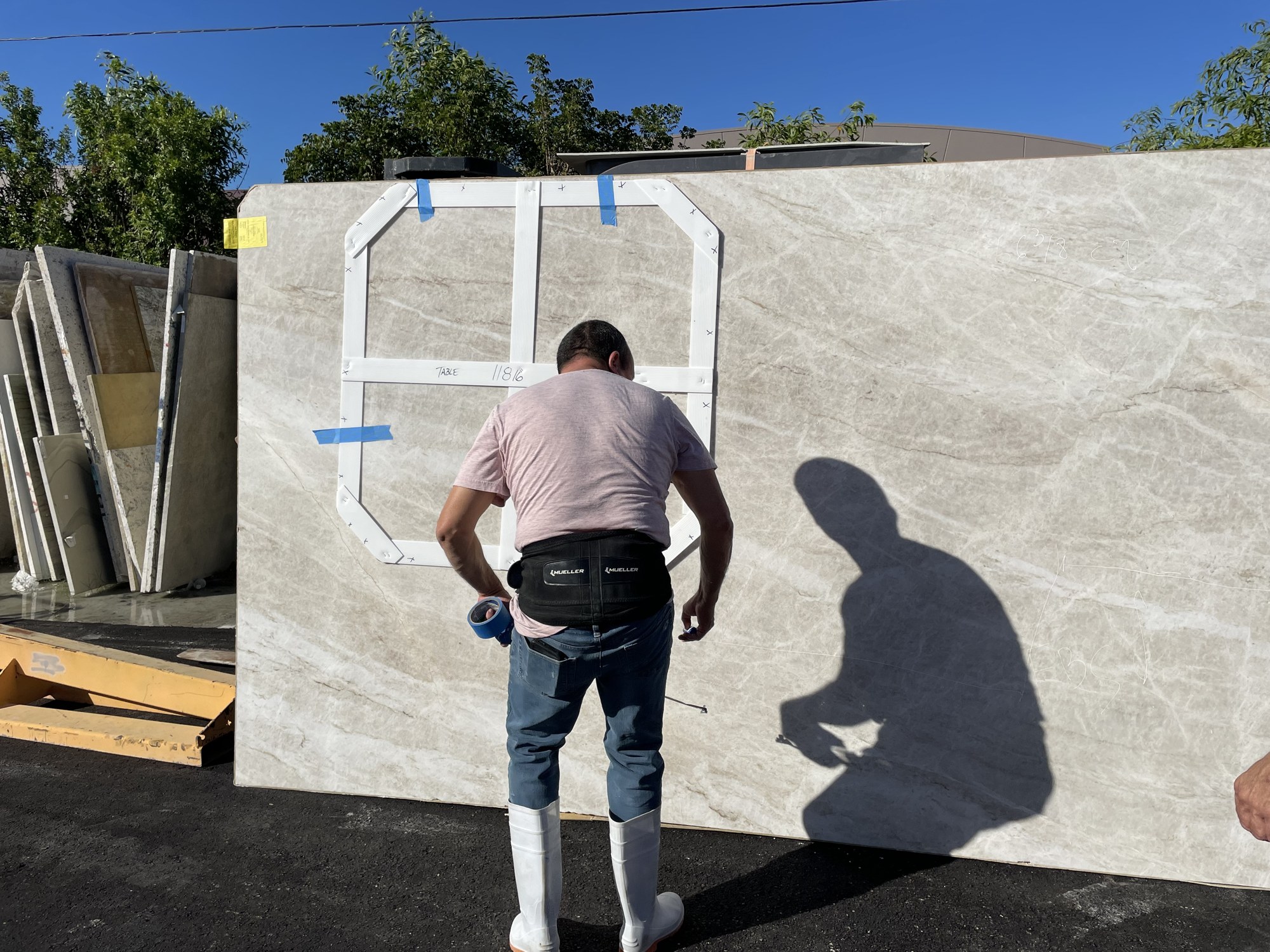
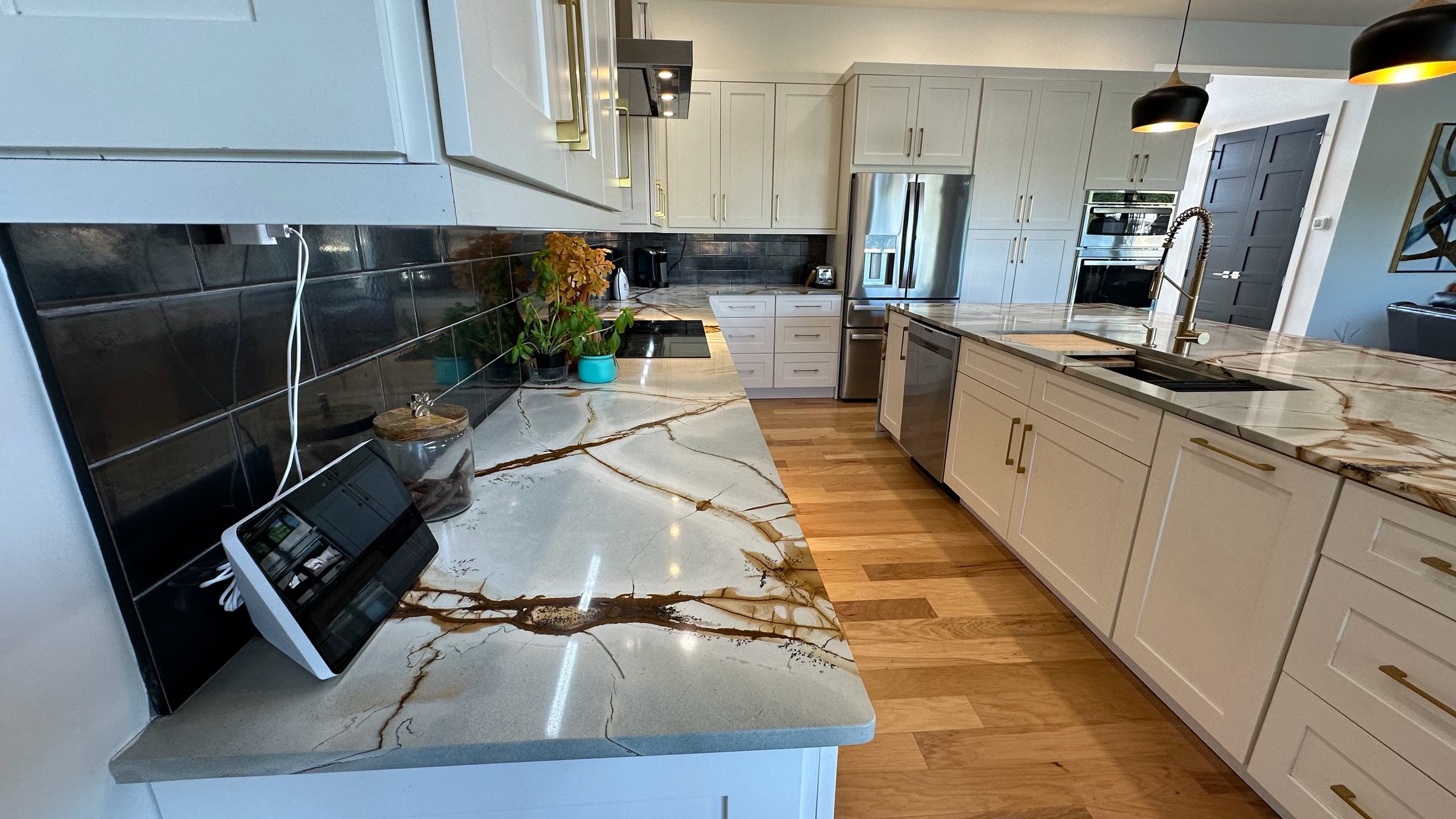
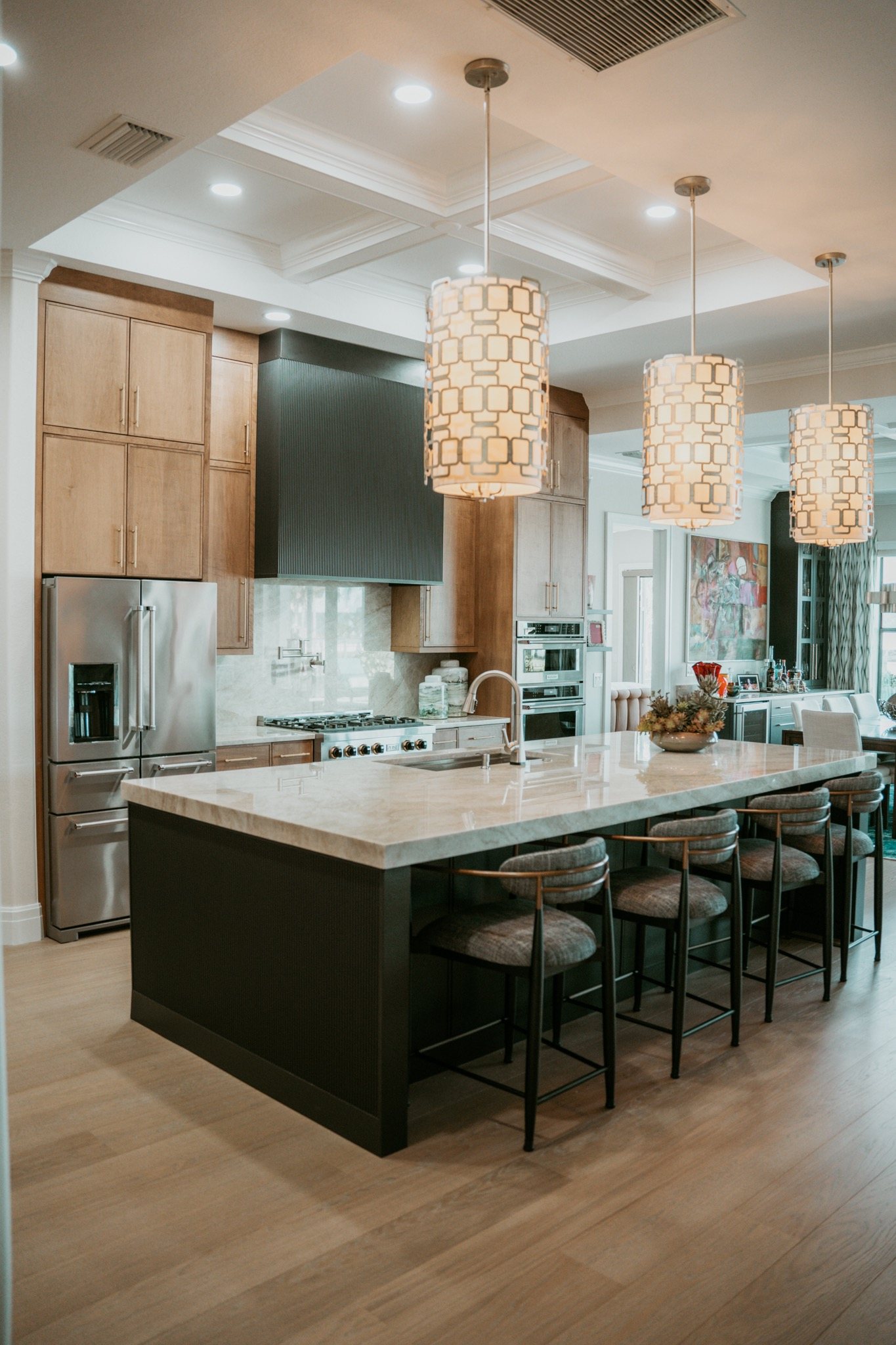
If you’re planning a lanai grill island or a low-maintenance kitchen, porcelain and Dekton are worth a close look. HB Marble & Granite fabricates and installs porcelain countertops and Dekton for kitchens, bathrooms and outdoor kitchens across Southwest Florida. We template at your Fort Myers, Naples or Cape Coral home and you approve the layout before anything is cut.
Both are manufactured rather than quarried. Porcelain slabs are made from fine clay and minerals pressed and fired at very high temperatures. Dekton is Cosentino’s ultracompact surface, made from a blend of the raw materials used in glass, porcelain and quartz. You’ll also hear the category called sintered stone.
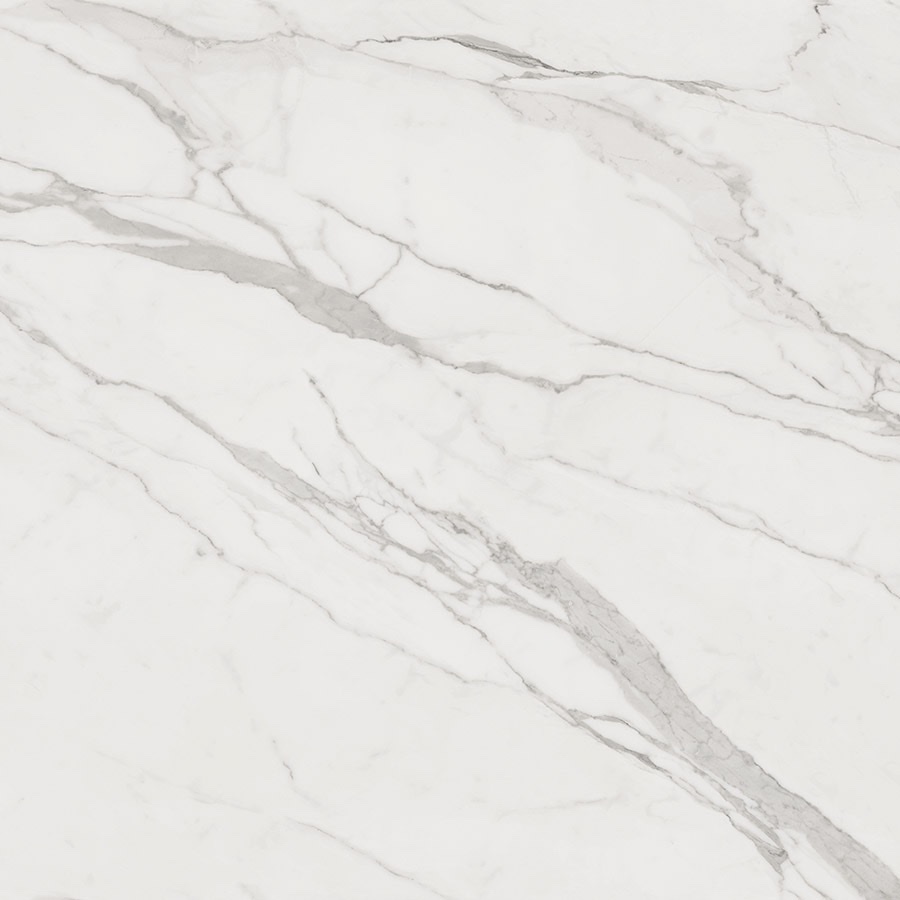
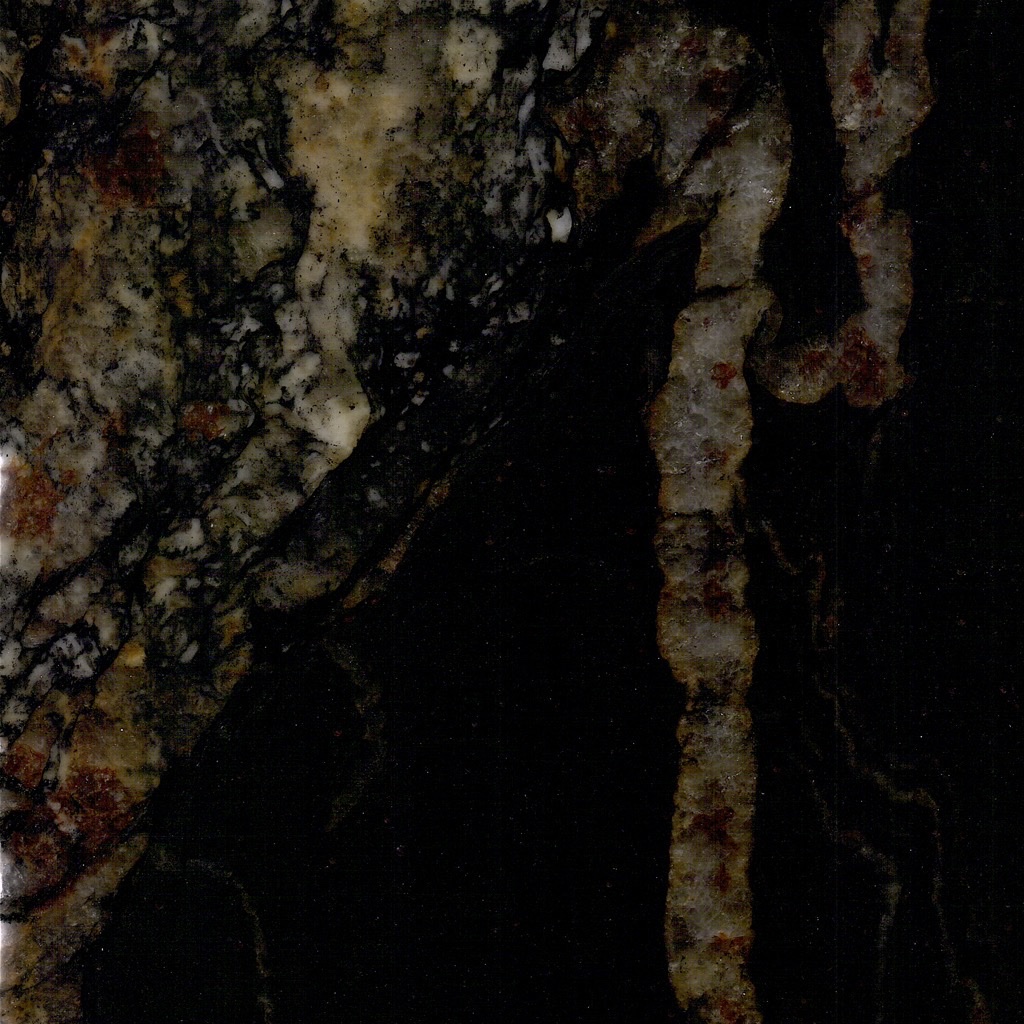
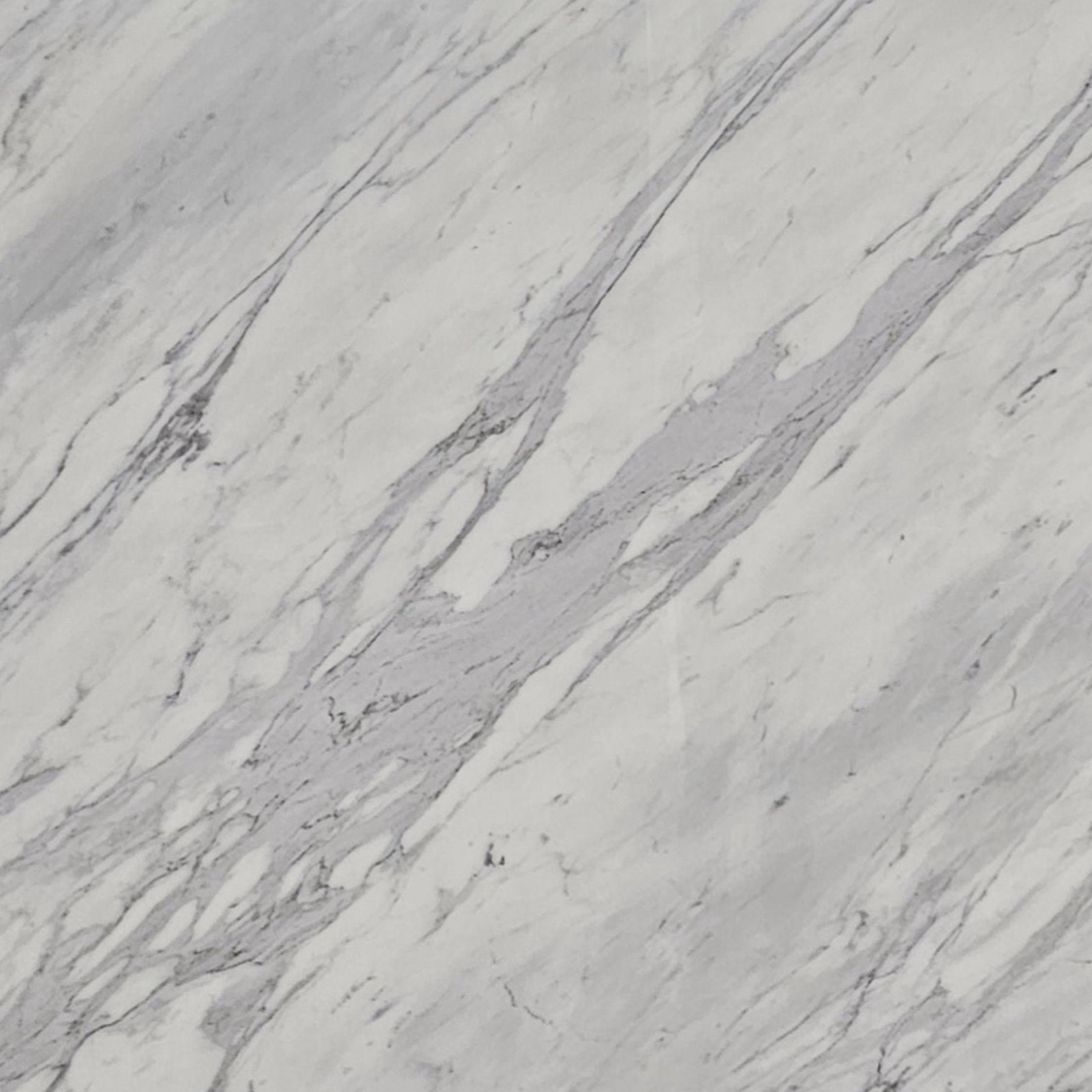
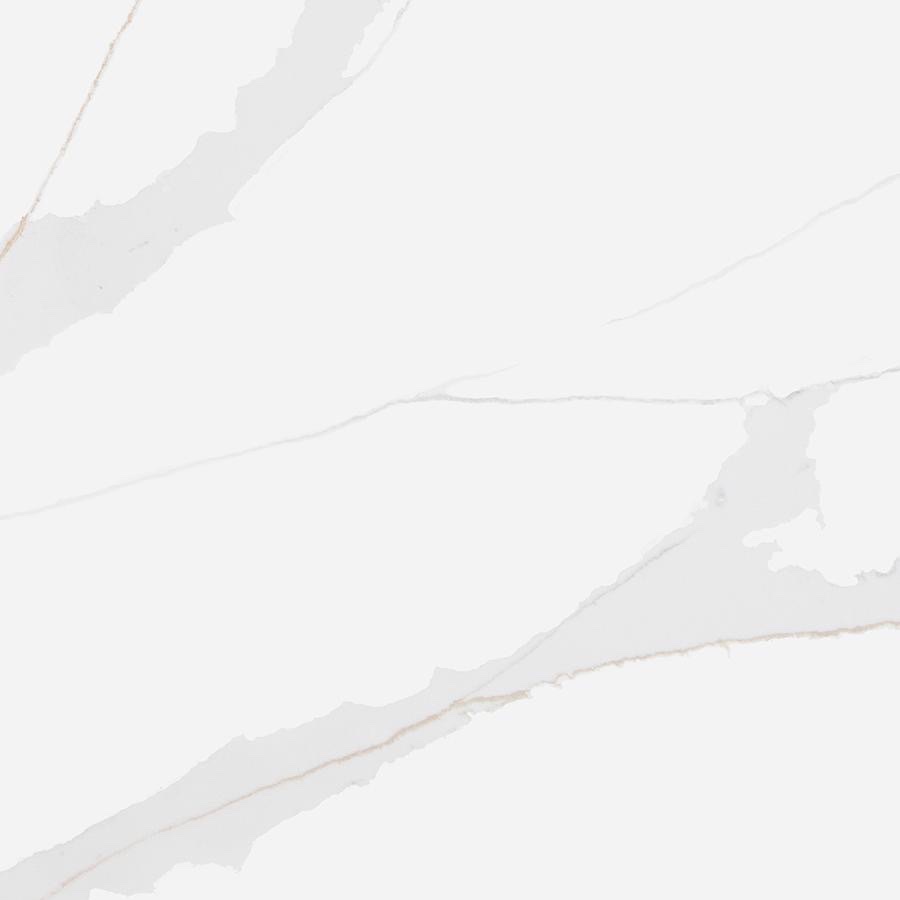
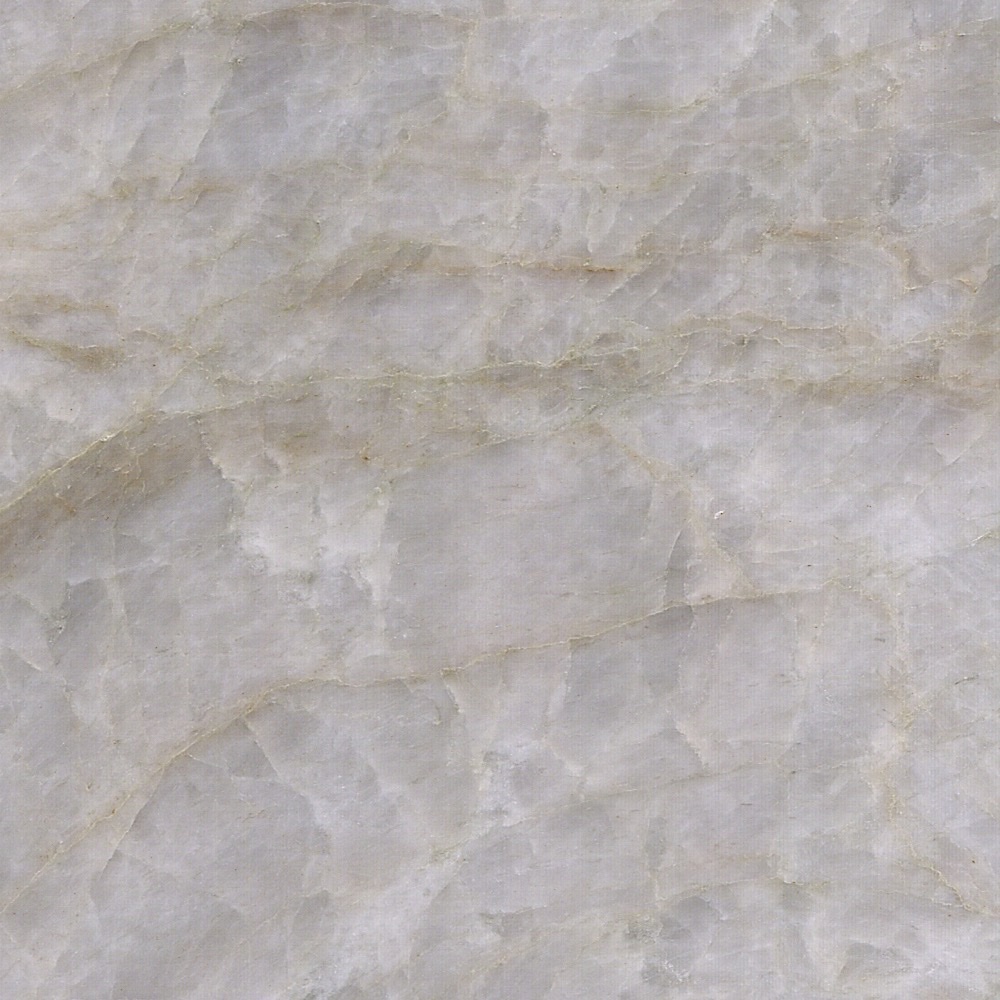
Statuario Bianco · Teracanto
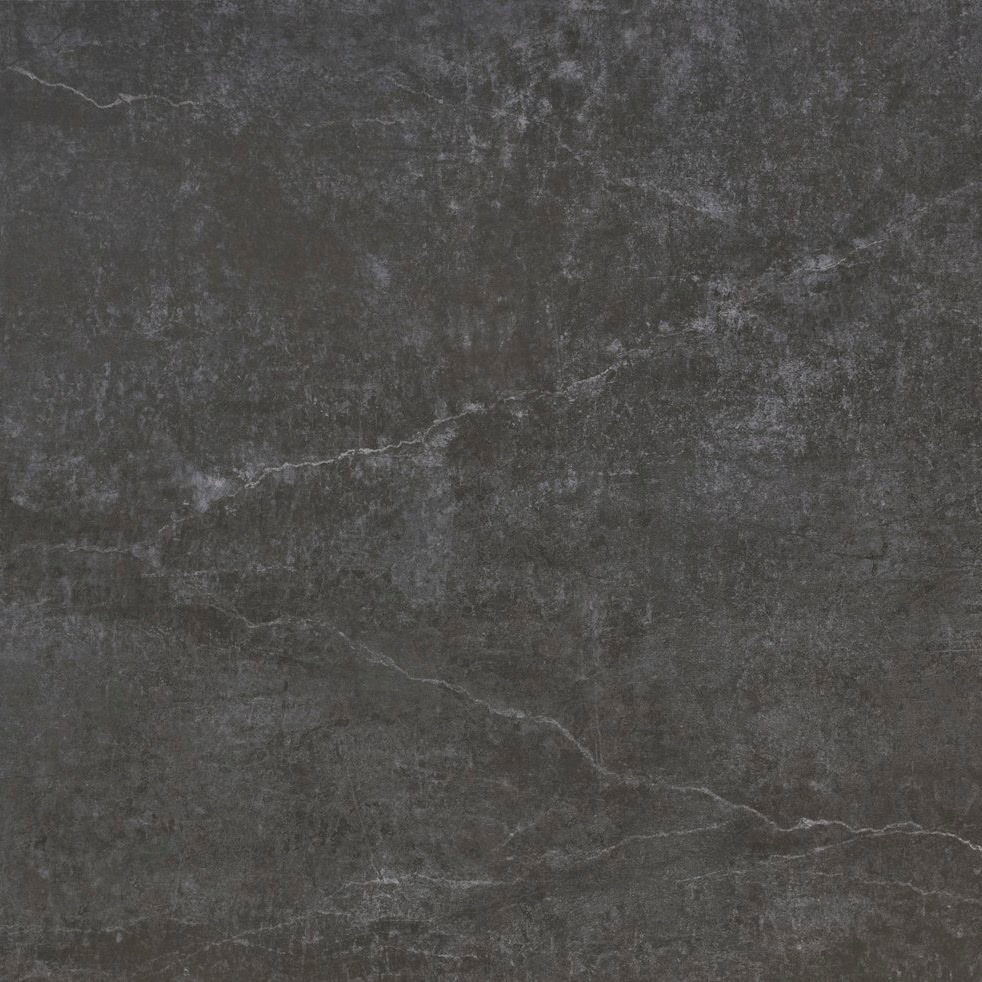
Dekton Laos porcelain, slab detail
Makeup
Clay and minerals fired at high heat
Sealing
None
Heat
High; trivet still smart
Outdoors
Made for full sun
Edges
Thin slabs; mitered edges common
Strengths
Why People Choose Porcelain and Dekton
01
Made for the sun
The color and pattern are fired into the slab surface, so they’re made to hold up under UV. That makes it a strong pick for a lanai in full sun, and our outdoor kitchen countertop page covers the details.
02
Nothing to seal
The surface is non-porous, so coffee, wine and oil don’t soak in. There’s no resealing to remember.
03
Heat and scratch resistance
A hot pan or a slipped knife is far less likely to leave a mark than on quartz. We still suggest trivets and cutting boards, mostly to protect your cookware and knives.
04
Big, modern looks
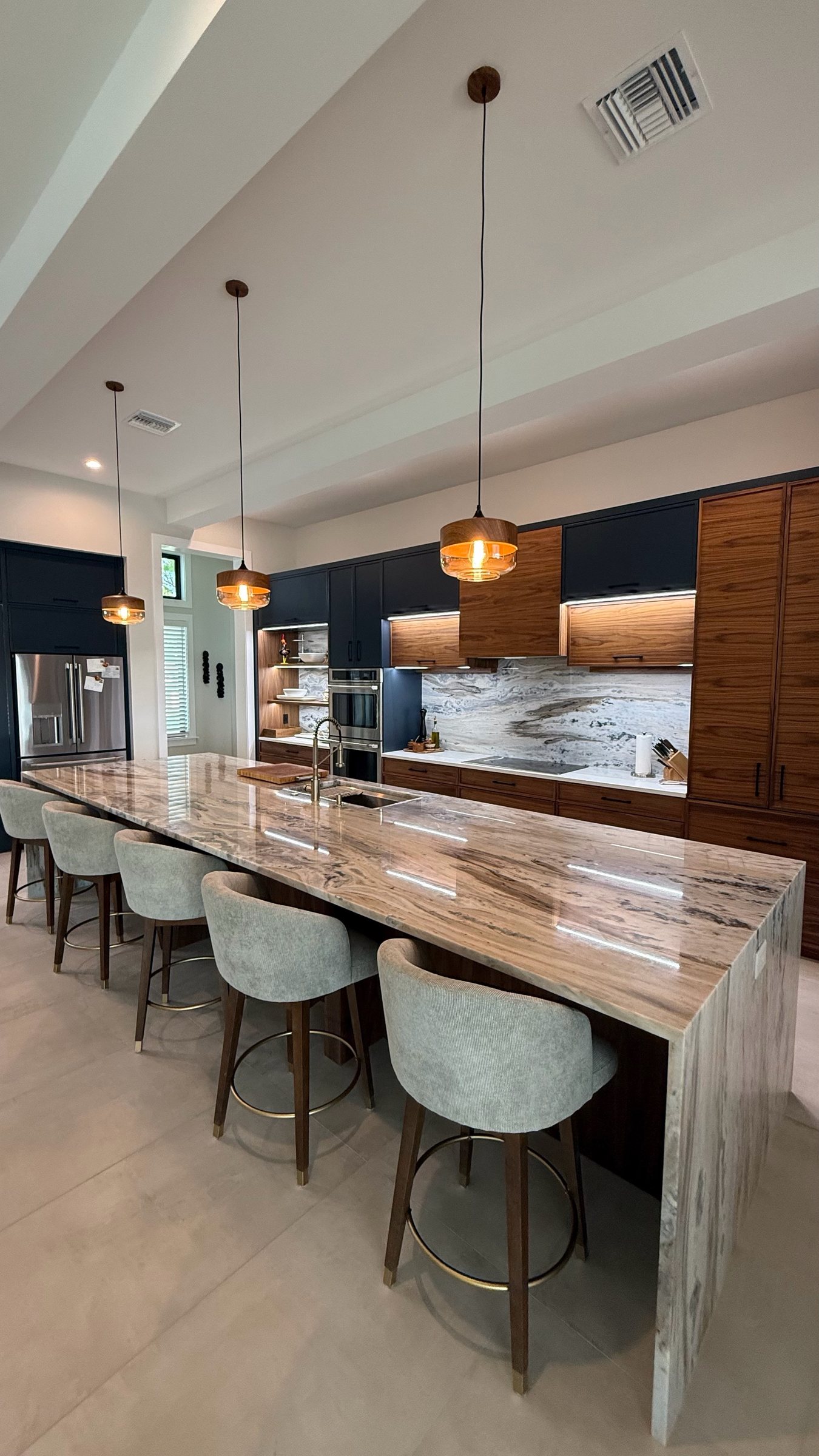
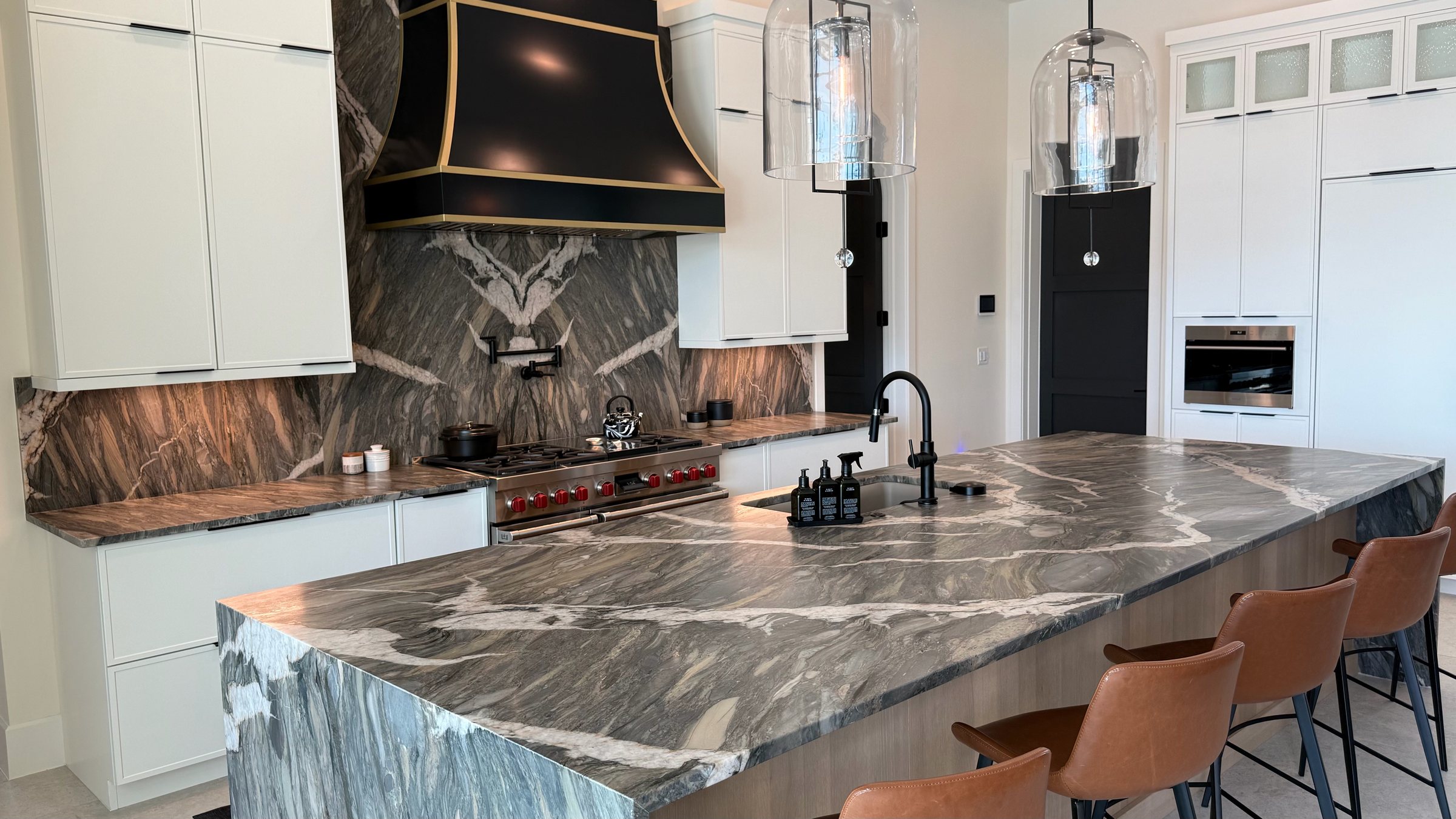
Large slabs with marble-style veining, concrete, solid colors and stone looks suit modern kitchens, waterfall islands and full-height backsplashes.
Trade-offs
What to Know Before You Choose
The trade-offs are different from quartz. Porcelain is very hard but less forgiving of a sharp knock: a heavy pot dropped on an edge or corner can chip it, and a chip is harder to hide than on a busy granite. Slabs are often thinner than natural stone, commonly around 12 or 20 mm, so the edge is usually mitered to look thicker. Ornate profiles such as ogee or a full bullnose usually aren’t practical.
On many porcelain slabs the pattern sits on the surface while the body underneath is a plainer color. That matters for sinks, cutouts and edges, and it’s one reason we plan the layout and edge detail before cutting. Porcelain also takes different blades and more careful handling than granite during fabrication and installation.
The names
Porcelain, Dekton and Sintered Stone
The names overlap. Porcelain is the broad category. Dekton is one brand of ultracompact surface made by Cosentino. Sintered stone is the general term for slabs made by fusing minerals under heat and pressure, which covers both. For your kitchen, the practical differences come down to the specific product: its thickness, finish, how the pattern runs through the slab, and which colors are rated for outdoor use. Ask us which colors fit your space.
Indoors, both are low-maintenance and non-porous, so the choice often comes down to look and use. Porcelain handles heat and sun better, while quartz countertops offer thicker slabs, more edge options and are easier to repair if an edge gets nicked. If you like a one-of-a-kind natural pattern, granite gives you that at a lower starting price. For a commercial counter or a busy kitchen, porcelain’s stain and heat resistance is a real plus.
Compare materials
How porcelain compares with the other four.
How the five compare on heat, scratches, stains and sealing. See the slabs side by side at our Fort Myers showroom.
Porcelain
This page
Heat
High
Scratch
High
Stain
High
Sealing
Never
- High
- Medium
- Low
Questions
Porcelain & Dekton Countertop FAQs
Another question about porcelain? Call the showroom and talk to someone who works with the stone every day.
What is the downside of porcelain countertops?
The main trade-offs are edge chipping from hard impacts and fewer edge profiles, because slabs are thinner. On many slabs the pattern is on the surface rather than through the body, so cutouts and edges need careful planning.
How much do porcelain countertops cost?
It depends on the product you choose, its thickness, the edge detail, cutouts and layout, and on how custom the job is. We provide a detailed quote after reviewing your project.
Is porcelain cheaper than quartz or granite?
It depends on the product, the color and the job. We’re happy to quote porcelain next to quartz and granite for the same layout, so you can compare them side by side.
Do porcelain countertops need to be sealed?
No. Porcelain and Dekton are non-porous, so they don’t need sealing. Clean them with warm water and a mild cleaner.
Can porcelain go outdoors in Florida?
Yes. It’s made to resist UV, heat and weather, but confirm the specific color is rated for outdoor use. Our outdoor kitchen guide compares it with granite and quartzite.
Free estimate
Get a free estimate for your countertops.
Call (239) 362-0404 or request an estimate to compare porcelain, quartz and natural stone for your space.