
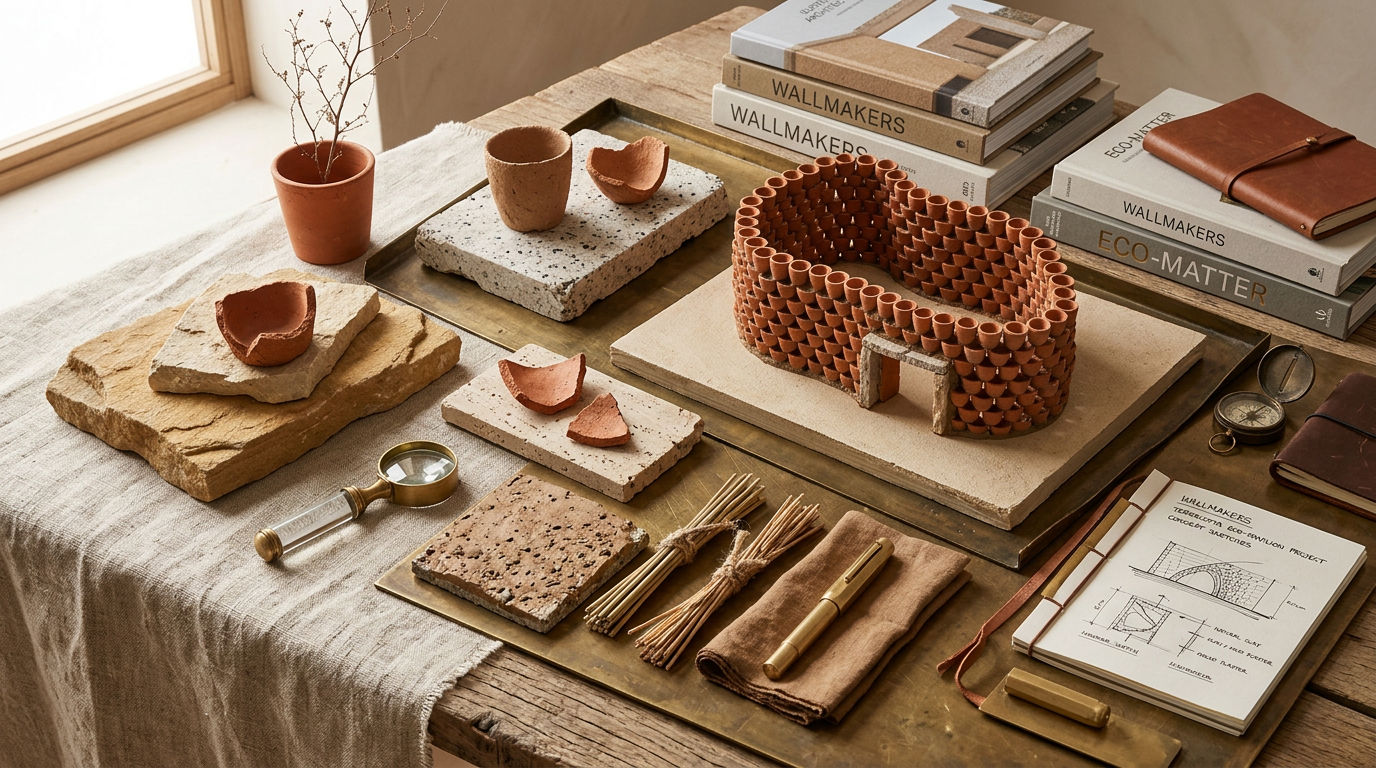
Wallmakers Transforms Terracotta Cups into Eco-Pavilion
Explore how Wallmakers ingeniously repurposed 18,000 discarded terracotta cups to construct a stunning, sustainable pavilion in India, showcasing innovative material reuse.
Embracing Sustainable Innovation in Architectural Design
In an era where environmental consciousness is paramount, the architectural firm Wallmakers has once again pushed the boundaries of sustainable design with their remarkable Kulhad Pavilion in India. This project stands as a testament to their philosophy of utilizing readily available, often discarded, materials to create structures that are not only aesthetically captivating but also environmentally responsible. The pavilion's construction, which ingeniously incorporates 18,000 disused terracotta cups, offers a profound lesson in resourceful innovation for contemporary architects and designers.
The traditional practice of discarding single-use items contributes significantly to landfill waste. Wallmakers’ approach directly challenges this by showcasing how everyday refuse can be elevated into a primary building material. This principle is particularly relevant for professionals seeking to reduce the ecological footprint of their projects without compromising on design integrity or structural soundness. The Kulhad Pavilion serves as a powerful reminder that the true value of a material lies not just in its virgin state, but in its potential for transformation and renewed purpose.
The Ingenuity of Terracotta: Beyond Its Traditional Use
Terracotta, a ceramic material widely recognized for its use in roofing tiles, pottery, and decorative elements, possesses inherent qualities that make it an excellent candidate for sustainable construction. Its natural composition, durability, and thermal properties have been admired for centuries. However, Wallmakers' innovation lies in their reinterpretation of the material, moving beyond conventional applications to explore its structural potential in a new context.
By selecting discarded 'kulhads' – traditional Indian terracotta cups – Wallmakers not only addresses the issue of waste but also taps into the material's earthy appeal and inherent strength. This project illustrates how architects can look beyond the typical supply chain and consider repurposing materials that are locally abundant, fostering a more sustainable and culturally resonant design approach. The use of individual cups, often seen as fragile, in a compressive system demonstrates a deep understanding of material science and structural engineering.
Catenary Vaults: A Structural Masterclass in Material Efficiency
The structural backbone of the Kulhad Pavilion consists of three compressive catenary vaults. This ancient yet highly efficient architectural form allows for maximum structural integrity with minimal material usage. Catenary arches and vaults distribute forces uniformly, primarily through compression, thus negating the need for extensive reinforcement. This design choice is particularly significant when working with materials like terracotta cups, which, individually, have limited tensile strength.
Understanding and applying principles of catenary geometry can unlock new possibilities for architects working with unconventional or recycled materials. It’s a method that prioritizes inherent structural efficiency over material bulk, leading to lighter, more economical, and environmentally friendly constructions. The successful implementation of these vaults in the Kulhad Pavilion provides a valuable case study for professionals interested in exploring advanced structural forms with sustainable materials.
“True sustainability in architecture doesn't just mean using green materials; it means rethinking how we use everyday materials and redefining their purpose and aesthetic potential.” – Wallmakers
Designing for Impact: Aesthetics and Sustainability Hand-in-Hand
The aesthetic outcome of the Kulhad Pavilion is equally as compelling as its sustainable methodology. The sinuous, organic forms created by the arrangement of the terracotta cups give the pavilion a unique and inviting character. The interplay of light and shadow through the gaps in the cups creates an ever-changing visual texture, adding to the sensory experience of the space. This project proves that sustainable architecture need not sacrifice beauty for environmental responsibility; in fact, it can enhance it.
For designers seeking to make a statement with their projects, the Kulhad Pavilion offers inspiration on how to marry strong environmental principles with striking visual appeal. It encourages a design philosophy where material stories are celebrated, and innovative construction techniques become a part of the project's narrative. The pavilion serves as a powerful example of how thoughtful design can transform discarded items into architectural marvels that inspire and educate.
Lessons for the Future of Architectural Practice
The Kulhad Pavilion by Wallmakers represents a significant contribution to the discourse on sustainable architecture. It provides actionable insights for architects and designers committed to creating a more sustainable built environment. Key takeaways include:
- Embrace Local & Discarded Materials: Prioritize sourcing materials that are locally available and consider repurposing items that would otherwise become waste.
- Master Structural Principles: Revisit fundamental structural geometries like catenary arches to maximize material efficiency and strength.
- Innovate with Existing Resources: Look beyond conventional applications of materials and explore their inherent properties for new design possibilities.
- Integrate Aesthetics with Ethics: Design beautiful, impactful structures that inherently tell a story of sustainability and resourcefulness.
By integrating these principles, architectural practices can move towards a future where every project contributes positively to both the environment and society. The Wallmakers' Kulhad Pavilion stands as a beacon for what is possible when creativity, engineering, and environmental stewardship converge.
Enjoyed this article?
Share it with someone who might find it useful.