
Safeguarding Your Sanctuary: Essential Sealing for Outdoor Marble in Southwest Florida
Discover the critical role of proper sealing in preserving the pristine beauty and longevity of your outdoor marble surfaces. This guide delves into protecting your luxurious investment from Southwest Florida's relentless sun, humidity, and occasional downpours, ensuring your outdoor kitchen or lanai remains a timeless haven.
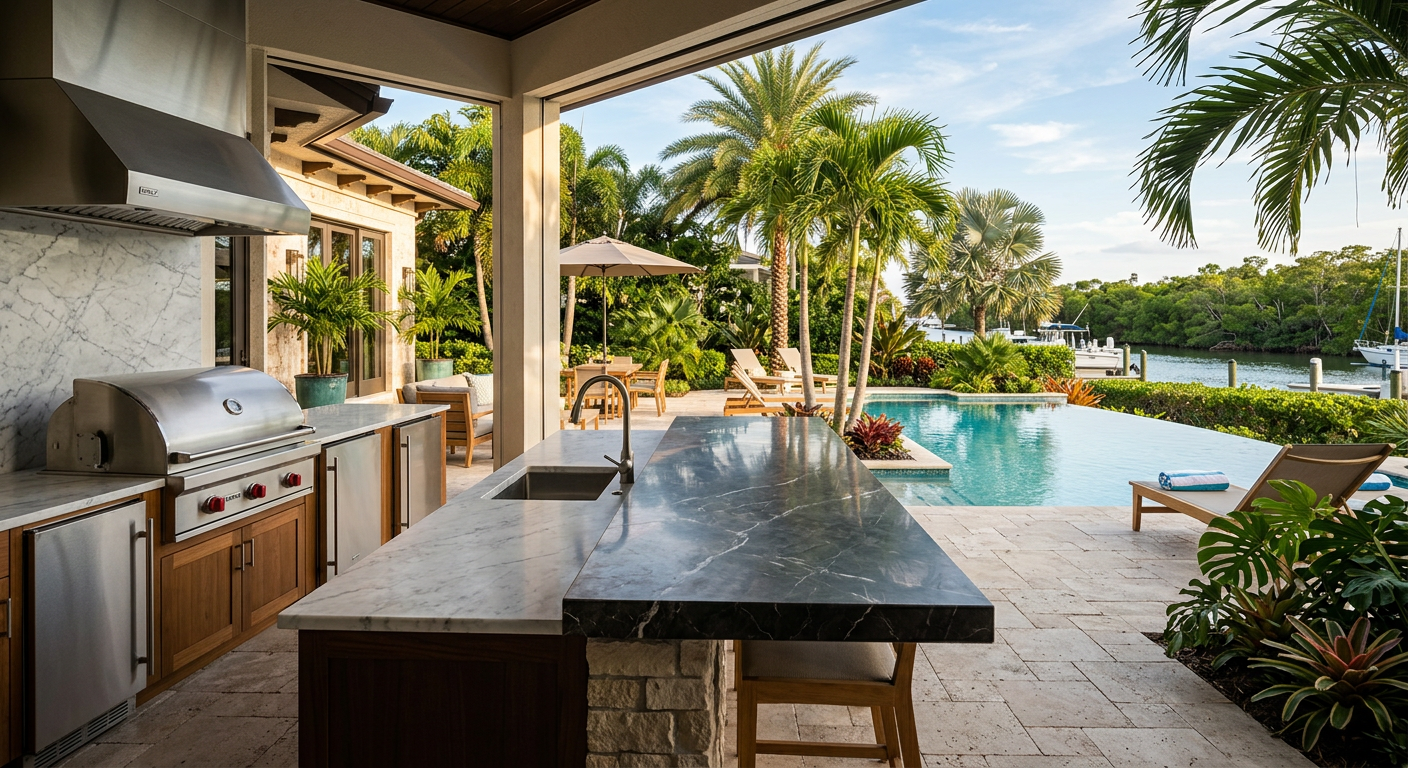
As the sun-drenched days and balmy evenings of Southwest Florida beckon, transforming your outdoor spaces into an extension of your luxurious home becomes paramount. For many discerning homeowners, designers, and architects in Fort Myers, Naples, and Charlotte County, marble emerges as the material of choice for its unparalleled elegance and classic appeal. Imagine a breathtaking outdoor kitchen island, a sophisticated bar top on your lanai, or exquisite accents around your pool deck – all crafted from the luminous veins of natural marble. While marble undoubtedly elevates any outdoor aesthetic, its inherent porosity demands vigilant protection, especially when exposed to the unique challenges of our coastal climate. Neglecting proper sealing can quickly diminish its allure, leaving it vulnerable to etching, staining, and the relentless elements. This article will guide you through the essential steps and considerations for safeguarding your outdoor marble investment, ensuring its enduring beauty for years to come.
Unveiling Marble's Vulnerability: Why Outdoor Sealing is Non-Negotiable
Marble, a metamorphic rock composed primarily of recrystallized carbonate minerals, possesses a natural elegance that is hard to replicate. However, its beauty comes with a degree of porosity, making it susceptible to various forms of damage, particularly in an outdoor setting. Unlike denser materials, marble has microscopic pores that can absorb liquids, leading to unsightly stains from spilled beverages, food, or even airborne pollutants. In Southwest Florida, the intense UV radiation from our abundant sunshine can fade and discolor unsealed marble over time. Furthermore, the high humidity creates an environment where mold and mildew can thrive, embedding themselves within the stone's pores if left unprotected. While tropical downpours are a refreshing break from the heat, the acidic nature of rainwater, combined with dirt and debris, can etch the surface of unsealed marble, dulling its natural luster. For outdoor kitchens and bar areas, the risk of acid etching from citrus, vinegar, or alcoholic drinks is significantly higher. Therefore, understanding marble's inherent characteristics and the environmental stressors it faces outdoors is the first step towards ensuring its longevity.
The Science of Protection: Choosing the Right Sealer for Florida's Climate
Selecting the appropriate sealer is crucial for outdoor marble in Southwest Florida. Not all sealers are created equal, and some are better suited to our specific environmental conditions than others. Impregnating sealers (also known as penetrating sealers) are typically the best choice for outdoor applications. These sealers don't form a film on the surface of the stone but rather penetrate deep into the pores, creating a barrier that repels water and oil-based liquids. This allows the stone to breathe naturally, preventing moisture from getting trapped beneath the surface, which is vital in our humid climate. When choosing an impregnating sealer, look for formulations that offer:
- UV Stability: Essential for preventing discoloration and degradation under the intense Florida sun. A high-quality UV-stable sealer will resist breaking down when exposed to prolonged sunlight, ensuring long-lasting protection.
- Breathability: Allows moisture vapor to escape, preventing issues like efflorescence (white powdery deposits) and mold growth, which are common concerns in humid outdoor environments.
- Stain Resistance: Specifically designed to repel common outdoor culprits like red wine, oil, grease, and food spills, which are inevitable in an outdoor kitchen setting.
- Freeze-Thaw Durability (though less critical in SWFL): While true freezing temperatures are rare in Southwest Florida, a sealer that offers some freeze-thaw protection provides added peace of mind for the occasional cold snap, preventing potential expansion and contraction damage.
- Ease of Application and Reapplication: Consider how easy the sealer is to apply and how often it needs reapplication. For outdoor surfaces, more frequent reapplication (typically every 1-3 years depending on traffic and exposure) is often necessary compared to indoor countertops.
It's always recommended to test any sealer on an inconspicuous area of your marble first to ensure it doesn't alter the stone's appearance. Our experts at HB Marble & Granite can provide guidance on the best sealer products tailored to your specific outdoor marble installation.
Application & Maintenance: Preserving Your Outdoor Marble Oasis
Proper application of the sealer is just as important as choosing the right product. Before applying any sealer, ensure your marble surface is thoroughly clean, dry, and free of any dust, debris, or existing stains. For new installations, allow sufficient time for the setting materials to cure completely as per manufacturer recommendations. Apply the sealer evenly according to the product's instructions, typically with a clean cloth, sponge, or applicator pad. Pay close attention to achieving full saturation without leaving excess product pooling on the surface. After the recommended dwell time, buff off any excess sealer to prevent residue buildup, which can create a hazy appearance.
Beyond initial sealing, consistent maintenance is key to preserving your outdoor marble's beauty. Regular cleaning with a pH-neutral stone cleaner will help remove surface grime without stripping the sealer. Promptly wipe up spills, especially acidic ones, to minimize the risk of etching. Periodically inspect your marble surfaces for signs that re-sealing may be necessary. A simple water test can indicate if the sealer is still effective: if water droplets bead up on the surface, the sealer is likely still doing its job. If water absorbs into the stone and darkens it, it's time for reapplication. For high-traffic areas, outdoor kitchens, or surfaces exposed to direct, prolonged sunlight, re-sealing every 1-2 years is a good preventive measure. Investing in professional sealing services can also ensure a thorough and long-lasting application, offering peace of mind.
The HB Marble & Granite Advantage: Your Partner in Outdoor Luxury
At HB Marble & Granite, we understand the investment you make in creating stunning outdoor living spaces in Southwest Florida. From the initial selection of the perfect marble slab for your outdoor kitchen or lanai bar to expert fabrication and installation, we are committed to helping you protect your luxurious surfaces. Our team of experienced professionals in Fort Myers, Naples, and Charlotte County can offer personalized advice on marble sealing and care, ensuring your outdoor oasis remains as breathtaking as the day it was installed. Visit our showroom to explore an exquisite selection of natural stone and discuss how we can help you safeguard your outdoor marble investment against the elements, allowing you to enjoy your beautiful surroundings worry-free for years to come.
Enjoyed this article?
Share it with someone who might find it useful.