
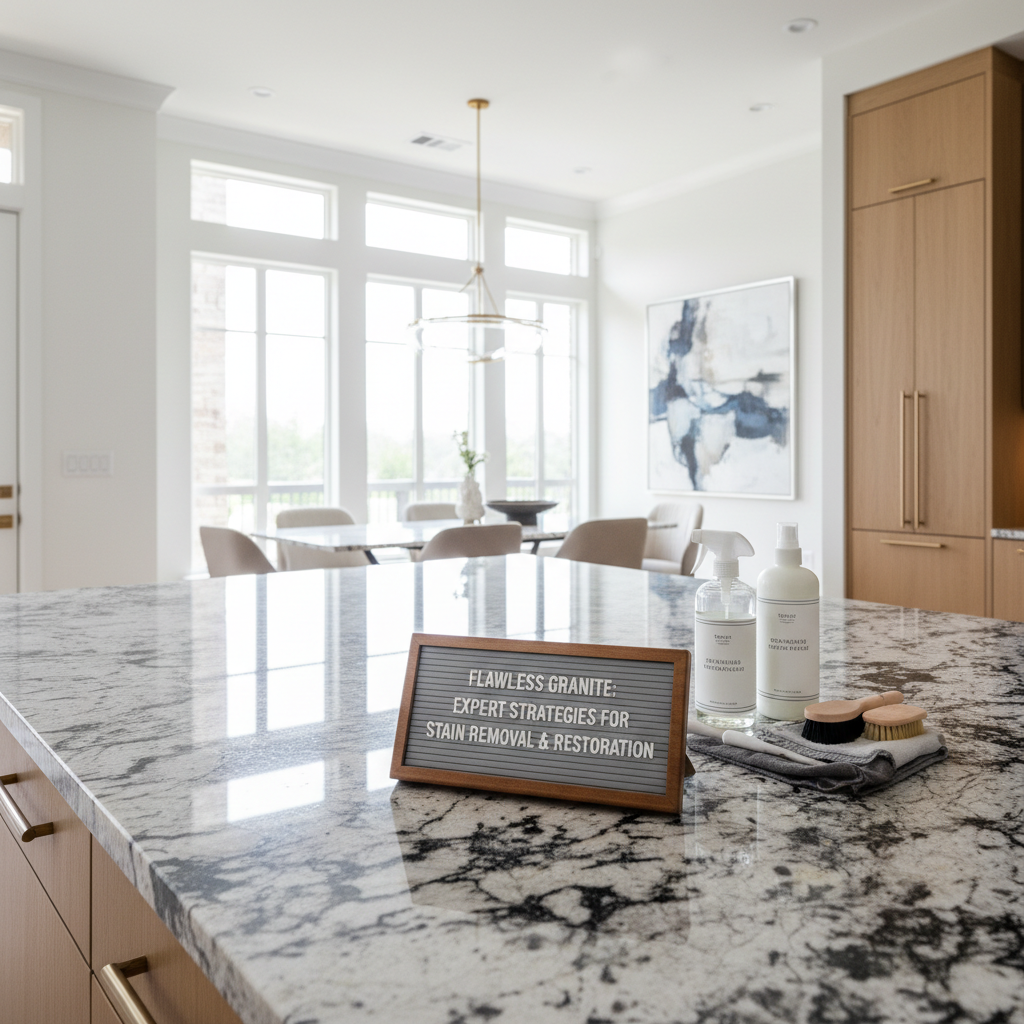
Flawless Granite: Expert Strategies for Stain Removal & Restoration
Preserving the pristine beauty of granite countertops is paramount for luxury homes and commercial spaces. This comprehensive guide, tailored for discerning designers and architects, delves into advanced techniques for effectively removing common stains from granite, ensuring its lasting elegance and structural integrity. Learn professional-grade methods to maintain the exquisite allure of your natural stone investment.
Flawless Granite: Expert Strategies for Stain Removal & Restoration
Granite, a cornerstone of luxury design in Southwest Florida and beyond, embodies enduring beauty, strength, and sophistication. Its unique veining and crystalline structure make each slab a natural work of art, gracing high-end kitchens, opulent bathrooms, and distinguished commercial spaces. However, even this remarkably durable natural stone is not entirely immune to the occasional blemish. Stains, if not addressed promptly and correctly, can mar its pristine surface, diminishing its inherent grandeur. For designers, architects, and homeowners investing in premium granite, understanding the nuances of stain removal is not just practical – it's essential for preserving the aesthetic and financial value of this magnificent material.
This guide offers an in-depth exploration of granite countertop stain removal, providing professional strategies and practical insights. We'll demystify the types of stains, equip you with the knowledge to tackle them effectively, and emphasize the importance of proper sealing and maintenance. Our aim is to empower you to maintain the impeccable appearance of your granite, ensuring it remains a focal point of elegance for decades to come.
Understanding Granite's Porosity and Stain Vulnerability
While granite is often perceived as impenetrable, it is, in fact, a porous material. Its porosity varies depending on the specific type and density of the stone. This characteristic allows liquids to penetrate the surface and become trapped within its microscopic capillaries, leading to staining. The good news is that most stains on granite are not permanent damage to the stone itself, but rather substances that have been absorbed into these pores. The key to successful stain removal lies in drawing these contaminants back out.
Before diving into removal techniques, it's crucial to understand the role of sealing. High-quality granite sealers create a protective barrier on the stone's surface, significantly reducing its absorption rate. This barrier doesn't make granite stain-proof, but it does buy you valuable time to clean up spills before they penetrate deeply. Regular sealing, typically every 1-3 years depending on usage and sealer quality, is the first and most critical line of defense against staining. For design professionals, recommending proper sealing and maintenance to clients is paramount for long-term satisfaction.
Identifying and Tackling Common Granite Stains
Effective stain removal begins with accurate identification. Different types of stains require different approaches. Here, we categorize common culprits and outline targeted solutions:
1. Oil-Based Stains (Grease, Cooking Oil, Cosmetics, Ink)
Oil-based stains are among the most frequent offenders in kitchens and bathrooms. These stains appear as dark spots that often darken the stone. The challenge is to draw the oil out without spreading it further or damaging the granite.
Solution: The Poultice Method
The poultice is the gold standard for extracting absorbed stains from granite. It's a paste-like substance that absorbs the staining agent as it dries. For oil-based stains, an alkaline poultice is most effective.
Materials:
- Absorbent material: Kaolin clay, diatomaceous earth, baking soda, or unbleached flour.
- Chemical agent: Acetone (nail polish remover without lanolin), mineral spirits, or hydrogen peroxide (use caution with darker granite, as peroxide can lighten).
- Plastic wrap.
- Masking tape.
- Non-abrasive plastic spatula.
Procedure:
- Clean the Area: Ensure the granite surface around the stain is clean and dry.
- Mix the Poultice: Combine your absorbent material with the chemical agent to create a thick, peanut butter-like consistency. It should be moist enough to spread but not runny.
- Apply: Apply a generous layer (about 1/4 to 1/2 inch thick) of the poultice directly over the stain, extending slightly beyond its edges.
- Cover: Cover the poultice with plastic wrap and tape down the edges to prevent it from drying out too quickly. This allows the chemical agent time to break down the stain and the absorbent material to draw it out.
- Dwell Time: Allow the poultice to sit for 24-48 hours. As it dries, it pulls the stain out of the stone.
- Remove: Once completely dry and crumbly, carefully scrape off the poultice with a plastic spatula. Avoid using metal tools that could scratch the surface.
- Rinse & Inspect: Rinse the area with clean water and dry thoroughly. Inspect the stain. Multiple applications may be necessary for stubborn stains.
2. Organic Stains (Coffee, Tea, Wine, Food, Foliage, Pet Urine)
Organic stains typically appear as brownish or pinkish discolorations. They are common in areas where food and beverages are consumed.
Solution: Peroxide-Based Poultice or Mild Bleach Solution
- Poultice Method: Follow the general poultice procedure above, but use hydrogen peroxide (12% or higher, available at beauty supply stores for hair bleaching, or a 3-6% solution from pharmacies) as the chemical agent with your absorbent material. Hydrogen peroxide acts as a bleaching agent, breaking down the organic matter. For very delicate or dark granite, start with a lower concentration of peroxide or test in an inconspicuous area.
- Mild Bleach Solution (Caution): For surface-level organic stains, a very dilute solution of household bleach (1 part bleach to 10 parts water) can be carefully applied with a clean cloth. Immediately rinse thoroughly with clean water and dry. Never leave bleach on granite for extended periods, especially on darker stones, as it can cause etching or lightening. This method is generally less effective for deeply absorbed stains than a poultice.
3. Metal Stains (Rust, Iron, Copper)
Rust stains (orange-brown) from metal objects left on granite are common, particularly in bathrooms or outdoor kitchen areas. Copper stains (greenish-blue) can also occur.
Solution: Rust Remover Poultice
Materials:
- Absorbent material (as above).
- Chemical agent: Commercial rust remover specifically formulated for natural stone (containing hydrofluoric acid or oxalic acid). Extreme caution is required with these chemicals; always wear gloves and eye protection and ensure good ventilation.
Procedure: Follow the poultice method as described for oil-based stains, but use the stone-safe rust remover as your chemical agent. For stubborn rust, multiple applications may be needed. Always choose a rust remover explicitly labeled as safe for granite to avoid etching.
4. Water Spots & Hard Water Stains
These appear as dull, white, or cloudy rings and are caused by mineral deposits (calcium, magnesium) left behind after water evaporates. They are more common on unsealed or poorly sealed granite.
Solution: Mild Acidic Cleaners (with caution) or Polishing Powders
- Mild Acidic Solution (Caution): For light water spots, a small amount of distilled white vinegar (diluted 1:1 with water) can be applied briefly with a soft cloth, then immediately rinsed thoroughly with clean water and dried. Avoid prolonged contact with vinegar, as acids can etch granite if left on too long, especially on polished surfaces. This is generally not recommended for regular cleaning.
- Commercial Hard Water Removers for Stone: Use products specifically designed for natural stone. Always test in an inconspicuous area first.
- Polishing Powder: For etched or dull areas caused by hard water, a professional-grade granite polishing powder (containing fine abrasives) can often restore the shine. This requires careful application and buffing with a polishing pad. This is often best left to a professional stone restoration specialist.
Prevention: The Ultimate Stain Removal Strategy
While knowing how to remove stains is valuable, preventing them in the first place is always the best approach. For designers and architects, educating clients on these preventative measures is crucial for long-term satisfaction with their granite investment.
- Regular Sealing: Re-seal granite countertops every 1-3 years, or as recommended by your stone supplier. A simple water test (water beads up on the surface) can indicate if resealing is needed.
- Immediate Spill Cleanup: Wipe up spills, especially acidic or oil-based liquids, immediately. Don't let them sit.
- Use Coasters and Trivets: Protect granite from hot pans, acidic beverages, and condensation rings.
- Use Cutting Boards: While granite is hard, cutting directly on it can dull knives and potentially scratch the surface, especially if it contains softer minerals. It also prevents the absorption of food juices.
- Daily Cleaning: Use a pH-neutral cleaner specifically formulated for natural stone. Avoid abrasive cleaners, harsh chemicals (like ammonia or bleach for regular cleaning), and acidic cleaners (like vinegar or lemon juice), which can etch the surface and degrade the sealer.
- Professional Cleaning and Sealing: For high-traffic areas or commercial applications, consider scheduling professional cleaning and resealing services annually.
When to Call a Professional Stone Restoration Specialist
Despite best efforts, some stains may prove too challenging for DIY removal, or the granite may suffer etching or surface damage. In such cases, it's always advisable to consult a professional stone restoration specialist. They possess the expertise, specialized equipment, and industrial-grade chemicals to safely and effectively address:
- Deeply embedded, persistent stains.
- Etching (dull spots caused by acidic substances).
- Scraches or chips.
- Overall dullness or loss of shine.
- Re-polishing and honing services.
Investing in luxury natural stone like granite is a testament to discerning taste and a commitment to quality. By understanding the nature of granite, employing appropriate stain removal techniques, and adhering to a rigorous prevention and maintenance regimen, you can ensure that your granite countertops remain a breathtaking feature, reflecting timeless elegance and sophistication in every space they adorn. For design professionals, this knowledge translates into delivering lasting beauty and value to your esteemed clientele.
Enjoyed this article?
Share it with someone who might find it useful.