
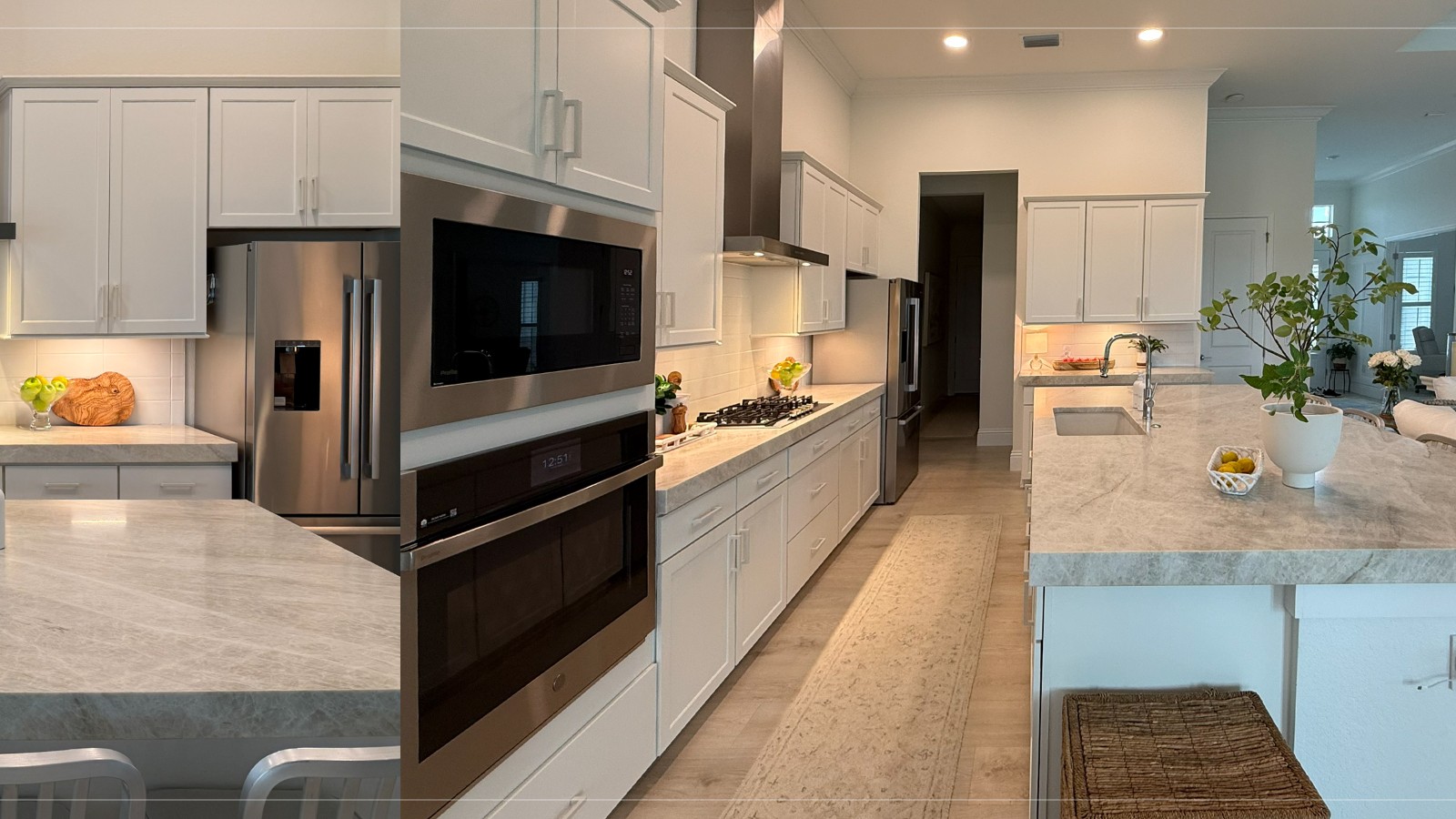
What Affects Countertop Cost in Fort Myers? A 2026 Planning Guide
Countertop pricing depends on much more than the stone itself. Learn which factors affect the final cost of a countertop project in Fort Myers and what to clarify before comparing estimates.
The cost of new countertops in Fort Myers depends on much more than the price of the stone.
Material selection matters, but the final project can also be affected by the amount of material required, slab layout, edge details, sink and cooktop cutouts, removal of existing countertops, fabrication, installation, and the complexity of the kitchen itself.
That is why two kitchens using a similar material can end up with very different estimates.
If you are comparing countertop quotes, the most useful question is not simply "What does this stone cost per square foot?" It is "What is included in the installed price?"
Material Is Only One Part of Countertop Cost
The material is usually one of the first decisions homeowners make.
Granite, quartz, quartzite, and marble have different price structures, and even two slabs within the same material category can have different costs.
Color, availability, manufacturer, slab characteristics, and the amount of material needed for the project can all affect the material portion of the quote.
A common mistake is comparing the advertised price of one material with the complete installed price from another proposal.
Those numbers may represent very different things.
If you are still comparing materials, our Granite Guide and Quartz Guide can help you understand some of the practical differences before requesting an estimate.
Material Price vs. Installed Price
A price attached to a slab or quoted by the square foot does not always represent the complete countertop project.
An installed price may include some combination of measurement, fabrication, standard edge work, cutouts, delivery, installation, sealing, or other services. What is included varies by company and by project.
Other items may be priced separately.
Before comparing two estimates, ask both companies to clarify exactly what their numbers include.
For an HB Marble & Granite estimate, the current inclusions should be confirmed directly with the team before making a comparison.
[EDITORIAL CHECK BEFORE PUBLISHING: HB must confirm which services are normally included in its estimate and whether any are quoted separately.]
How the Amount of Countertop Affects the Quote
More countertop area generally means more material and more fabrication.
A small bathroom vanity has very different requirements from a kitchen with perimeter countertops and a large island.
Square footage is important, but slab utilization also matters.
Slab Size and Layout
Natural stone and engineered slabs come in fixed dimensions.
A kitchen layout may require one slab, multiple slabs, or a particular arrangement to accommodate the dimensions of an island and perimeter counters.
Large islands can have a significant effect on planning. The fabricator may need to consider whether the island can be produced from a single piece and how the remaining sections of the slab can be used elsewhere in the project.
With natural stone, the direction of the veining may also influence how pieces are positioned.
That means countertop pricing cannot always be calculated accurately by multiplying a simple square-foot number.
You can explore examples of different stone appearances on our Stone Colors page.
Edge Profiles Can Change Fabrication
The edge is the finished profile along the exposed side of the countertop.
A standard edge generally requires less fabrication than a more detailed profile. Depending on the fabricator and material, upgraded edges can add work to the project and affect the quote.
Common designs include eased, bevel, bullnose, and more detailed decorative profiles.
There are also applications where a thicker visual edge or waterfall detail requires additional fabrication and material.
When reviewing an estimate, confirm which edge profile is included instead of assuming every option carries the same price.
Sink and Cooktop Cutouts Matter
Countertops are fabricated around the fixtures and appliances that will be installed in them.
A sink requires an accurately sized opening. Cooktops may require another custom cutout. Faucet holes, soap dispensers, and other fixtures can also require drilling or fabrication.
These details should be identified before fabrication.
A kitchen with one simple sink opening has different fabrication requirements from a project with multiple sinks, a cooktop, additional faucet holes, and other built-in features.
If you already selected the sink or cooktop, having the correct model information available can make the planning process easier.
Removal of Existing Countertops May Be a Separate Part of the Project
Replacing countertops often starts with removing the existing surface.
That work can involve demolition, disposal, and preparation before the new countertops can be installed.
The difficulty depends on what is already there and how it was installed.
A straightforward removal is different from a project where the existing material is difficult to detach or where removing it reveals cabinet, wall, plumbing, or other conditions that need attention.
Do not assume removal and disposal are automatically included in every countertop proposal.
[EDITORIAL CHECK BEFORE PUBLISHING: confirm HB's policy on countertop removal, haul-away, and related preparation.]
Templating Helps Define the Final Countertop
Before fabrication, the countertop dimensions need to be captured accurately.
Templating documents the actual layout so the new pieces can be fabricated for the space.
This stage can account for walls that are not perfectly straight, cabinet dimensions, appliance openings, overhangs, and other project-specific details.
The more complex the layout, the more planning may be required before cutting the slab.
Have the Kitchen Ready Before Templating
The conditions required before templating can vary by fabricator.
In many projects, cabinets and relevant fixtures or appliance specifications need to be finalized before the countertop can be measured accurately.
For HB projects, the exact preparation requirements should be confirmed with the team when the estimate is scheduled.
[EDITORIAL CHECK BEFORE PUBLISHING: HB should provide its actual templating prerequisites.]
Installation Complexity Can Affect the Final Cost
Not every countertop installation has the same level of difficulty.
A simple, accessible kitchen with short countertop runs is different from a project involving an oversized island, multiple seams, waterfall panels, difficult access, or pieces that require additional handling.
The property itself can matter too.
Stairs, elevators, restricted access, tight doorways, and other site conditions may affect how material is delivered and installed.
This is another reason an in-person project review or accurate measurement can provide more useful information than a generic online price.
Seams and Vein Placement Require Planning
Large projects may require seams.
Where those seams are placed can influence both fabrication and the finished appearance.
Natural stone introduces another consideration because every slab has its own movement.
A fabricator may need to decide how the veins will continue between sections and which part of the slab should become the focal point of an island or other large surface.
This is especially important with materials selected for dramatic patterns.
The goal is not simply to fit pieces into the kitchen. The slab needs to be planned around the layout before fabrication begins.
Waterfalls and Full-Height Backsplashes Use More Material
Some design choices substantially increase the amount of stone involved.
A waterfall island extends the countertop material vertically down the side of the cabinetry.
A full-height stone backsplash can carry the same slab material from the countertop up the wall.
Both applications can create a strong visual result, but they also require more material and additional fabrication compared with a standard countertop alone.
If either feature is part of your plan, include it when requesting the estimate rather than adding it after the slab has already been selected.
Granite and Quartz Should Not Be Compared by Price Alone
Granite and quartz are both common countertop options, but price should be only one part of the decision.
Granite is natural stone, so each slab has its own variation. Quartz is engineered and generally offers more consistency between samples and finished surfaces.
The right choice also depends on maintenance preferences, appearance, heat exposure, and how the kitchen is used.
A cheaper material that does not fit the project is not necessarily the better value.
Likewise, a higher-priced slab does not automatically make it the right choice for the home.
Compare the actual materials, understand the project requirements, and then compare complete estimates.
Questions to Ask Before Comparing Countertop Estimates
Before choosing between quotes, make sure you understand what each company is pricing.
Ask what material is included and whether the quote represents material only or an installed project.
Confirm the edge profile, sink and cooktop cutouts, templating, fabrication, removal of existing countertops, delivery, installation, and any other work that applies to your kitchen.
If one quote appears significantly lower than another, check whether both include the same scope.
A clear estimate is easier to evaluate than a low starting number with several items added later.
Planning Countertops in Fort Myers
The most accurate way to understand the cost of your countertop project is to evaluate the actual space and the material you want to use.
HB Marble & Granite works with homeowners planning countertop projects in Fort Myers and Southwest Florida.
Visit our Fort Myers showroom to compare materials and see full slabs in person.
When you are ready to price your project, contact HB Marble & Granite to request an estimate and confirm what is included for your specific installation.
Enjoyed this article?
Share it with someone who might find it useful.